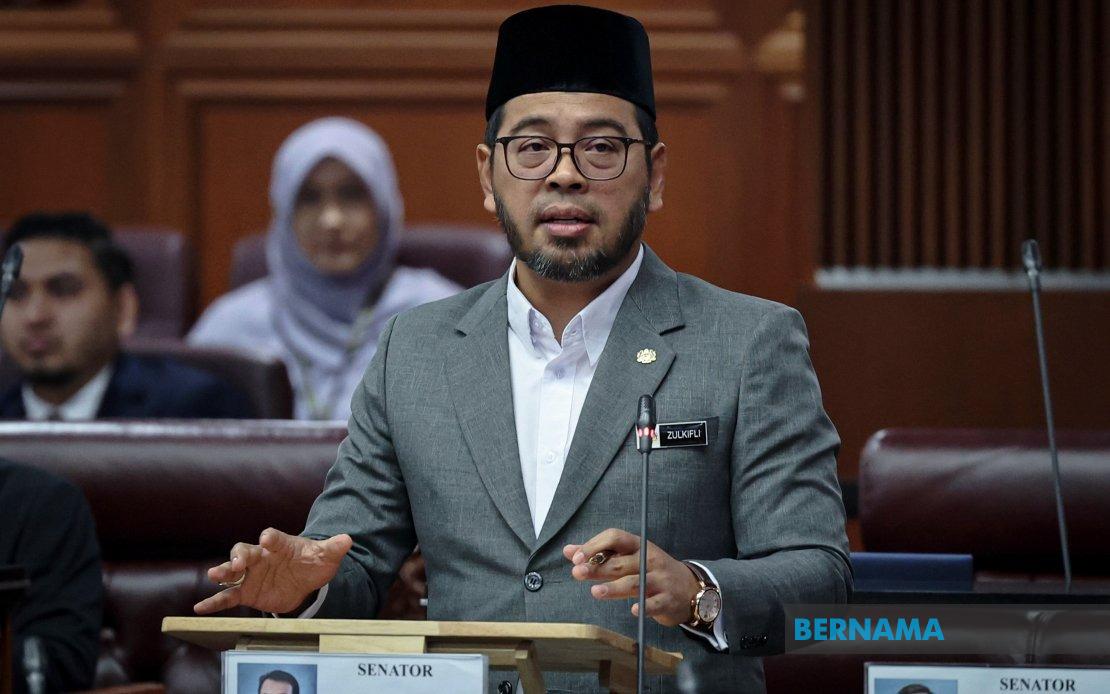
Tabung Haji depositors can be assured that their zakat obligations have been properly discharged through mechanisms that comply fully with Islamic religious requirements, Minister in the Prime Minister's Department (Religious Affairs) Dr Zulkifli Hasan declared during a special Parliamentary sitting on the institution's regulatory status. The statement addresses lingering uncertainty among millions of Muslims who have entrusted savings to the hajj fund, particularly following the 2022 Royal Commission of Inquiry that revealed significant operational weaknesses during the 2014 to 2020 period.
Dr Zulkifli outlined the religious validation undergirding TH's zakat practices, referencing multiple authoritative endorsements. The institution's own Syariah Advisory Committee determined in September 2020 that zakat payments made prior to 2019 were valid and compliant, while the National Fatwa Committee for Islamic Religious Affairs Malaysia established in 1979 that TH itself is exempt from personal zakat liability but must discharge the obligation on behalf of each depositor. This dual-layer approval reflects the intricate religious framework governing Islamic financial institutions in Malaysia, where competing considerations of corporate structure and individual depositor accountability must be reconciled.
The mechanics of zakat payment shifted across different periods depending on TH's contract structures with depositors. Between 2016 and 2019, when the institution operated under the Wadiah Yad Damanah framework—a safekeeping arrangement permitting trading of pooled funds—zakat was levied as business zakat, effectively a collective tithe calculated across the aggregated depositor pool that TH actively invested. This approach differs from the wakalah model introduced in 2019, where TH functions more as an agent managing individual mandates rather than a custodian trading a collective fund. The transition between these contractual arrangements created technical questions about continuity of zakat obligation that required clarification from religious authorities.
Further legitimacy came through the National Council for Islamic Religious Affairs Muzakarah Committee, which reviewed TH's zakat governance framework in June 2024 and subsequently presented findings to the October 2024 Conference of Rulers. This cascade of approvals—from TH's internal religious committee through national fatwa bodies to the highest state-level Islamic councils—represents an exhaustive validation process designed to silence any theological objections among the institution's 3.8 million depositors. For depositors unfamiliar with Islamic finance terminology, the message was deliberately simplified: all zakat operations comply with both civil Islamic law and Islamic finance best practice.
Dr Zulkifli emphasised that TH's ongoing zakat governance operates under formal Zakat Guidelines that have been approved and continuously monitored by the institution's Syariah Advisory Committee, composed of specialists in Islamic jurisprudence and Islamic finance. This institutional architecture is intended to prevent the kind of unilateral management decisions that characterised earlier periods when oversight appeared insufficient. The minister's emphasis on expert-driven governance signals an effort to rebuild confidence in TH's religious credibility following the RCI's damning findings about inadequate checks on management authority during the years of mounting losses.
The broader context of the RCI itself underscores why zakat clarity matters so urgently. The 211-page report, released publicly in July 2024 after being submitted to the Yang di-Pertuan Agong in August 2022, detailed structural deficiencies and operational lapses accumulating between 2014 and 2020. During this period, TH experienced financial deterioration that eventually necessitated government intervention and raised questions about whether depositors' savings had been adequately protected. The RCI generated 25 improvement recommendations, of which 75 percent had been implemented by late July 2024, suggesting TH has moved with reasonable speed to remedy identified problems, though implementation of the remaining quarter of recommendations remains pending.
Beyond zakat assurances, Dr Zulkifli announced that TH is finalising revisions to its hajj management policies in line with RCI suggestions about eligibility and waiting periods. The anticipated reforms will operate according to the Islamic principle of istito'ah—the capacity or readiness to undertake the hajj journey—coupled with emphasis on systematic advance planning rather than reactive allocation. This represents a departure from historical practices where waiting lists sometimes extended across decades and allocation appeared opaque, frustrating aspirational pilgrims. The renewed framework aims to create clearer timelines and more transparent eligibility pathways, addressing one of the most visible sources of depositor frustration.
The religious legitimacy narrative matters particularly for Malaysian Muslim voters and depositors who view TH not merely as a financial institution but as a sacred trust embedded within Islamic governance structures. Depositors entrust funds partly for spiritual reasons—the obligation to undertake hajj is a fundamental Islamic duty—and partly for practical wealth management. The RCI's exposure of operational mismanagement threatened the spiritual dimension, suggesting TH could be a vehicle for misuse rather than Islamic compliance. By systematically walking through the zakat validation process and demonstrating that religious authorities across multiple levels have endorsed TH's practices, the minister attempts to decouple financial management failures from religious credibility.
Yet questions persist beneath the surface assurances. The shift from Wadiah Yad Damanah to wakalah arrangements, while technically valid, reflected underlying structural instability during the period when TH required rescue. The fact that zakat treatment varied across contractual regimes and required retrospective validation through multiple religious committees suggests TH's original architects did not establish sufficiently robust Islamic frameworks from inception. For financially sophisticated depositors, the necessity of securing post-hoc religious approval for practices spanning years raises concerns about whether religious oversight was genuinely independent or merely was aligned with institutional management interests.
From a Southeast Asian perspective, TH represents a critical test case for Islamic financial governance within democratic systems. Malaysia's constitutional framework guarantees Islam's special position, yet Islamic institutions operate within secular legal and regulatory environments. The RCI demonstrated that religious validation alone provides insufficient guardrails against mismanagement; yet financial regulation alone cannot address the sacred trust depositors place in Islamic institutions. The ongoing TH saga reveals the tension inherent in simultaneously maintaining Islamic authenticity and corporate accountability standards—a challenge Malaysia shares with other Muslim-majority nations developing Islamic finance sectors.
The minister's parliamentary statement reflects an attempt to restore institutional confidence through layered religious validation, yet the fundamental challenge remains institutional reform rather than theological argument. Depositors primarily want assurance that their savings will be safeguarded and that promised hajj opportunities materialise, not reassurance about zakat compliance per se. While the minister successfully demonstrated that zakat obligations have been discharged according to Islamic law, the broader imperative is demonstrating that TH has been fundamentally reformed such that the financial deterioration and governance failures documented by the RCI cannot recur. That reassurance ultimately depends less on religious committee approvals and more on sustained evidence of prudent management and transparent operations across the coming years.

