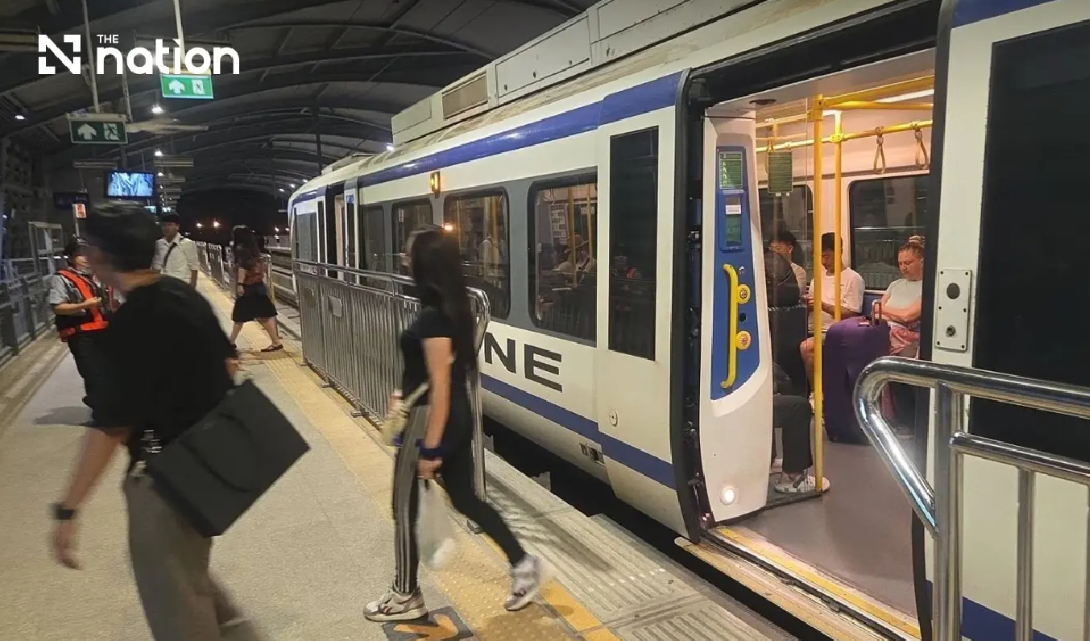
Commuters and travellers using Bangkok's Airport Rail Link experienced relief Wednesday evening when the critical transport artery resumed full service at 10.07pm following a day-long operational halt. The disruption, which affected the vital link between Phaya Thai and Suvarnabhumi airports, had stranded passengers and created bottlenecks for those dependent on Thailand's primary rail connection to its main international hub.
The State Railway of Thailand (SRT), working alongside its subsidiary SRT Electrified Train Company and Asia Era One, pinpointed the root of the problem to a faulty track switch located at the turnback point inside the Khlong Tan maintenance depot. Engineers and specialists conducted exhaustive inspections throughout the day to identify and rectify the mechanical issue. Beyond addressing the switch malfunction itself, technicians also needed to remove a train that was blocking the system's access routes, a secondary complication that had prevented normal service patterns from resuming despite initial repair attempts.
The response to the crisis demonstrated Bangkok's multi-agency coordination machinery in operation. SRT governor Anan Phonimdeang confirmed that the transport ministry's deputy minister had directed all relevant agencies to prioritise rapid service restoration. This top-down directive galvanised resources across both public and private sectors, with rail-system specialists from state entities and private operators deployed simultaneously to tackle different aspects of the problem. The collaborative approach proved effective, as evening commuters saw operations return to normal before midnight.
Asia Era One, the primary operator, has committed to an exhaustive technical investigation that extends beyond identifying the immediate cause of Wednesday's failure. The company plans to replace the entire track-switch assembly at the depot's turnback point, suggesting that officials believe the faulty component may have been nearing the end of its operational life. This replacement initiative reflects a broader reassessment of infrastructure vulnerability, as the operator intends to conduct a comprehensive audit of other sections deemed susceptible to similar failures. Such proactive maintenance represents standard best practice for critical transport infrastructure in major cities, yet it also indicates that the Airport Rail Link may have accumulated maintenance backlogs requiring systematic attention.
Operational resilience has become a secondary focus for airport rail administrators. Asia Era One is reviewing its contingency timetables and backup operating procedures to fortify the system against future disruptions. These protocols are particularly crucial for airport transport systems, where delays cascade rapidly through passenger schedules and create widespread economic ripple effects. A single day's disruption forces travellers onto congested road networks and diminishes confidence in public transport reliability, consequences that extend beyond Bangkok's airport precinct to affect the broader Southeast Asian travel hub's competitive position.
The operator has emphasised that the fault posed no threat to passenger safety, a reassurance that distinguishes mechanical reliability issues from structural or design deficiencies. This distinction matters significantly for public confidence—maintenance failures that are quickly remedied differ fundamentally from systematic safety concerns. However, the need for such assurances itself reflects underlying anxieties about infrastructure maintenance in a rapidly ageing transport system that has operated continuously since 2010.
The Airport Rail Link typically serves passengers throughout extended daily hours, commencing operations at 5.30am from both Phaya Thai and Suvarnabhumi terminals and concluding at midnight. This 18.5-hour operational window accommodates early morning departures and late evening arrivals characteristic of international aviation. The system's standard configuration deploys six trains during regular operations, supplemented by two additional trains during peak travel periods, a capacity allocation that frequently tests itself during school holidays and high season tourism months.
For Malaysian travellers and transport observers, the incident underscores vulnerabilities present in aging airport rail infrastructure across Southeast Asia. Bangkok's Airport Rail Link serves as a bellwether for regional transport reliability, and service disruptions damage not merely individual railway operators but broader regional confidence in public transport modernity. Malaysia's own Kuala Lumpur International Airport rail connections have experienced comparable issues, making the Thai experience instructive for local transport authorities and passengers evaluating system reliability.
The rapid resolution of Wednesday's disruption, while operationally successful, should prompt strategic questions about preventive maintenance investment across Thailand's transport sector. Asia Era One's commitment to detailed investigation and future-proofing measures represents appropriate crisis management, yet it may also indicate that reactive maintenance protocols had previously dominated operational thinking. The shift towards anticipatory infrastructure assessment, if sustained, could prevent future disruptions that would otherwise compromise Bangkok's standing as Southeast Asia's premier travel hub.
Longer-term implications extend to traveller behaviour and transport modal choice. Each infrastructure failure incrementally erodes passenger confidence in rail alternatives to private vehicles and taxis, outcomes that generate traffic congestion and air quality deterioration across Bangkok. The success of airport rail depends not merely on technical operational performance but on consistent reliability that makes public transport the rational choice for time-conscious travellers. Wednesday's disruption, though resolved swiftly, will nonetheless influence some passenger decisions for months ahead.

