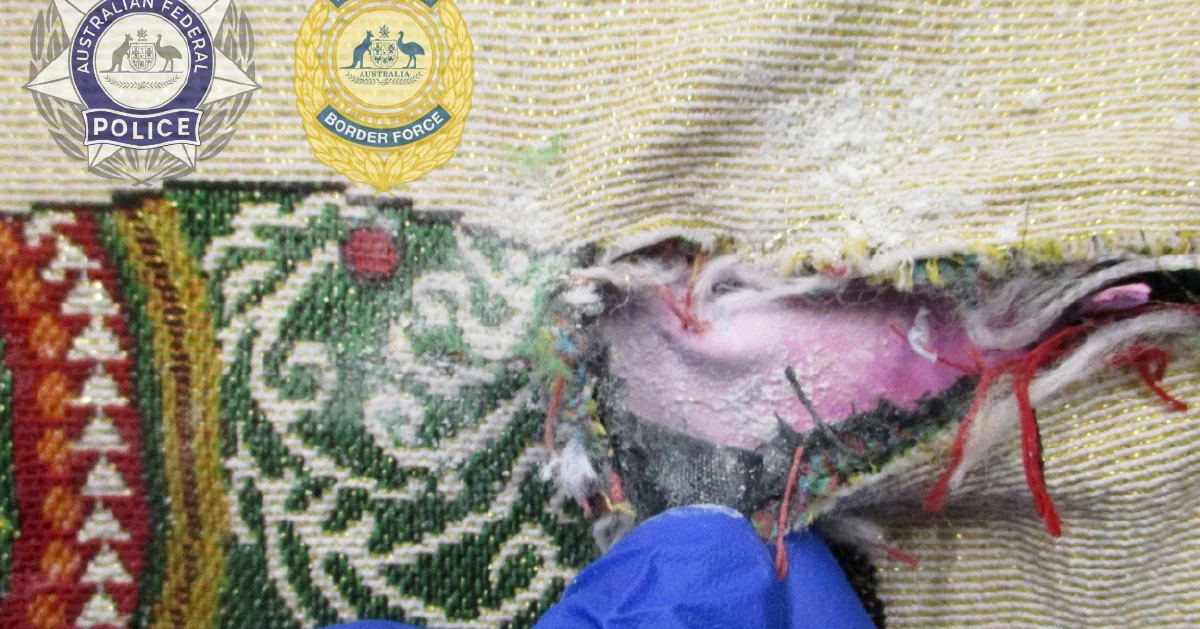
A crew member employed by Thai Airways has been apprehended in Sydney and charged following the discovery of a substantial heroin shipment concealed within travel bags at the airport, according to announcements from the Australian Federal Police. The incident highlights ongoing challenges faced by law enforcement agencies across the Indo-Pacific region in combating transnational drug trafficking networks that exploit airline staff and international travel routes.
The seizure represents a significant interdiction of narcotics destined for Australian markets. Customs officials identified and removed the concealed heroin, which exceeded one kilogram in weight, during routine screening procedures. The discovery has triggered a formal investigation into the circumstances surrounding the attempted importation and whether additional individuals or networks were involved in the operation.
The case underscores how international criminal organisations continue to recruit employees working within the aviation sector to facilitate drug smuggling. Airlines operating across Southeast Asia and to Australia have become increasingly concerned about the vulnerability of their personnel to recruitment by traffickers, particularly among ground and cabin crew members who have legitimate access to restricted airport areas and international flight operations.
Thailand has long served as a transit point within broader regional drug trafficking networks. While the nation has strengthened border controls and enforcement operations targeting methamphetamine and other substances in recent years, individuals with legitimate travel credentials remain targets for exploitation by organised crime syndicates. The involvement of airline crew members represents a distinct challenge, as their employment provides cover and opportunity that ordinary passengers cannot access.
For Australia, the apprehension reflects the effectiveness of customs screening at major entry points, particularly Sydney Airport, one of the country's busiest international terminals. However, the sheer volume of international passengers and cargo handled daily means that detection of such smuggling attempts depends significantly on intelligence, random screening, and the expertise of frontline officers. Each successful seizure provides investigators with additional intelligence to map trafficking routes and identify associated networks.
The incident carries implications for Malaysia and the broader region as well. Drug trafficking syndicates operating across Southeast Asia often coordinate activities across multiple jurisdictions, and the capture of networks attempting to supply Australian markets frequently involves preliminary movements through Malaysian ports and airports. Enhanced regional cooperation in intelligence sharing and coordinated enforcement actions has become essential to disrupting these supply chains at multiple points.
Thailand's government has prioritised drug enforcement in recent policy agendas, announcing ambitious targets for reducing narcotics availability. However, corruption within some border and port authority personnel, combined with the substantial profits available in international trafficking, creates persistent vulnerabilities. Training and resource allocation to customs agencies remain inconsistent across the region, creating gaps that organised groups actively exploit.
The recruitment of airline staff represents an evolution in trafficking tactics. Rather than attempting to move drugs through conventional passenger luggage or cargo systems, syndicates directly approach employees with opportunities to earn substantial sums for transporting relatively small quantities. This approach reduces visible suspicion at airports while maximising the amount successfully imported on each operation. For airlines, the reputational and operational consequences extend beyond the individual charged, affecting the company's standing with regulators and passengers.
Australian authorities have escalated engagement with regional counterparts to develop more comprehensive screening protocols and information-sharing arrangements. Intelligence agencies recognise that disrupting supply chains requires intervention at earlier stages, including within source and transit countries. The case will likely feature in discussions between Australian law enforcement and Thai counterparts regarding coordination and capacity-building.
For Malaysian readers and businesses engaged in regional trade and travel, the incident reinforces broader trends affecting cross-border commerce and movement. While the vast majority of international travellers and shipments proceed without incident, security measures and screening procedures continue to intensify across major hubs. Understanding these developments helps businesses anticipate longer processing times and adjust logistics planning accordingly.
The charges against the Thai Airways employee will proceed through Australian courts, which typically impose substantial sentences for heroin importation convictions. Beyond the immediate legal consequences, the case serves as a cautionary reminder of the vulnerabilities that criminal organisations target within apparently legitimate operations. For Southeast Asian governments and private sector organisations, strengthening internal controls, staff vetting procedures, and creating awareness among employees about criminal recruitment tactics have become operational imperatives.

