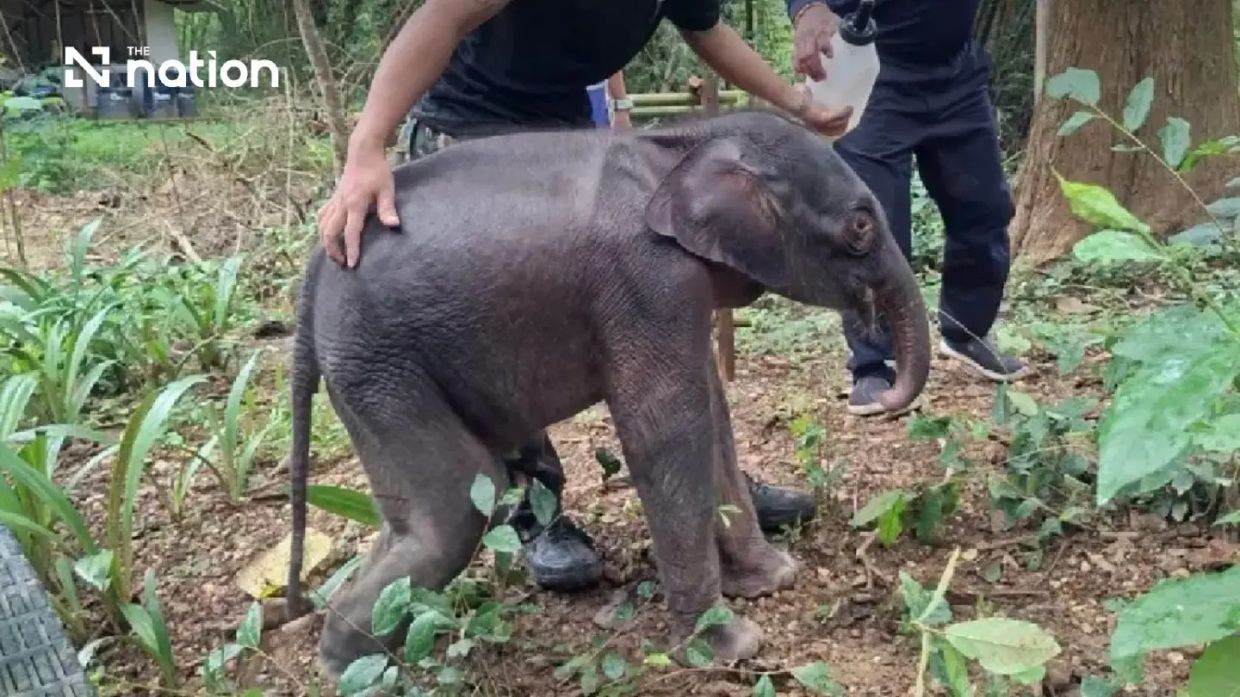
National park officers in Thailand's Kanchanaburi Province have launched an intensive rescue operation to save a critically ill male elephant calf discovered alone and severely weakened on a riverbank in Sai Yok district. The young animal, believed to be no more than two weeks old and weighing approximately 40 kilograms, was found by local residents on the bank of Huai Mae Nam Noi river after apparently becoming separated from its mother and herd. Veterinary teams mobilised by the Department of National Parks, Wildlife and Plant Conservation are now providing round-the-clock care at the national park headquarters, where the calf faces a battle against dehydration, multiple injuries, and potential life-threatening infections.
The discovery came on Thursday, July 30, 2026, when residents of Ban Mae Nam Noi village alerted officers at Sai Yok National Park Protection Unit No. 5 to the presence of a lone elephant calf struggling on the riverbank. Reaching the animal proved extraordinarily challenging—park officers required a boat journey lasting between one and two hours through difficult terrain to access the remote location. When they arrived, they found the calf in a severely distressed state, exhibiting signs of prolonged separation from its mother. The animal appeared to have been stranded for approximately two days, periodically calling out during the night in desperate attempts to locate its herd, but receiving no response. The surrounding geography presented additional dangers: steep terrain confined the calf to just 1.5 metres of accessible space, with the river immediately adjacent and water levels rising due to heavy rainfall in the preceding days.
The calf's physical condition upon initial inspection revealed a catalogue of medical concerns that demanded immediate intervention. Veterinary teams from Protected Areas Regional Office 3, despatched on Friday, July 31, identified the animal as severely dehydrated with multiple injuries across its body. Most alarming were extensive mouth ulcers—one measuring approximately the size of a Thai 10-baht coin—that prevented the distressed animal from feeding properly. The calf exhibited abrasions and blistering wounds on its trunk with areas of dead tissue visible, though veterinarians noted the absence of infection markers such as pus or fly eggs at this stage. A wound at the navel compounded concerns about potential infection, whilst the animal's eyes were compromised by conjunctivitis caused by bee-like insects that had gathered around them. The calf's dark yellowish-red urine suggested either active infection or severe dehydration stemming from prolonged water deprivation and malnutrition.
Beyond the immediately visible injuries, the calf's overall metabolic state raised serious alarm bells among attending veterinarians. The animal drank very little milk due to pain from the mouth ulcers, creating a vicious cycle of malnutrition and weakening immunity during its most vulnerable developmental period. Loose stools with an unpleasant, sour odour indicated gastrointestinal distress, potentially resulting from drinking contaminated water or consuming unsuitable vegetation as it desperately sought nourishment. Prior to rescue, observers noted the calf attempting to draw sustenance from tree roots and stones—clear evidence of extreme hunger and maternal separation lasting days. The combination of dehydration, malnutrition, multiple traumatic injuries, and gastrointestinal dysfunction created a medical emergency that demanded specialist treatment impossible to provide in the field.
The rescue operation itself demonstrated the extraordinary commitment of Thailand's conservation personnel working under genuinely dangerous conditions. Heavy rainfall had raised water levels substantially, creating risks of flash flooding that endangered both the stranded calf and the rescue teams attempting to reach it. Boat journeys remained perilous, with officers navigating strong currents through terrain inaccessible by conventional means. The Thai Natural Resources and Environment Minister Suchart Chomklin formally acknowledged the exceptional efforts of rescue personnel, explicitly commending their willingness to endure harsh weather and treacherous river conditions to extract the suffering animal. His public statements reflected understanding that successful rescue required not merely technical veterinary knowledge but sustained physical and emotional commitment from officers working in genuinely testing circumstances.
The ministry's response demonstrated institutional commitment to elephant welfare, with Suchart issuing urgent directives for the Department of National Parks to mobilise specialist veterinary teams for intensive oversight of the calf's treatment. Such action matters considerably within Southeast Asian conservation contexts, where government support directly determines whether rescue animals receive adequate specialist care or simply face prolonged suffering. The appointment of specialist veterinarians to oversee every stage of treatment represented an official acknowledgement that this particular rescue required more than routine park-level veterinary attention. By Thursday morning's first assessment through Friday's more detailed veterinary evaluation, a clear trajectory emerged: without intensive intervention, the calf faced grave risk of mortality within days.
The medical complexity of the calf's condition extends beyond immediately visible injuries to include potential exposure to infectious diseases that prove particularly dangerous for separated young elephants. Testing protocols for elephant endotheliotropic herpesvirus (EEHV) became essential components of the treatment regime, as this pathogen causes acute, often fatal disease in young elephants lacking maternal antibody protection. Separation from the mother at such an extremely young age deprives the calf not only of milk nutrition but also of critical maternal immunological support that protects against endemic pathogens. The stress of isolation, hunger, injury, and exposure compounds immunosuppression, rendering the animal vulnerable to secondary infections that may prove more dangerous than primary injuries. Park veterinarians must therefore monitor for signs of viral infection whilst simultaneously treating traumatic wounds and gastrointestinal complications—a multifaceted medical challenge.
The circumstances of the separation itself—likely involving a river crossing during elevated water levels caused by heavy rainfall—illustrate how environmental factors increasingly threaten elephant populations across Southeast Asia. Climate change brings intensified rainfall events that swell rivers beyond their normal parameters, creating dangerous crossing conditions even for adult elephants. Young calves, particularly those newly weaned or not yet fully capable swimmers, face elevated drowning and separation risks during such episodes. The calf in this instance probably remained behind after its mother and herd successfully crossed swollen waters, becoming stranded as the herd moved deeper into forest seeking calmer crossing points. This scenario reflects broader challenges facing elephant conservation: as human infrastructure fragments habitats and climate volatility increases, wild elephants face mounting difficulties in traditional migration and movement patterns.
The successful rescue of this calf represents a significant commitment from Thai authorities, but the animal remains far from recovery. The intensive care regime now underway at park headquarters aims not merely at immediate survival but at enabling sufficient healing to eventually return the animal to wild elephant society. However, the psychological trauma of prolonged maternal separation at such a critical developmental stage raises questions about the calf's long-term welfare and integration prospects. Even if the physical injuries heal, the animal faces potential behavioural complications stemming from early-life trauma. Conservation specialists increasingly recognise that successful elephant rescue requires not merely veterinary medicine but sustained psychological care and eventually, careful reintegration programmes if wild living remains possible.
For Malaysian observers, this incident carries particular relevance given Malaysia's own endangered elephant populations and ongoing conservation challenges. Both Thailand and Malaysia share responsibility for Asian elephant welfare within their territories, and cross-border conservation cooperation remains essential. The Thai rescue operation demonstrates the resource commitment and expertise required for successful wildlife emergency response. Malaysian authorities managing the country's increasingly fragmented elephant populations might draw lessons regarding rapid mobilisation protocols, specialist veterinary capacity building, and interagency coordination during wildlife crises. The Kanchanaburi calf's struggle ultimately reflects continental challenges facing all Southeast Asian elephant populations as habitat loss, climate change, and human encroachment create mounting pressures on these iconic species.

