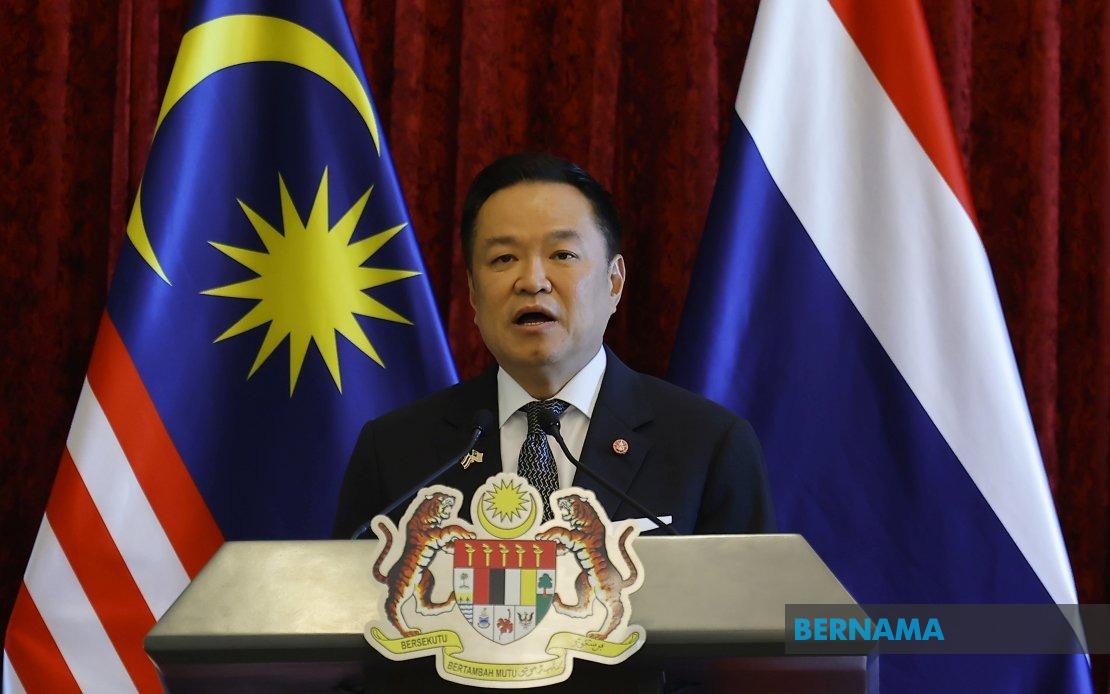
Thailand's Prime Minister Anutin Charnvirakul has publicly backed Malaysia's Datuk Seri Anwar Ibrahim in the closely watched Johor state election, offering his personal support as the two leaders concluded discussions in Putrajaya. At a joint press conference marking the end of their meeting, Anutin conveyed warm wishes for the upcoming ballot, underscoring the friendly rapport between the two neighbouring nations' leadership.
The timing of Anutin's visit carries particular significance given that Johor voters will head to the polls this Saturday in what promises to be a pivotal contest. The 16th state election will determine control of the southeastern peninsula's political future, with 172 candidates competing across 56 state assembly seats. The scale of the contest underscores the stakes involved, as the outcomes could reshape both Johor's administration and broader Malaysian federal political dynamics.
Anwar's Pakatan Harapan coalition has committed fully to the Johor race, fielding candidates in all 56 constituencies. The slate represents a carefully curated mix of established political figures and emerging talent drawn from the coalition's three main components—PKR, the Democratic Action Party, and Amanah. This balanced approach reflects the strategic importance of the contest and the coalition's determination to consolidate its position in a state with significant economic and demographic weight.
The personal warmth evident between the two prime ministers suggests deepening ties between Malaysia and Thailand at the leadership level. Anwar characterised their exchange as reminiscent of a conversation between longstanding friends rather than formal diplomatic engagement, highlighting the comfort and ease with which the leaders interact. His remarks suggest that bilateral relations have evolved beyond ceremonial protocol into substantive, genuine rapport.
Anutin's visit represents his first journey to Malaysia since his reappointment as Thailand's Prime Minister in March 2026, marking a return to Malaysia for significant engagement at the highest levels. The fact that Anwar specifically invited him underscores both Malaysia's interest in reinforcing Thai ties and Anutin's importance as a regional political actor. Such invitations carry implicit messages about priority relationships and diplomatic alignment.
Beyond the electoral context, the official visit is framed around strengthening bilateral cooperation between the two neighbouring countries. The Thai premier and Malaysian Prime Minister explored various areas of mutual interest during their discussions, though specific outcomes and agreements were not detailed at the press conference. Such visits typically address trade matters, security cooperation, and regional policy coordination—issues of considerable importance given the two nations' geographic proximity and interconnected interests.
For Malaysian observers, Anutin's endorsement carries weight precisely because Thailand is not directly involved in domestic Malaysian politics. A foreign leader's public expression of support, while diplomatically carefully worded, implicitly validates Anwar's government and coalition approach. This international dimension can influence perceptions among both political elites and ordinary voters regarding the legitimacy and standing of Malaysia's current administration.
The Johor election itself has attracted considerable attention as a barometer of electoral trends following the 2022 general election. The state's political leanings have shifted considerably in recent years, making this contest a genuine competitive race rather than a predetermined outcome. Both ruling and opposition camps view Johor as critical territory, with implications for federal-level calculations and the durability of existing coalitions.
Anwar's characterisation of the meeting as relaxing and comfortable also carries subtle political messaging. By emphasising ease and friendship, he projects an image of confident leadership unburdened by diplomatic tension or regional strain. This framing contrasts with any narrative of Malaysian political instability or external pressure, instead positioning the government as respected and engaged on equal terms with neighbouring leadership.
The broader context of Malaysia-Thailand relations has evolved considerably over recent years, encompassing joint efforts on maritime security, economic integration through regional frameworks, and people-to-people exchange. Anutin's visit provides an opportunity to reinforce these connections and potentially advance new areas of cooperation. For Southeast Asian readers, closer Malaysia-Thailand coordination carries implications for regional stability and the effectiveness of ASEAN as a collective body.
Looking ahead to Saturday's polling, the Johor election will test whether Anwar's Pakatan Harapan coalition can maintain or expand its current position. The result will provide significant data points regarding the coalition's strength outside its traditional strongholds and its capacity to compete across diverse demographic and geographic terrain. Victory would strengthen Anwar's hand in managing coalition dynamics and pursuing his policy agenda at the federal level.
The international dimension added by Anutin's visit and public backing demonstrates how even state-level elections in Malaysia can intersect with regional diplomacy. By visiting at this juncture and expressing support for Anwar's electoral prospects, Thailand's premier has signalled his government's interest in the stability and continuity of Malaysia's current political trajectory. Such gestures, though conducted through diplomatic niceties, reflect deeper calculations about regional order and bilateral relationships.

