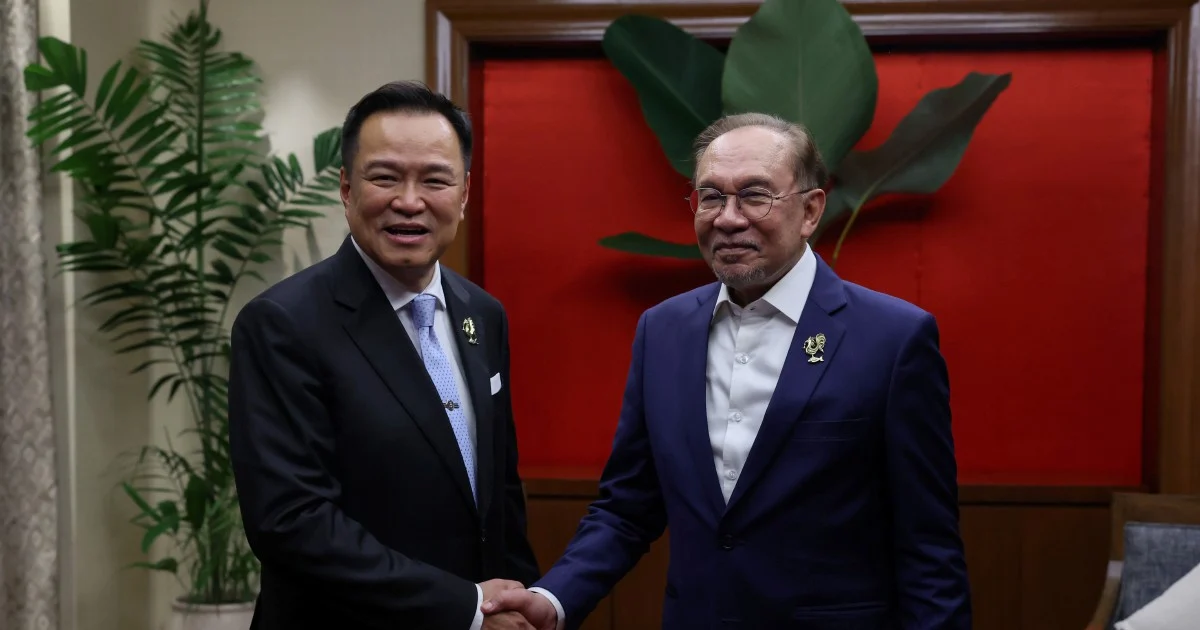
Thai Prime Minister Anutin Charnvirakul is scheduled to arrive in Malaysia on July 9 for a two-day official visit that will see him meet with Prime Minister Datuk Seri Anwar Ibrahim to address pressing regional concerns. The bilateral engagement reflects the deepening diplomatic ties between Bangkok and Kuala Lumpur, two major Southeast Asian economies with intertwined interests spanning security, commerce, and regional stability.
Border security is poised to dominate the high-level discussions between the two leaders, reflecting longstanding challenges that affect communities on both sides of the Thailand-Malaysia frontier. The porous nature of this border has made it a corridor for transnational crime, human trafficking, and smuggling operations that destabilise both nations. Recent years have seen intensified cooperation between Thai and Malaysian security forces, yet coordination gaps and resource constraints continue to hamper efforts to fully seal the boundary against illicit activities. The visit provides an opportune moment for senior officials to review the effectiveness of existing security protocols and explore mechanisms to strengthen intelligence sharing and joint operations.
The Malaysian southern region, particularly Kedah and Perlis, shares extensive land borders with Thailand's northern provinces. These areas have experienced intermittent security incidents ranging from narcotics trafficking to cross-border disputes, making any discussion between top leadership significant for residents whose livelihoods depend on stable regional conditions. Anutin's visit signals Thai willingness to address mutual vulnerabilities that extend beyond bilateral concerns to affect the broader security architecture of Southeast Asia.
Economic cooperation will occupy equally important space in the talks, as both nations seek to capitalise on the opportunities presented by their geographic proximity and complementary economic strengths. Malaysia and Thailand are major players in regional trade networks, and enhancing bilateral commerce could yield significant benefits for both. Potential areas of collaboration include manufacturing, agricultural products, and digital services—sectors where both countries possess competitive advantages. The discussions may also address investment flows, with Thai businesses eyeing Malaysian markets and vice versa, particularly in infrastructure and technology sectors that align with both nations' development priorities.
The timing of this visit reflects the evolving regional dynamics in Southeast Asia, where countries are simultaneously managing great power competition while fostering intra-ASEAN cooperation. Thailand and Malaysia share membership in the Association of Southeast Asian Nations, and their bilateral relationship serves as a microcosm of the broader regional integration project. Strengthening bilateral ties helps both nations navigate external pressures while building the economic resilience necessary for sustainable growth in an increasingly competitive global environment.
Anwar Ibrahim's administration has emphasised deeper engagement with immediate neighbours as part of its foreign policy framework. The Malaysian Prime Minister has positioned economic pragmatism and regional stability as cornerstones of his diplomatic approach, making a visit from a fellow ASEAN peer leader particularly significant. Anutin's trip will provide both sides with a formal platform to reset any previous tensions and chart a course for enhanced cooperation across multiple domains.
The visit also comes at a time when Southeast Asian nations face common challenges including pandemic recovery, inflation, and supply chain disruptions. Bilateral dialogue between Malaysia and Thailand can yield collaborative solutions that benefit both economies and potentially establish models that other ASEAN members might adopt. Trade facilitation measures, including streamlined customs procedures and enhanced transport linkages, could accelerate commerce across the border while maintaining security standards.
Security arrangements for the visit will themselves be noteworthy, as hosting a Thai Prime Minister requires coordination between Malaysian defence and intelligence agencies to ensure smooth proceedings. The logistics of such visits often involve detailed discussions about protocol, security protocols, and media arrangements that, while procedural, underscore the importance both governments attach to the engagement.
Looking ahead, this visit may establish the groundwork for expanded people-to-people exchanges, cultural initiatives, and academic collaborations that have historically strengthened the bonds between Thai and Malaysian societies. Educational partnerships and tourism promotion could inject dynamism into bilateral relations beyond the formal governmental sphere, creating constituencies within both nations with vested interests in continued friendship.
The substantive outcomes of Anutin's visit remain to be detailed, but observers anticipate a joint statement reaffirming bilateral commitment and possibly announcing new initiatives in security cooperation or trade facilitation. Whether these talks yield concrete mechanisms to address trafficking networks or new frameworks for investment promotion will determine the visit's impact on the ground. For Malaysian citizens in border regions and businesses engaged in cross-border commerce, the success of these talks carries tangible implications for their security and economic prospects.

