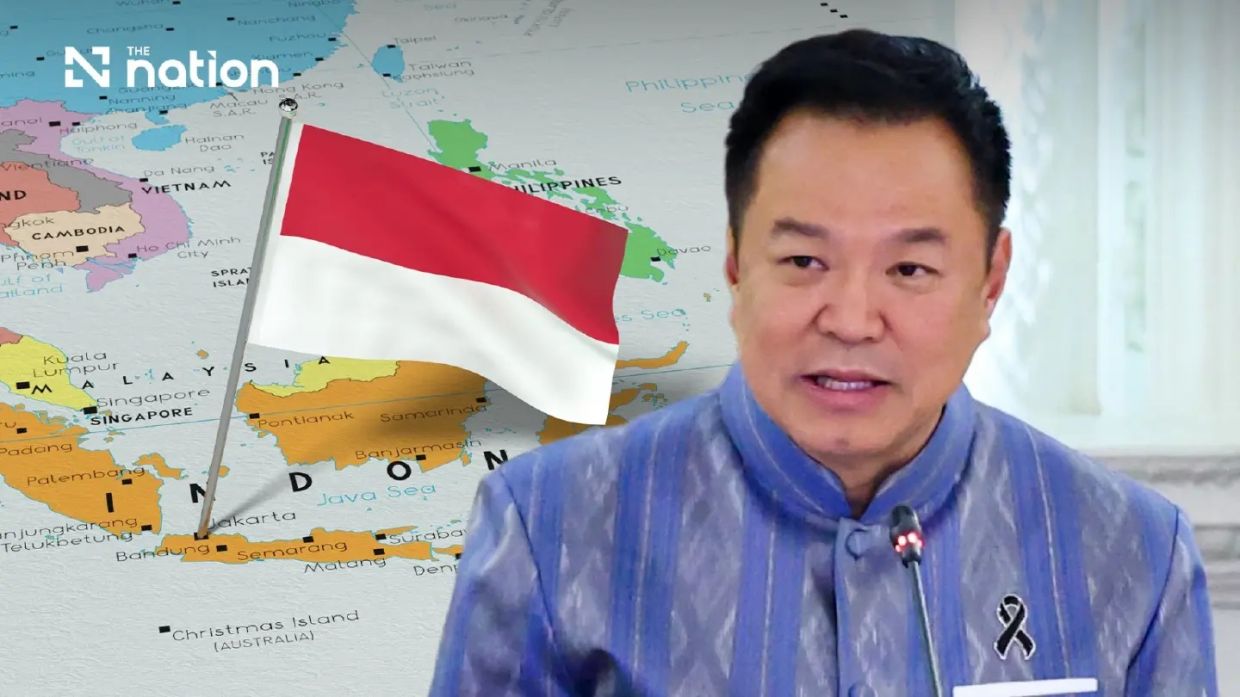
Prime Minister Anutin Charnvirakul is set to visit Indonesia on August 3–4 in what Bangkok describes as the first official visit by a Thai prime minister to the archipelago in 15 years. The trip marks a significant diplomatic moment as Thailand seeks to deepen its relationship with Southeast Asia's largest and most populous nation, a country with around 280 million people and an economy that anchors the entire Asean region.
Anutin's agenda in Jakarta will centre on substantive talks with Indonesian President Prabowo Subianto covering an expansive range of policy areas. Beyond the ceremonial aspects of such visits, the two leaders plan to explore concrete opportunities in trade, investment, tourism, security cooperation, food security, energy development, educational exchanges and business-to-business partnerships. This breadth of topics reflects Bangkok's ambition to transform bilateral goodwill into tangible economic outcomes that benefit Thai citizens and businesses across sectors.
A key component of the visit involves Anutin delivering a foreign-policy address at the Asean Secretariat headquarters in Jakarta. This platform will allow him to articulate Thailand's regional vision and priorities while simultaneously signalling Bangkok's readiness to assume the Asean chairmanship in 2028. Such addresses are carefully crafted diplomatic moments that allow member states to set the tone for their regional leadership and demonstrate strategic thinking on major continental challenges.
Government Spokesperson Rachada Dhnadirek has framed the visit as part of a broader strategy to translate diplomatic relationships into practical benefits. She emphasised that Indonesia's size and economic significance make it an indispensable partner for Thai commerce and investment. With its massive consumer market and resource wealth, Indonesia represents an frontier for Thai businesses seeking to expand beyond their home market, particularly as regional competition intensifies and Thai companies face pressure to internationalise.
The economic dimension of this engagement cannot be overstated for Malaysian and Southeast Asian observers. Closer Thailand-Indonesia ties can generate ripple effects across the region's supply chains, logistics networks and trade corridors. Thai companies, from large conglomerates to small and medium-sized enterprises, see Indonesia as a crucial expansion opportunity. Similarly, Bangkok hopes to create pathways for Thai agricultural products, processed foods and services to penetrate the Indonesian market more deeply, creating employment and foreign exchange earnings at home.
Rachada articulated a notably modern approach to foreign policy, one that explicitly links diplomatic engagement to economic prosperity and improved living standards. Rather than treating international relations as a separate domain, Bangkok is positioning foreign policy as a direct instrument for job creation, technology transfer and income generation. This reflects a pragmatic recognition that in an era of economic uncertainty and global competition, diplomatic success must ultimately deliver material benefits to ordinary Thais.
The visit also provides both leaders with an opportunity to discuss Asean's collective challenges and strategic direction. As founding members of the regional bloc, Thailand and Indonesia both understand their responsibility in maintaining Asean unity while navigating geopolitical shifts, transnational security threats and economic transformation. The talks will likely touch on how the organisation can preserve Southeast Asia's strategic autonomy amid great-power competition and ensure the region remains an economic opportunity zone rather than a theatre of conflict.
Sustainable development, food security and energy cooperation emerge as particularly significant themes. These are not merely diplomatic talking points but pressing regional concerns. Food security is a critical vulnerability across Southeast Asia, while energy cooperation can help stabilise prices and ensure supply reliability. Knowledge and technology exchanges in these complementary areas can benefit both nations and demonstrate how bilateral cooperation advances broader regional interests.
The business forum organised jointly by the Thai Chamber of Commerce in Indonesia and Indonesia's KADIN chamber represents the practical manifestation of this diplomatic engagement. By creating structured platforms for companies from both nations to meet and identify collaboration opportunities, Bangkok is ensuring the visit produces concrete commercial outcomes beyond government-to-government agreements. Such forums can unlock investment flows and supply-chain partnerships that might otherwise remain undiscovered.
Anutin's itinerary also includes meetings with Indonesian private-sector representatives, underscoring the government's recognition that sustained economic growth depends on business community engagement. Thai companies need direct access to Indonesian partners, and Indonesian businesses benefit from exposure to Thai expertise and investment. These meetings can catalyse long-term commercial relationships that transcend political cycles.
Thailand's anticipated 2028 Asean chairmanship provides crucial context for this visit's significance. As a chair-designate, Thailand has incentive to build strong relationships with major members and demonstrate capacity for regional leadership. The chairmanship offers Bangkok an opportunity to shape Asean's agenda on matters ranging from connectivity and economic integration to security cooperation and sustainable development. Indonesia's support and cooperation during Thailand's tenure will be essential for achieving meaningful outcomes.
For Malaysian readers and broader Southeast Asian observers, this diplomatic development carries important implications. Thailand-Indonesia coordination strengthens the Asean core and can advance shared interests in maintaining regional stability, deepening economic integration and managing external pressures. Closer ties between two major economies can also create gravitational pull affecting trade patterns, investment flows and strategic alignments across the broader region.
Rachada's framing of this visit as reflecting a foreign-policy approach centred on strategic partnerships and economic negotiating leverage speaks to a wider regional reality. In an era of heightened global competition, shifting supply chains and geopolitical uncertainty, Southeast Asian states must maximise their diplomatic and economic leverage through strong regional relationships. Thailand's engagement with Indonesia exemplifies this emerging approach to statecraft.

