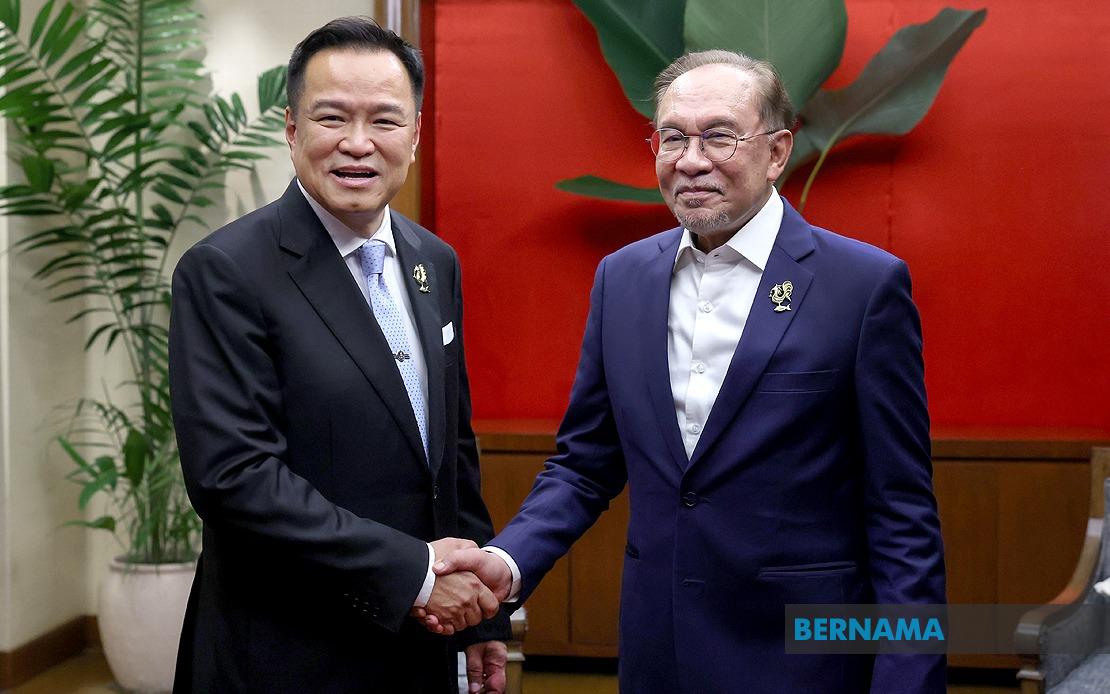
Thai Prime Minister Anutin Charnvirakul will undertake a two-day official visit to Malaysia beginning July 9, strategically timed to precede the inauguration of a newly constructed permanent border checkpoint at Sadao scheduled for July 11. The timing underscores both nations' determination to strengthen bilateral economic ties and underscore their commitment to deepening regional cooperation as they prepare to mark seven decades of diplomatic relations in 2027.
Anutin's journey comes at the formal invitation of Malaysian Prime Minister Datuk Seri Anwar Ibrahim, with government spokesperson Ratchada Thanadirek characterizing the visit as evidence of the two countries' shared vision for advancing cooperation and delivering tangible results in their ongoing partnership. The trip marks Anutin's third visit to Malaysia since he took office as prime minister, following his attendance at the ASEAN Summit and Related Summits in Kuala Lumpur last October and a subsequent official visit in late November.
The newly operational Sadao checkpoint represents a significant infrastructure upgrade designed to replace the existing border crossing, with Thailand's Cabinet formally approving its opening on Tuesday. Situated in Songkhla province, the state-of-the-art facility will be directly connected to Malaysia's Bukit Kayu Hitam checkpoint in Kedah, creating a more efficient corridor for bilateral commerce and travel. Operating hours of 5 am to 11 pm Thailand time will accommodate the daily rhythms of cross-border commerce and tourism, established under Ministry of Interior notification.
Beyond the checkpoint itself, Thai authorities have committed to comprehensive infrastructure development on their side of the border. The Cabinet has directed relevant agencies to accelerate supporting projects, including the construction of improved connecting roads designed to optimize traffic distribution and reduce bottlenecks around the checkpoint area. Additionally, government bodies have been tasked with establishing shuttle bus services that will link the new checkpoint with inland Thai communities, facilitating smoother movement for residents and commercial operators unfamiliar with the new crossing procedures.
Public communication will play a crucial role in the checkpoint's success. Authorities have received instructions to intensify awareness campaigns targeting both Thai and Malaysian communities, particularly focusing on the new traffic routes, customs procedures, immigration protocols, and measures specifically designed to ease cross-border trade operations and tourism facilitation. Special emphasis will be placed on educating residents of the Dan Nok border area, ensuring that local business owners and communities understand and can adapt to the new procedures and opportunities.
The new Sadao Customs, Immigration and Quarantine Complex represents the physical manifestation of bilateral commitment to reducing bureaucratic friction. By consolidating these three critical functions into a single modern facility, both countries hope to dramatically improve the speed and efficiency with which goods and travellers move across the border. This efficiency gain carries significant implications for supply chain operations throughout Southeast Asia, as the Thailand-Malaysia corridor serves as a crucial node connecting the broader regional trade network.
From a Malaysian perspective, this development addresses longstanding concerns about border crossing efficiency along the northern frontier. Businesses operating across the boundary have frequently cited delays and congestion as impediments to trade competitiveness, particularly for time-sensitive goods and perishable products. The modernized checkpoint promises to reduce these friction points, potentially allowing manufacturers and traders based in either country to integrate supply chains more seamlessly and respond more rapidly to market demands.
The timing of Anutin's visit is not coincidental—it positions Thai leadership alongside Malaysian counterparts during the inauguration period, sending a powerful signal about the importance both governments attach to this infrastructure project. Such high-level engagement demonstrates that the checkpoint represents far more than a routine administrative facility; it embodies a broader strategic commitment to deepening economic integration between the two nations.
Tourism stands to benefit particularly substantially from the operational improvements. The simplified crossing procedures and extended operating hours should encourage greater leisure travel between Thailand and Malaysia, as well as facilitate the movement of tour groups. For Malaysian tourists visiting southern Thai provinces and Thai visitors heading northward, the enhanced facilities promise a more welcoming and efficient experience, potentially boosting visitor numbers and spending in border regions on both sides.
Investment flows may also accelerate as the checkpoint upgrade reduces the transaction costs associated with conducting business across the border. Manufacturing firms considering regional consolidation strategies will find the improved corridor more attractive, potentially encouraging foreign direct investment decisions that favour integrated Thai-Malaysian operations over other Southeast Asian configurations.
Looking ahead to 2027 and the 70th anniversary of diplomatic relations, this checkpoint opening represents an important symbolic and practical milestone. Rather than merely commemorating past cooperation, the two nations are actively constructing the physical infrastructure that will define their economic relationship for decades to come. For Malaysian readers and businesses engaged in cross-border operations, this development marks a genuine inflection point in the ease and cost-effectiveness of conducting trade and tourism with Thailand.

