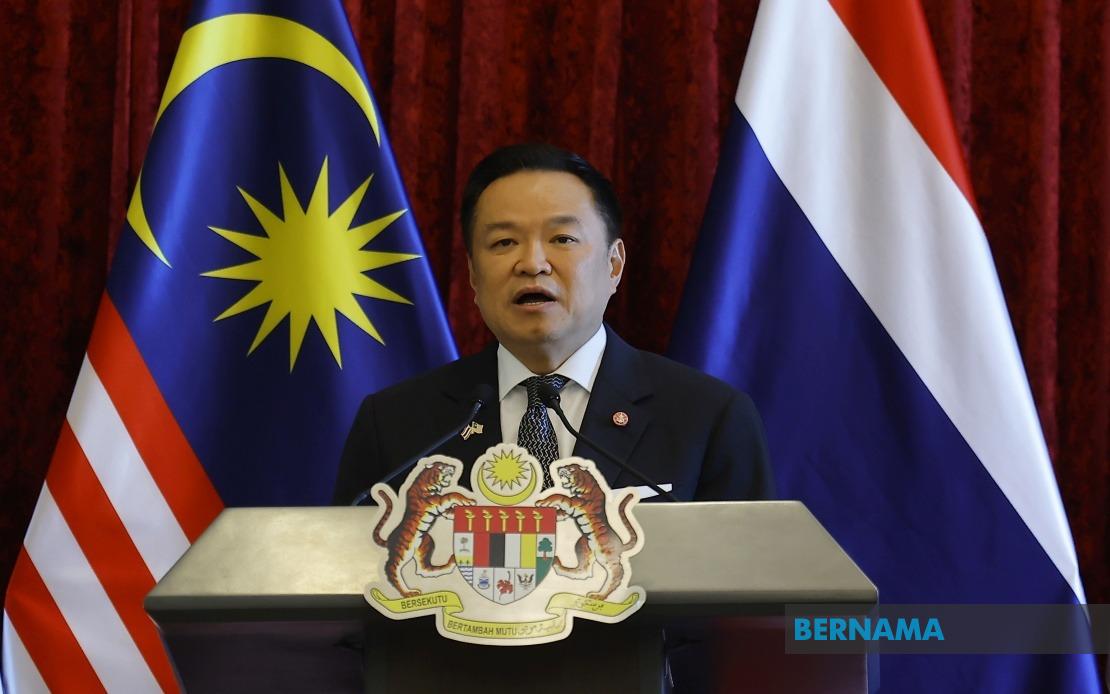
Thai Prime Minister Anutin Charnvirakul has placed the resolution of conflict in Thailand's southern border provinces squarely at the centre of his government's agenda, signalling renewed diplomatic momentum in a region long plagued by violence. Speaking alongside Malaysian Prime Minister Datuk Seri Anwar Ibrahim in Putrajaya on Thursday, Anutin underscored the interconnection between security and economic progress, framing peace as a prerequisite for the development that borderland communities desperately need.
The Thai leader's comments came as the two nations reaffirmed their commitment to sustained bilateral cooperation on security matters affecting the frontier. For Malaysian policymakers and observers of regional stability, the statement carries particular weight given Kuala Lumpur's expanding involvement in mediating one of Southeast Asia's most intractable conflicts. The southern Thai provinces—Yala, Pattani, and Narathiwat—have endured decades of insurgent activity that has claimed thousands of lives and displaced countless civilians, making progress on this front critical for broader regional development.
Anutin's assertion that "peace creates the conditions for development, while development helps build lasting peace" encapsulates a holistic approach to conflict resolution that extends beyond military measures. This philosophy aligns with Malaysia's own experience managing communal tensions and security challenges, positioning the country as a natural intermediary in the dialogue process. The Thai premier's acknowledgment of Malaysia's facilitation role represents explicit recognition that Bangkok cannot resolve this crisis unilaterally and requires external diplomatic support.
Malaysia's involvement in the Southern Thailand Peace Dialogue has evolved significantly in recent months. Leading the Malaysian team is Datuk Mohd Rabin Basir, a seasoned security official appointed as chief facilitator on July 1, 2024, drawing on his experience as former director-general of the National Security Council. His counterpart on the Thai side, Thanat Suwannanont, serves as director of Thailand's National Intelligence Agency (NIA), indicating that both capitals are deploying high-level officials with deep expertise in intelligence and security affairs. This personnel selection suggests serious intent to move negotiations forward with the sophistication and confidentiality such sensitive talks demand.
The dialogue process itself involves complex negotiations between the Thai government and the Barisan Revolusi Nasional (BRN), the principal insurgent group driving the separatist movement in Thailand's predominantly Muslim south. These talks touch on fundamental questions of autonomy, resource distribution, and political representation—issues that have resisted simple solutions for generations. Malaysia's role transcends mere logistics; it involves building trust between parties with profound historical grievances and competing visions for the region's future.
Anutin's comments also reflected appreciation for Malaysia's insistence on accountability for violence. He welcomed Anwar's explicit assurance that Malaysia will not tolerate violent activities on its soil and remains committed to pursuing those responsible through legal channels. This stance is crucial because cross-border dimensions of the conflict have periodically tested bilateral relations, with insurgent groups allegedly using Malaysian territory for sanctuary or logistical purposes. Reaffirming joint determination to address such transgressions helps maintain the political space for peace negotiations to progress.
For Malaysia, deeper involvement in the southern Thailand peace process carries both strategic benefits and diplomatic risks. Successfully mediating a settlement would enhance Kuala Lumpur's standing as a neutral, respected actor in regional conflict resolution while potentially stabilizing a neighbouring territory that affects Malaysian security and economic interests. The southern Thai provinces' proximity to Kedah and Perlis means that instability there directly impacts Malaysian communities and cross-border commerce. Conversely, failure to advance negotiations could strain bilateral relations and embolden those who question Malaysia's ability to influence outcomes.
The economic dimensions of continued conflict in Thailand's south deserve particular attention for Malaysian audiences. The three affected provinces contain significant agricultural and fishing resources, with cross-border trade and investment constrained by security concerns. Economic deprivation in these areas fuels grievances that insurgent movements exploit for recruitment and legitimacy. By pursuing peace, both Thailand and Malaysia aim to unlock development potential that could improve livelihoods and reduce conditions conducive to violent extremism—a regional security threat that transcends borders.
The appointment of experienced intelligence officials to lead negotiations on both sides signals recognition that solving this crisis requires more than political goodwill. Intelligence agencies possess detailed knowledge of armed group structures, financing networks, and battlefield dynamics that can inform realistic negotiating positions. Both Basir and Suwannanont bring credibility within their respective security establishments, potentially facilitating back-channel communications and building confidence between parties.
Looking forward, the success of these peace efforts remains uncertain. Decades of conflict have hardened positions on multiple sides, and grievances run deep. However, the visible commitment from both Bangkok and Kuala Lumpur, coupled with Malaysia's willingness to invest diplomatic capital in facilitation, represents the most concerted recent push toward dialogue. For Malaysian observers, the message is clear: regional stability depends on active engagement with a neighbour's internal conflicts, particularly when those conflicts threaten cross-border security and prosperity.
The coming months will test whether this diplomatic momentum can translate into substantive progress. Both leaders' public endorsements of the dialogue process create political incentives to demonstrate tangible results, even if comprehensive peace remains a distant prospect. For Malaysia's role to bear fruit, sustained commitment from both Bangkok and the various parties to the conflict will be essential, along with international support that acknowledges the complexity of historical grievances while emphasizing the mutual benefits of peace.

