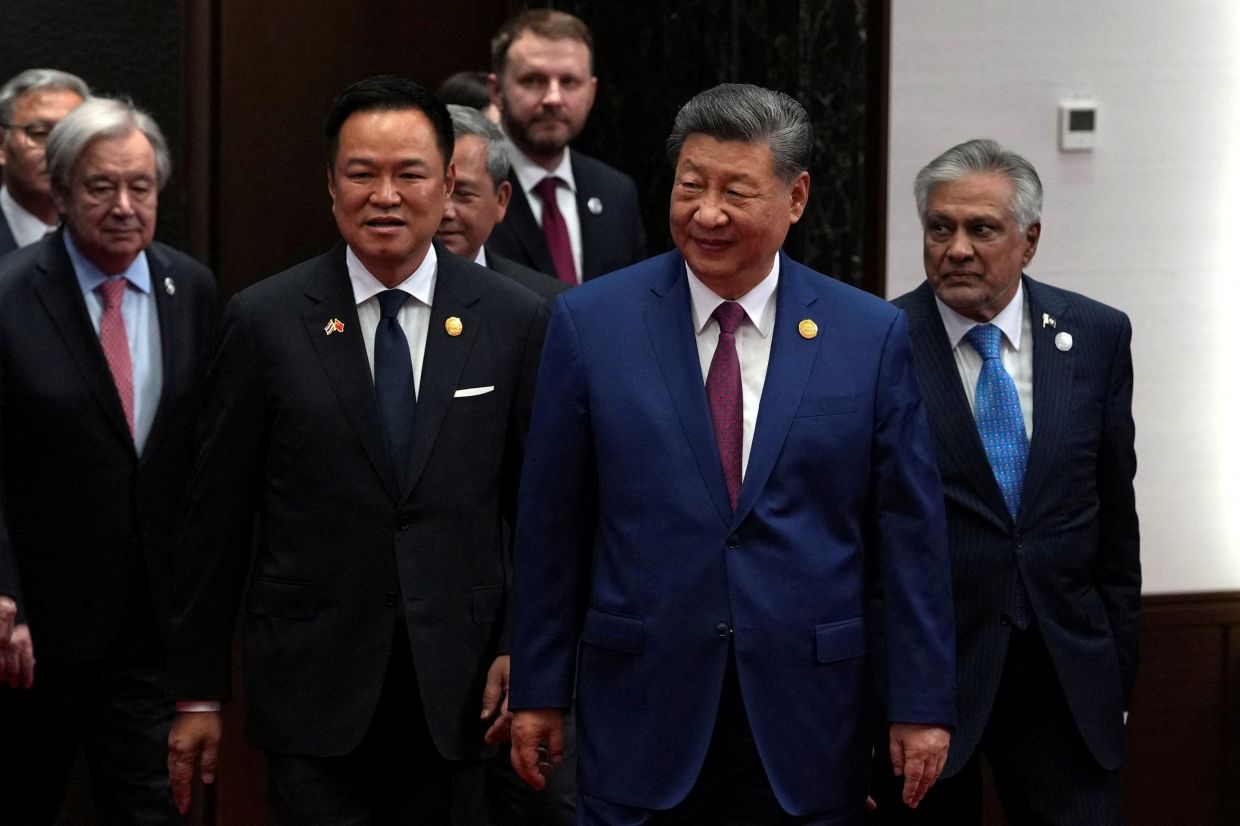
Thai Prime Minister Anutin Charnvirakul has taken his distinctive approach to international relations to new heights, performing a Teresa Teng classic for Chinese Premier Li Qiang during an official lunch in Beijing on Monday. The performance, captured in footage distributed by Anutin's office, showed the Thai leader seated alongside Li at a formal gathering, microphone in hand, while a pianist provided accompaniment. The assembled dignitaries, positioned between Thai and Chinese flags, responded with applause as the prime minister delivered the serenade to his counterpart.
This latest musical gesture exemplifies Anutin's emerging diplomatic toolkit, which blends traditional ceremonial protocol with personal charm and cultural exchange. Unlike the more formal speechmaking that typically characterises high-level bilateral meetings, his performances create informal moments of connection and shared appreciation. The approach has become increasingly prominent in his international engagements, suggesting a calculated effort to distinguish his leadership style on the regional stage.
Just weeks earlier, Anutin demonstrated his musical versatility during a state visit involving Malaysian Prime Minister Anwar Ibrahim, where the two leaders performed a duet of "My Way", the Frank Sinatra classic. In that instance, Anutin switched instruments to the saxophone while his Malaysian counterpart took the vocal lead, creating a collaborative moment that was heavily publicised in both countries. The performance symbolised not merely a diplomatic courtesy but an attempt to humanise relations between neighbouring nations and their respective governments.
During a recent visit to Hanoi, Anutin extended his cultural outreach to Vietnam by performing alongside local musicians using traditional Vietnamese instruments. His appearance alongside Prime Minister Le Minh Hung reinforced a pattern of engagement that prioritises personal rapport and cultural immersion over conventional diplomatic formalities. These performances underscore Anutin's willingness to participate actively in the cultural contexts of countries he visits, a gesture that often resonates favourably with host populations and their leaderships.
Anutin's musical inclinations are genuine rather than purely performative. The Thai premier is an accomplished hobbyist pilot and proficient musician with credentials on multiple instruments including piano and the traditional Thai flute. This authentic background lends credibility to his performances and distinguishes them from mere theatre. His musical abilities have long been part of his personal brand, and he has now successfully integrated them into his diplomatic practice since assuming office in September.
The timing of this musical diplomacy is strategically significant for Thailand's international positioning. Anutin's coalition government secured electoral validation in February after taking power through earlier mechanisms, and he faces the task of consolidating both domestic support and regional relationships. His unconventional style serves multiple purposes: it softens Thailand's diplomatic image following years of domestic political turbulence, it creates memorable personal connections with counterparts in strategically important nations, and it projects an image of modernity tempered with cultural rootedness.
Thailand's conservative political establishment has historically emphasised respect for national traditions and social hierarchy. Anutin, despite his unconventional personal flourishes, is notably aligned with Thailand's traditional institutional order, a positioning that has earned him considerable support among conservative constituencies. His background as scion of a major construction dynasty provides him with significant economic and social standing, yet he cultivates an image of accessibility and connection to ordinary Thai citizens. This balance between establishment credentials and populist appeal characterises much of his political strategy.
Recently, Anutin has expanded his musical collaborations to include a Thai teenager who achieved international recognition through a performance on the television programme America's Got Talent. By associating himself with youthful talent and viral media phenomena, he further demonstrates an ability to connect across generational and cultural boundaries. These engagements with contemporary entertainment figures complement his performances with fellow heads of state, creating a more comprehensive cultural narrative around his leadership.
From a Southeast Asian perspective, Anutin's approach reflects a broader shift toward personal diplomacy and soft power projection in the region. Nations increasingly recognise that building durable international relationships requires more than transactional negotiations; they depend on mutual understanding and personal rapport among leaders. Anutin's musical diplomacy, while unconventional, taps into universal human experiences and emotions that transcend language barriers and formal protocol. His performances with leaders from China, Malaysia, and Vietnam signal Thailand's desire to maintain active engagement across its most significant regional relationships.
The implications for Malaysia and other ASEAN neighbours warrant consideration. Thailand's emphasis on cultural exchange and personalised diplomatic engagement may influence how other regional governments approach bilateral relations. If Anutin's unconventional style proves effective in advancing Thai interests and strengthening regional bonds, other leaders may adopt similar strategies. For Malaysia, Anutin's willingness to collaborate musically with Anwar Ibrahim demonstrates confidence in bilateral relations and may signal Thailand's openness to deeper cooperation on shared regional challenges.
Anutin's musical diplomacy also serves defensive purposes for Thailand's image management. Thailand has experienced significant internal political upheaval over the past decade, with multiple constitution changes and governmental transitions affecting its standing in international forums. By emphasising cultural exchange, personal warmth, and artistic collaboration, Anutin attempts to reframe Thailand's international identity away from political instability toward cultural richness and humanitarian connection. This rebranding effort recognises that hard power and formal diplomatic statements carry limited persuasive weight in contemporary international relations.
The sustainability of this diplomatic approach remains to be tested. While performances at high-level bilateral meetings generate favourable publicity and create memorable moments, their long-term impact on substantive policy coordination or strategic alignment requires careful evaluation. Nevertheless, Anutin's consistent deployment of musical performances across multiple countries and settings suggests this is a deliberate, integrated component of his diplomatic strategy rather than isolated gestures. As Thailand navigates complex relationships with major powers including China while maintaining ASEAN centrality, such personalised engagement may prove increasingly valuable in an era where traditional diplomacy faces mounting challenges.

