Thai law-enforcement authorities have widened their crackdown on an alleged international narcotics operation by detaining a married couple in Loei province, following the arrest of a Thai Airways flight attendant at Melbourne Airport. The coordinated police action underscores mounting concerns about Southeast Asia's vulnerability to transnational drug smuggling networks that exploit commercial air routes and exploit ordinary citizens as couriers.
The investigation began when Australian police arrested the flight attendant, identified in Thai media reports as Mina, at Melbourne Airport after discovering approximately one kilogram of heroin concealed in her checked baggage. Thai authorities subsequently launched a comprehensive probe to trace the source of the illicit parcel and identify those responsible for dispatching it across the Pacific. This retroactive investigation proved crucial in uncovering the domestic network supplying contraband to international couriers.
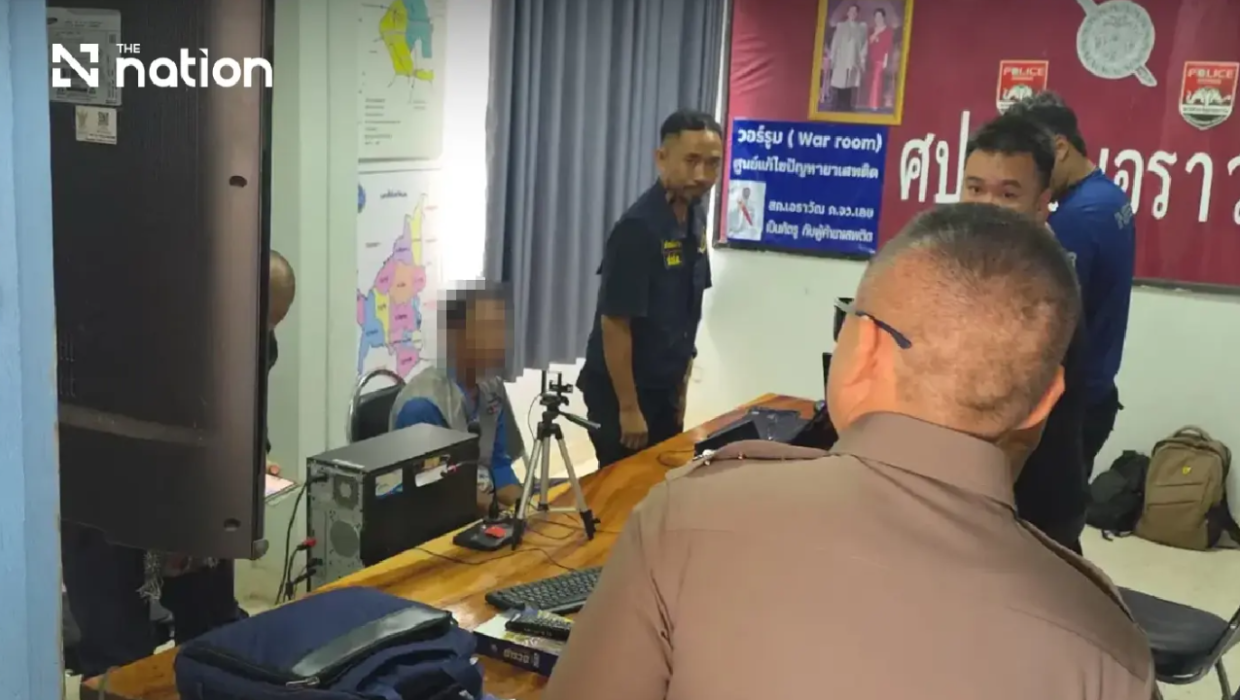
On July 2 at approximately 1pm, officers from Chiang Khan Police Station, working alongside agents from the Office of the Narcotics Control Board (ONCB) and supporting police units, moved to apprehend two individuals linked to addresses in Chiang Khan district. Initial searches of their registered residences in That subdistrict yielded no results, prompting investigators to pursue intelligence suggesting the pair were engaged in agricultural labour nearby. The breakthrough came when officers located Athit, aged 43, working on temple roof repairs at Wat Tham Pha Mak Ho in Sri Songkhram subdistrict of Wang Saphung district. He was transported to Erawan Police Station for interrogation.
During preliminary questioning, Athit allegedly confessed to accepting payment for delivering parcels on six separate occasions, receiving 8,000 baht per shipment from a Laotian national contact. According to police accounts, three parcels originated from Chiang Khan's parcel service outlets, two dispatched from Ban That and one from Erawan district. The final parcel in this series was allegedly sent on June 28, 2026, suggesting the operation had been running continuously until shortly before the Australian arrest. This pattern indicates a well-established courier system rather than opportunistic smuggling.
Thatsaphon, Athit's 42-year-old wife and a Lao national, was subsequently apprehended following the discovery of a black Mitsubishi Triton pickup truck bearing Loei registration plates abandoned in a rubber plantation within the Pha Nang-Pha Koeng area of Erawan district. Her detention marked a significant development, as investigators sought to establish her degree of involvement in the operation. During her initial interview, Thatsaphon denied all knowledge of or participation in the alleged trafficking activities, maintaining her distance from the accusations levelled against her husband.
The case demonstrates the operational sophistication of modern drug networks, which deliberately distribute responsibilities across multiple participants and jurisdictions to insulate higher-level organisers from direct detection. By employing low-wage workers in rural provinces to handle parcel dispatch duties, coordinating with airport workers positioned to place contraband onto international flights, and utilising individuals separated by national borders, these networks create investigative obstacles for individual law-enforcement agencies. The reliance on diverse personnel—from rural residents desperate for income to international transport workers—also makes the networks difficult to penetrate completely.
Both detainees are now undergoing questioning by ONCB investigators, who are working to establish the full scope of the operation and identify upstream suppliers and downstream recipients. Authorities have made clear their intention to pursue charges against anyone involved at any operational level, from street-level courier handlers to those orchestrating transnational shipments. The investigation remains ongoing, with police specifically seeking to identify the ordering parties, financial facilitators, and any additional accomplices who may have supported the alleged trafficking network.
According to ONCB officials, the case represents a textbook example of how transnational drug syndicates compartmentalise operations to evade law enforcement scrutiny. The secretary-general emphasised that successful dismantling of such networks requires sustained international cooperation, noting that coordination between Thai and Australian authorities proved instrumental in tracing the supply chain backwards from the airport seizure to domestic producers and handlers. This cross-border intelligence sharing reflects a growing recognition among Southeast Asian nations that drug trafficking cannot be effectively combated through unilateral action.
The Thai government has pledged to intensify enforcement efforts targeting transnational narcotics operations, with particular emphasis on disrupting the transportation routes and financial mechanisms that enable international drug trafficking. The ONCB has announced plans to strengthen operational partnerships with foreign law-enforcement agencies, coordinate intelligence sharing on smuggling methodologies, and implement enhanced monitoring of commercial transport hubs where couriers typically embed contraband. These measures form part of a broader national drug-suppression policy that Thailand has prioritised amid rising methamphetamine consumption and heroin trafficking from neighbouring countries.
For Malaysian authorities and regional law-enforcement agencies, the Melbourne case carries sobering implications. The ease with which international drug networks recruit couriers from Southeast Asia—offering modest payments to economically marginalised individuals—demonstrates the persistent vulnerability of the region's aviation infrastructure to smuggling operations. Malaysia's position as a major aviation and transshipment hub makes it particularly susceptible to similar exploitation, requiring enhanced screening protocols, intelligence cooperation with international partners, and targeted intervention programmes addressing the economic desperation that renders individuals vulnerable to recruitment by traffickers.

