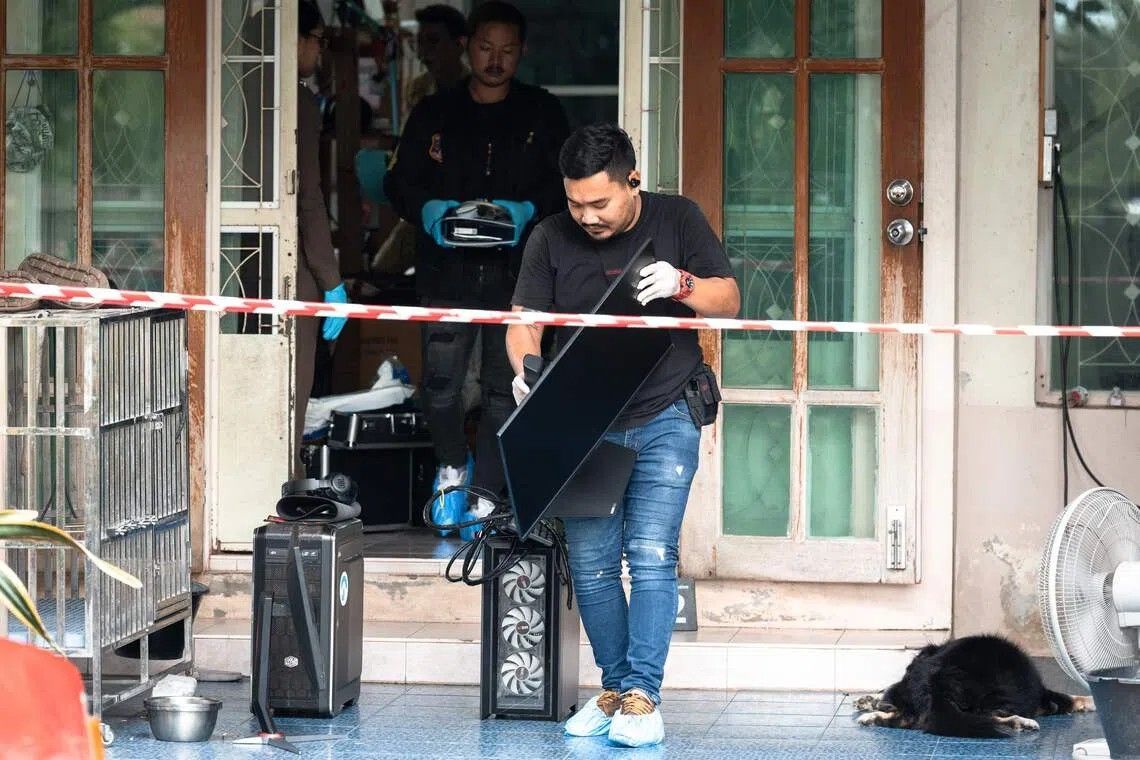
Thai authorities investigating the shooting at Debsirin Nonthaburi School have turned their attention to the digital footprint of a 14-year-old suspect, uncovering searches related to school violence in the United States and evidence of engagement with violent computer games. The probe into the teenager's online behaviour represents a significant avenue in efforts to understand what precipitated the attacks on August 7, as investigators seek to piece together the sequence of events and identify contributing factors to the violence.
Police believe the suspect killed his grandparents at their residence in Bang Khu Rat subdistrict, Bang Bua Thong district, before proceeding to the school where the shooting took place. Forensic teams and officers discovered the bodies at the home following a thorough search of the property. Provincial Police Region 1 Commissioner Wattana Yichin personally oversaw the inspection of the house as part of the widening investigation. The front entrance was locked from outside, suggesting the teenager deliberately secured the property after the deaths before departing for the school.
Investigators examining the suspect's computer have identified searches pertaining to a shooting incident at a United States school, with records indicating this online activity occurred around late July. Alongside these concerning searches, preliminary findings revealed that the teenager had spent considerable time engaged with video games featuring violent content. However, police have exercised caution in their analysis, acknowledging that they have not yet established any direct causal link between the online material and the shooting incidents. The investigation remains broad in scope, with officials exploring multiple possible factors that may have contributed to the violence.
Information gathered from the teenager's uncle has provided investigators with insight into the suspect's daily life and behavioural patterns. According to the relative, the boy had resided with his grandparents since early childhood and was known to spend substantial periods playing computer games rather than engaging in typical social activities. The uncle reported that the teenager was generally withdrawn and solitary in nature, with no apparent disputes or visible indicators of psychological distress prior to the incident. This account challenges any narrative suggesting obvious warning signs that might have alerted family members or authority figures to escalating danger.
The firearm used in the shootings was legally registered to the teenager's grandfather, according to police records. This detail raises questions about access controls and storage procedures for licensed weapons within households where minors are present, though investigators have not yet disclosed details about how the teenager obtained the weapon or whether security measures were in place. The grandfather's legal ownership of the gun does not address how a minor came to possess it on the day of the incident.
Thananyaporn, the 60-year-old sister of the deceased grandfather, has provided family context that complicates simplistic explanations for the violence. She described the household as deeply bonded, with the grandparents dedicating themselves to raising their grandson following his parents' separation. The grandfather, a retired bank manager, and the grandmother, an educator, created what appeared to be a stable, loving environment. Thananyaporn characterised her nephew as quiet, polite, and well-mannered, someone who showed no behavioural red flags despite his withdrawn nature. His daily routine involved attending school with his grandfather's transportation, returning home, and spending his afternoons engaged with video games rather than pursuing typical childhood friendships.
The suspect's isolation from peer groups stands out as a significant social factor in the case. Unlike most teenagers, the boy did not develop friendship circles or participate in extracurricular social activities. Instead, his world largely revolved around his home environment and digital spaces. While such isolationist behaviour does not automatically indicate danger, it does represent a departure from typical adolescent social development and may have contributed to a psychological trajectory that differs substantially from his more socially engaged peers. The combination of isolation, immersion in digital entertainment, and access to concerning online content creates a troubling profile that investigators are working to understand.
Family relationships appear to have been unusually close rather than fractured, which contradicts assumptions that troubled home environments necessarily precede violent outbursts. The grandfather's gentle demeanour and the grandmother's professional background in education suggest caregivers who were attentive and capable. Thananyaporn's insistence that no family disputes preceded the incident suggests that conventional domestic conflict theories may not apply in this case. This makes the investigation more complex, as investigators cannot simply attribute the violence to obvious family dysfunction or neglect.
The police investigation remains focused on establishing a comprehensive timeline of events and identifying any contributing factors, whether psychological, social, or environmental. Officials have explicitly stated they are examining possible difficulties involving the teenager at school, suggesting investigators are exploring peer relationships, academic pressures, or incidents with authority figures that may have transpired beyond his home environment. The examination of his computer activity, particularly the searches dating from late July, indicates a potential escalation in concerning behaviour approximately two weeks before the shooting, though the significance of this timing remains unclear.
The case presents authorities and the broader society with uncomfortable questions about the intersection of adolescent psychology, digital influence, and access to weapons. Unlike countries with strict gun control regimes, Thailand's licensed firearms system permits private ownership under specific conditions, creating scenarios where teenagers in homes with legally registered weapons may pose a risk. The suspect's immersion in violent digital content and his searches about school shootings, combined with his social isolation and access to a legal firearm, created a dangerous combination that resulted in tragedy.
For Southeast Asian observers, the incident underscores ongoing concerns about the psychological impact of violent digital media on youth, particularly those already vulnerable due to social isolation or developmental factors. Thailand's investigation may provide insights into whether digital content serves as a catalyst, reinforcement, or merely incidental factor in youth violence. As police continue their work to establish motive and contributing circumstances, the case remains a tragic reminder of the unpredictability of violence and the difficulty of identifying risk factors before tragedy occurs.
The broader investigation will likely influence policy discussions across the region regarding weapon storage in households with minors, digital literacy and monitoring of concerning online activity, and mental health support for isolated adolescents. Thai authorities face pressure to deliver answers about what drove a teenager from a apparently functional and loving home to commit multiple murders, a question that may ultimately resist simple explanation.

