A tragic incident unfolded in Thailand's Nonthaburi province on Friday morning when a secondary school student allegedly killed his grandparents at home before carrying out a mass shooting at Debsirin Nonthaburi School. The violence left seven people dead, including the suspected attacker, and wounded 15 others, marking one of Thailand's deadliest school shootings in recent memory and raising urgent questions about firearm access and adolescent mental health in the kingdom.
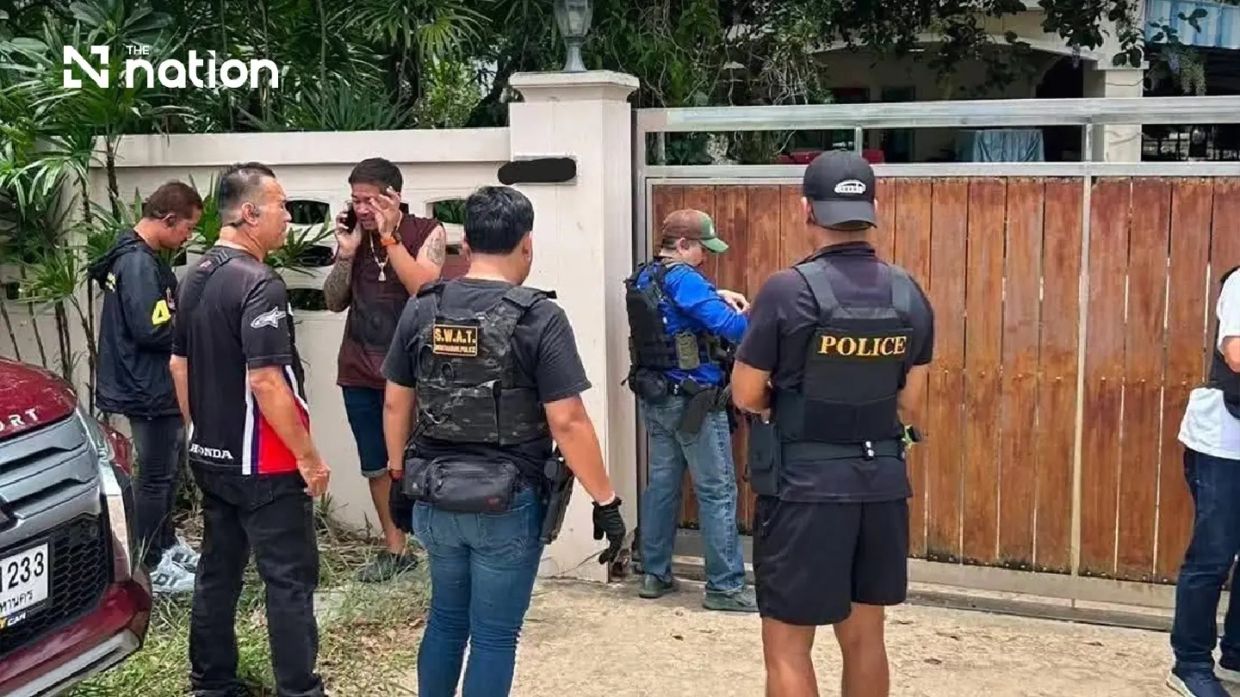
Investigators identified the suspected shooter as a Mathayom 2 student, roughly equivalent to an eighth-grader in Western education systems, who resided with his paternal grandparents in a residential neighbourhood in Bang Bua Thong district. When police responded to reports of gunfire at the school and subsequently investigated the family home in Soi Wat Lat Pla Duk, they discovered the bodies of both grandparents in the residence, indicating they had been killed earlier that morning. Authorities quickly determined that the same firearm used in the school attack had been employed in the fatal shootings at the house, suggesting a premeditated sequence of violence rather than an impulsive act.
The weapon in question was identified as a CZ 9mm handgun that had been legally registered to the suspect's grandfather. This detail has become central to the ongoing investigation, as authorities grapple with understanding how a juvenile managed to access a registered firearm and ammunition without apparent detection. Police have confirmed that initial checks verified the weapon's legitimate registration to a family member, yet the methods by which the adolescent obtained the gun, its storage conditions within the household, and the sourcing of ammunition remain subject to intensive scrutiny.
Royal Thai Police spokesman Pol Lt Gen Trairong Phiwphan stated that officers successfully contained the situation at the school and halted the violence, allowing emergency services to evacuate injured persons and remove deceased individuals from the premises. The police chief ordered comprehensive evidence collection, detailed scene mapping, and a thorough examination of the school grounds. All casualties were transported from the scene, with the wounded receiving medical treatment and the deceased being processed according to legal protocols.
Determining the suspect's motive presents a significant investigative challenge, as preliminary assessments suggest no immediately obvious trigger has been identified. Police acknowledge that establishing causation requires extensive examination of the student's behavioural patterns preceding the attack, his home environment, peer relationships, and broader personal circumstances. The fact that the adolescent lived with elderly relatives rather than parents adds another dimension to the investigation, potentially indicating family arrangements born from earlier difficulties or disruptions.
The sequence of events—first eliminating his grandparents at home, then proceeding to school to commit mass violence—suggests potential escalating psychological distress or crisis that warranted immediate intervention by mental health professionals. The careful planning implied by gaining access to a secured firearm and ammunition indicates this was not merely a spontaneous outburst of adolescent anger but rather a more deliberate act, though the underlying psychological or emotional precipitants remain obscure.
National police chief Pol Gen Kitrat Phanphet recognised the broader psychological impact of the tragedy on the school community by instructing the Police General Hospital's chief medical officer to deploy psychologists and mental-health specialists to the Nonthaburi area. These professionals have been tasked with providing counselling and support to teachers, students, and others directly affected by the shooting, with explicit focus on mitigating immediate trauma and preventing long-term psychological sequelae that frequently follow mass casualty incidents among young people.
This incident raises critical questions about firearm regulation and secure storage requirements within Thai households. Despite the weapon's legitimate registration, the apparent ease with which a secondary school student accessed it highlights potential gaps in how registered firearms are safeguarded within residential settings. Regulators and law enforcement will likely review current protocols for firearm storage, particularly in homes with adolescent residents, to prevent similar tragedies.
For Malaysian and Southeast Asian observers, the Nonthaburi school shooting serves as a sobering reminder that mass violence involving young perpetrators represents a transnational concern affecting the broader region. While mass shootings remain relatively uncommon in Southeast Asia compared to some Western nations, the convergence of adolescent psychological crisis, unsecured firearms, and access to deadly weapons creates dangerous conditions wherever such combinations exist. Schools throughout the region may face renewed pressure to enhance security measures and mental health screening protocols.

