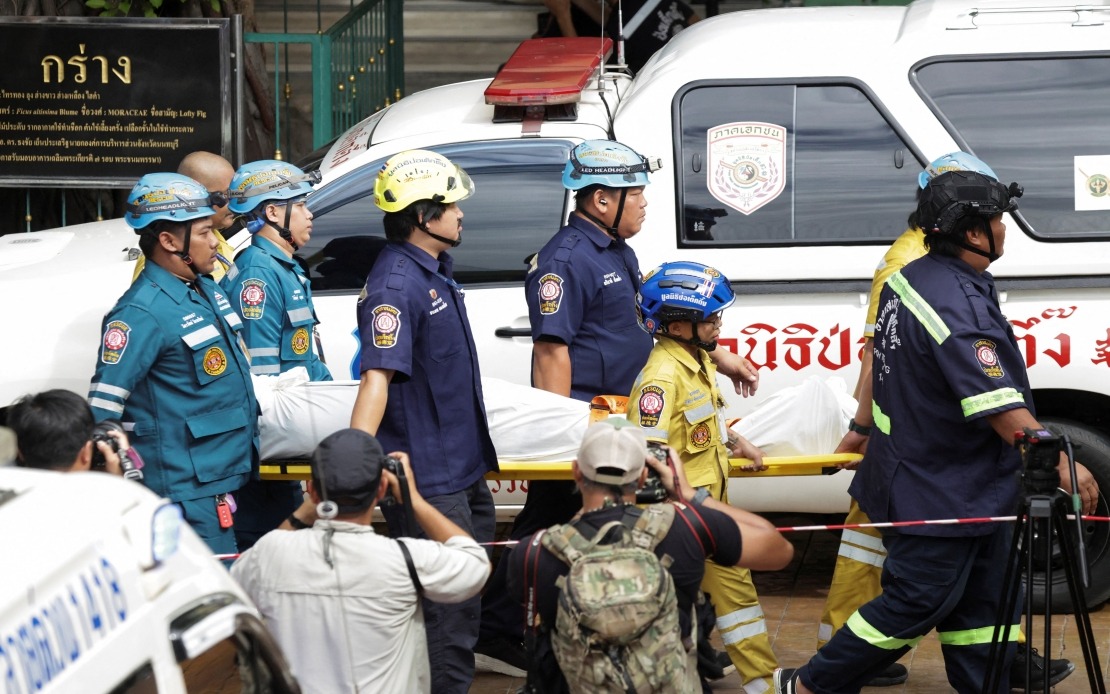
A devastating shooting at a school in Nonthaburi province on Friday has left six people dead and 15 wounded, with preliminary investigations suggesting the suspected gunman first killed his grandparents at their home before launching the attack on Debsirin Nonthaburi School. The incident marks one of Thailand's deadliest school shooting incidents in recent memory, raising urgent questions about firearm access and mental health safeguards in the country.
Lieutenant General Trairong Piwpan, Royal Thai Police Deputy Inspector-General and spokesperson, revealed at the scene on Friday that forensic evidence indicates the suspect had discharged 26 rounds before arriving at the school. This initial volley, investigators believe, was used in the killing of his grandparents at their home in Bang Bua Thong district. The discovery of the bodies came after police executed a search warrant at the residence following the school attack, fundamentally altering the understanding of the incident's scope and brutality.
Autopsy findings confirmed that both the grandfather and grandmother sustained fatal gunshot wounds to the head. While preliminary evidence strongly suggests the suspect killed them before proceeding to the school, authorities have emphasized that the precise sequence of events and exact timing remain under active investigation. This uncertainty underscores the complexity facing Thai law enforcement as they piece together the hours preceding the mass casualty event.
At the school itself, the shooting unfolded around 10 in the morning, resulting in three educator fatalities and three student deaths. The 15 injured individuals included both staff members and pupils, many of whom reportedly witnessed the violence firsthand. Police confirmed that the suspected gunman was found dead at the school, though authorities have not disclosed whether he took his own life or died in an exchange with responding officers.
The investigation uncovered a 9mm handgun recovered outside the magazine, accompanied by 34 additional rounds of ammunition. The presence of substantial ammunition reserves raises serious concerns about how easily the student obtained firearms and munitions. In Thailand, where civilian gun ownership is theoretically restricted compared to some Western nations, the accessibility of lethal weaponry to someone of school age represents a significant security breach with profound implications for national firearm regulation.
Lieutenant General Trairong emphasized that establishing the shooter's motive remains a priority for investigators. Mental health professionals and criminologists will likely examine whether the student exhibited warning signs that were missed by family, educators, or community members. The dual targeting of family members and schoolmates suggests deeply rooted psychological disturbance, though authorities have cautioned against premature conclusions until comprehensive investigation concludes.
The incident reverberates across Southeast Asia, where school safety has become an increasingly pressing concern. Unlike some neighbouring countries where mass shooting incidents remain relatively rare, Thailand's education system now faces renewed scrutiny regarding threat assessment protocols, emergency response procedures, and access controls at educational facilities. The psychological trauma inflicted on surviving students and teachers will likely require extensive mental health support infrastructure.
Parental anxiety throughout Thailand has intensified following the attack, with many families questioning whether schools provide adequate protection from armed perpetrators. Educational administrators face mounting pressure to implement additional security measures, though such interventions must balance protection with the need to maintain welcoming learning environments. The incident has sparked broader societal debate about how Thailand should address the intersection of firearm regulation, mental health services, and institutional safeguarding.
For Malaysian observers, the incident carries particular relevance given comparable demographic profiles and the region's shared challenges in managing gun violence prevention. While Malaysia maintains different firearm laws than Thailand, the tragedy underscores the importance of robust screening mechanisms, secure storage requirements, and warning sign recognition systems. Cross-national examination of the incident may yield insights applicable to school safety protocols throughout the region, particularly regarding identifying at-risk individuals before violence occurs.
The Royal Thai Police have committed to reconstructing a comprehensive timeline of events in the hours before, during, and immediately after the shooting. This forensic and investigative reconstruction will likely inform policy discussions at the highest levels of Thai government regarding firearm accessibility, mental health service integration, and school protection frameworks. Regional security experts anticipate that the findings may influence discussions at ASEAN forums concerning shared approaches to preventing mass casualty incidents in educational settings.

