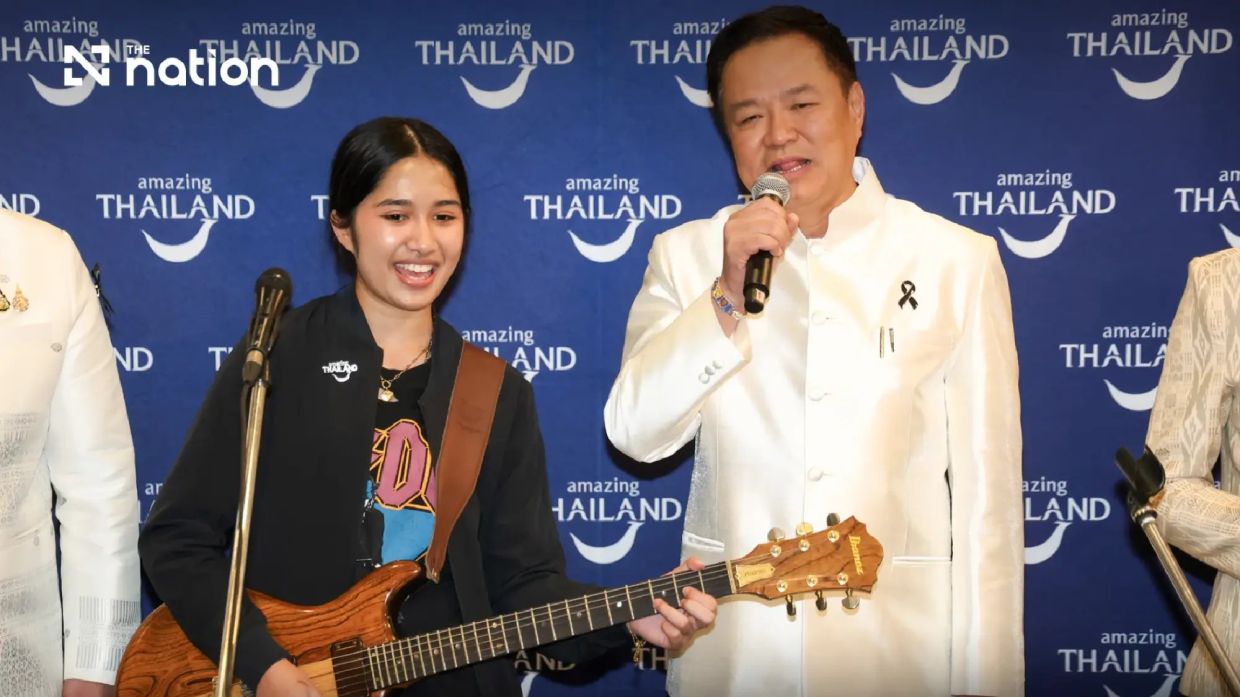
Thailand has embraced the remarkable ascent of Rattikarn Amloy, a 16-year-old guitarist performing under the stage name Nene Royal, whose performances on America's Got Talent have generated unprecedented online engagement and positioned her as a potential asset for the nation's tourism sector. The young musician's electrifying rendition of The Cranberries' Zombie, which showcased her vocal prowess alongside technically sophisticated guitar solos, rapidly accumulated massive viewership across social media platforms. With more than 200 million views across AGT's official digital channels, Nene has outpaced every other act competing in the 2024 season, making her phenomenon virtually unprecedented in the competition's recent history.
The Thai government has responded with tangible enthusiasm to Nene's growing international profile. Prime Minister Anutin Charnvirakul attended one of her performances and subsequently invited her to Government House, where he performed alongside her during a Thai rock composition. This official endorsement signals Bangkok's recognition of Nene's potential value beyond entertainment. Tourism authorities have begun exploring concrete mechanisms to leverage her rising fame, with discussions underway regarding her inclusion in promotional materials for the flagship "Amazing Thailand" brand. The government's engagement reflects a broader understanding that international cultural ambassadors can meaningfully influence travel decisions and destination awareness among global audiences.
The timing of Nene's emergence carries particular significance for Thailand's tourism-dependent economy. The sector, which constitutes one of the nation's primary revenue sources, has faced headwinds in recent years. Through late August, Thailand received approximately 20 million foreign visitors, representing a three percent decline compared to the equivalent period the previous year. More tellingly, annual visitor numbers remain substantially below the pre-pandemic peak of nearly 40 million arrivals recorded in 2019, underscoring the ongoing recovery challenges facing the industry. Against this backdrop, Nene's international visibility offers a timely opportunity to stimulate fresh interest in Thai destinations among younger, globally-connected demographics.
Nene's cultural significance extends beyond conventional tourism marketing because she embodies a contemporary, youth-oriented dimension of Thai identity that contrasts with established promotional narratives. Thailand's international brand has historically emphasized beach resort experiences, street food culture, and Buddhist heritage—all legitimate attractions but potentially limiting in scope. A talented young rock guitarist projects an alternative vision of Thailand as a source of modern artistic talent and creative dynamism, thereby broadening the nation's appeal to international audiences, particularly younger travelers who might not initially consider Thailand as a destination. This cultural repositioning addresses a strategic gap in how Thailand presents itself to global audiences.
Corporate Thailand has mobilized behind Nene with remarkable speed. Charoen Pokphand Foods, the food division of CP Group controlled by billionaire Dhanin Chearavanont's family, secured prominent advertising space on a massive electronic billboard in Manhattan's Times Square to broadcast Nene's performances and display messages of support from Thai fans during the competition's live rounds. This multi-million-baht investment demonstrates that major Thai business conglomerates view Nene's international platform as sufficiently valuable to warrant significant promotional expenditure. The visibility achieved through such placements amplifies Nene's profile among American audiences while simultaneously signaling Thailand's capacity to produce world-class talent. Additionally, Opal Suchata Chuangsri, the current Miss World pageant titleholder and a fellow resident of Phuket, publicly endorsed Nene's competition participation, adding another layer of local celebrity support to her campaign.
Nene's influence has already manifested in measurable commercial activity within Thailand's music retail and education sectors. Naris Padungsaeng, proprietor of a music shop located on Bangkok's outer ring, reported a notable uptick in electric guitar sales directly attributable to Nene's viral prominence. During a two-week period following her social media breakthrough, he sold two electric guitars to student customers—a volume substantially exceeding the baseline monthly sales rate of approximately one unit that prevailed throughout the earlier part of 2024. This anecdotal evidence suggests that celebrity influence shapes consumer behavior in music retail in Thailand just as it does internationally. The mechanism operates through aspiration: young people observing Nene's success seek to replicate her trajectory by acquiring similar instruments and pursuing comparable skill development.
Demand pressures have extended into Thailand's music education infrastructure. Wisoot Intharapichit, president of the Music School Association of Thailand, anticipates that Nene's ascending prominence will translate into substantially increased enrollment inquiries and heightened demand for guitar instruction and instrument sales. Music schools across the country have already registered heightened interest from younger students seeking to develop musical capabilities. At a shopping mall music retailer in Bangkok, 17-year-old high school student Benjapa Kaewpradit recently made her first electric guitar purchase, explicitly crediting Nene's viral social media presence as the inspiration prompting her to begin musical study. Such accounts illustrate how celebrity achievement can shift cultural aspirations among younger cohorts and generate tangible commercial ripple effects throughout adjacent industries.
This phenomenon of international celebrity influencing aspirations among Thai youth has clear historical precedents within the nation. Lisa, the Thai member of the K-pop group Blackpink, significantly elevated interest in dance training among younger Thais following her international breakthrough. Paradorn Srichaphan's professional tennis accomplishments generated sustained interest in tennis participation across Thailand. Tiger Woods, whose mother is Thai, inspired golf engagement among Thai youth and contributed to Thailand's development as a golf tourism destination. Nene Royal represents a continuation of this pattern whereby international success by culturally Thai individuals stimulates both aspirational behavior and tangible increases in participation across related activities within Thailand itself.
Nene's personal journey from humble circumstances to international recognition adds compelling narrative texture to her rise. She initiated guitar study at age seven using an instrument that cost 1,600 baht—approximately US$49—representing a significant financial commitment for her family at a time when her father's monthly income barely exceeded 10,000 baht. To offset the costs of musical instruction, her father encouraged her to perform at a night market in her native Phuket, where she earned money through audience donations. This trajectory from street performer to prime-time American television competitor encapsulates aspirational narratives that resonate powerfully across Thai society and Southeast Asia more broadly. Her success story validates investment in artistic development despite economic constraints and demonstrates that international achievement remains possible from modest origins.
Nene remains scheduled to compete in AGT's live quarterfinal rounds, with her performance airing on NBC on August 25. Thai supporters can monitor her progress through available broadcasts but cannot participate in audience voting, as the competition restricts voting participation to residents of the United States and Puerto Rico. Despite this participation limitation, Nene's performances have already achieved their tourism and cultural impact goals. Whether she advances further in the competition or ultimately secures victory, her existing level of international visibility has positioned her as a cultural asset for Thailand that extends well beyond entertainment. Her emergence demonstrates how individual talent, when amplified through global digital platforms, can reshape international perceptions of entire nations and generate measurable economic activity across multiple sectors. For Thailand's tourism and entertainment sectors, Nene Royal represents precisely the kind of contemporary, globally-resonant cultural figure capable of driving renewed international interest during a period of recovery and repositioning.

