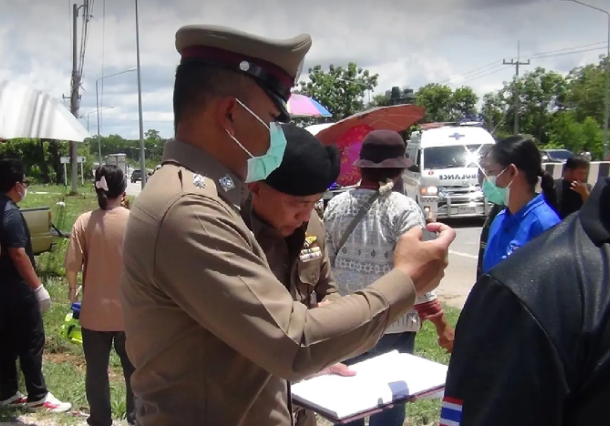
A tragic accident in Thailand's northeastern Mukdahan province has resulted in the deaths of ten Buddhist monks, with authorities confirming the toll on Friday following a collision that occurred the previous day. The incident unfolded when a young boy, aged just 11 years old, took control of a pickup truck without parental consent and drove it directly into a group engaged in a religious pilgrimage, leaving the community and the nation in shock.
The scale of casualties from Thursday's crash underscores the severity of the collision. Five monks lost their lives immediately at the scene, while another five succumbed to injuries sustained during the incident after arriving at medical facilities. The toll reflects one of the most serious accidents involving Buddhist clergy in recent Thai history, raising questions about vehicle safety and supervision of minors in the region.
At the time of the collision, a procession comprising 35 monks and five lay followers was moving along a roadside in Mukdahan province as part of their pilgrimage activities. The group was proceeding on foot when the truck suddenly ploughed through their ranks, creating chaos and devastation. The incident has sent ripples through Thai Buddhist circles, where such communal religious activities form a central part of spiritual practice and community engagement.
Mukdahan Hospital, serving the northeastern region, has provided updates on those who survived the initial impact. Ten individuals remained hospitalized in the immediate aftermath, with medical staff reporting two patients in critical condition requiring intensive care. Eight additional patients sustained injuries of varying severity, though hospital authorities have not specified the nature or extent of these injuries at this stage.
Police investigations into the incident have been complicated by the age of the driver. Prayut Ruanthongkam, chief of Mukdahan City Police, stated on Friday that the 11-year-old boy was unable to provide a formal police statement regarding the circumstances surrounding the crash. The child has been transferred to child welfare authorities for comprehensive assessment, with his mother accompanying him throughout the process. This procedural shift reflects Thai legal frameworks governing the treatment of minors involved in serious incidents.
Thai law provides specific protections for young children, with criminal liability not attaching to offenders under the age of 12. This legal principle means that despite the catastrophic consequences of his actions, the boy cannot face criminal charges in the traditional sense. Instead, the focus has shifted toward understanding what occurred and ensuring appropriate support and assessment through the child welfare system rather than the criminal justice apparatus. The lack of criminal accountability does not diminish the gravity of the situation or the need for thorough investigation.
Police have been gathering testimony from surviving monks as part of their comprehensive investigation into what led to the collision. These eyewitness accounts from clergy members who directly experienced the incident will prove crucial in reconstructing the sequence of events and determining whether the crash resulted from mechanical failure, driver error, or other factors. The surviving monks represent the most reliable sources of information about how the incident unfolded.
Buddhist monks occupy a uniquely revered position within Thai society and culture. Regarded as keepers and transmitters of Buddha's teachings, they command deep respect and veneration from the general population. Their visibility in communities is reinforced through regular public processions and ceremonial activities, during which ordinary Thais customarily present alms as expressions of goodwill and spiritual merit-making. These processions represent important moments of collective religious observance and are typically considered safe, protected occasions within the social fabric.
The immediate aftermath of the collision saw coordination between religious and welfare institutions in responding to survivors. Wat Roi Phra Phutthabat Phu Manorom, a prominent hilltop temple located in Mukdahan province, has opened its facilities to accommodate monks who survived the incident and those recovering from injuries. The temple has also provided shelter to other lay followers who participated in the ill-fated procession. This institutional response reflects longstanding Buddhist traditions of mutual support and communal care in times of crisis.
The incident raises broader concerns about road safety and child supervision in rural Thai communities. Mukdahan province, situated in the less densely populated northeast, may face particular challenges in addressing vehicle security and preventing unauthorised access by children. The circumstances that allowed an 11-year-old to obtain and operate a pickup truck without immediate intervention suggest potential gaps in oversight and safety protocols that may warrant examination by local authorities and community leaders.
For Malaysia and other Southeast Asian nations, this tragedy underscores shared vulnerabilities regarding child safety around vehicles and the potential for devastating accidents when supervision lapses. Many families across the region face similar risks if vehicles are left accessible to young children without proper security measures. The incident also highlights the importance of community religious activities and the unexpected dangers that can arise in spaces generally considered sacred and protected.
The emotional and spiritual toll on Thailand's Buddhist community extends beyond the immediate casualties. The loss of ten monks represents a significant depletion of clergy in the affected region, potentially affecting the capacity of temples to conduct religious services and serve their congregations. Mukdahan's Buddhist institutions will require time and resources to recover from this devastating blow while supporting those monks who sustained injuries and psychological trauma.

