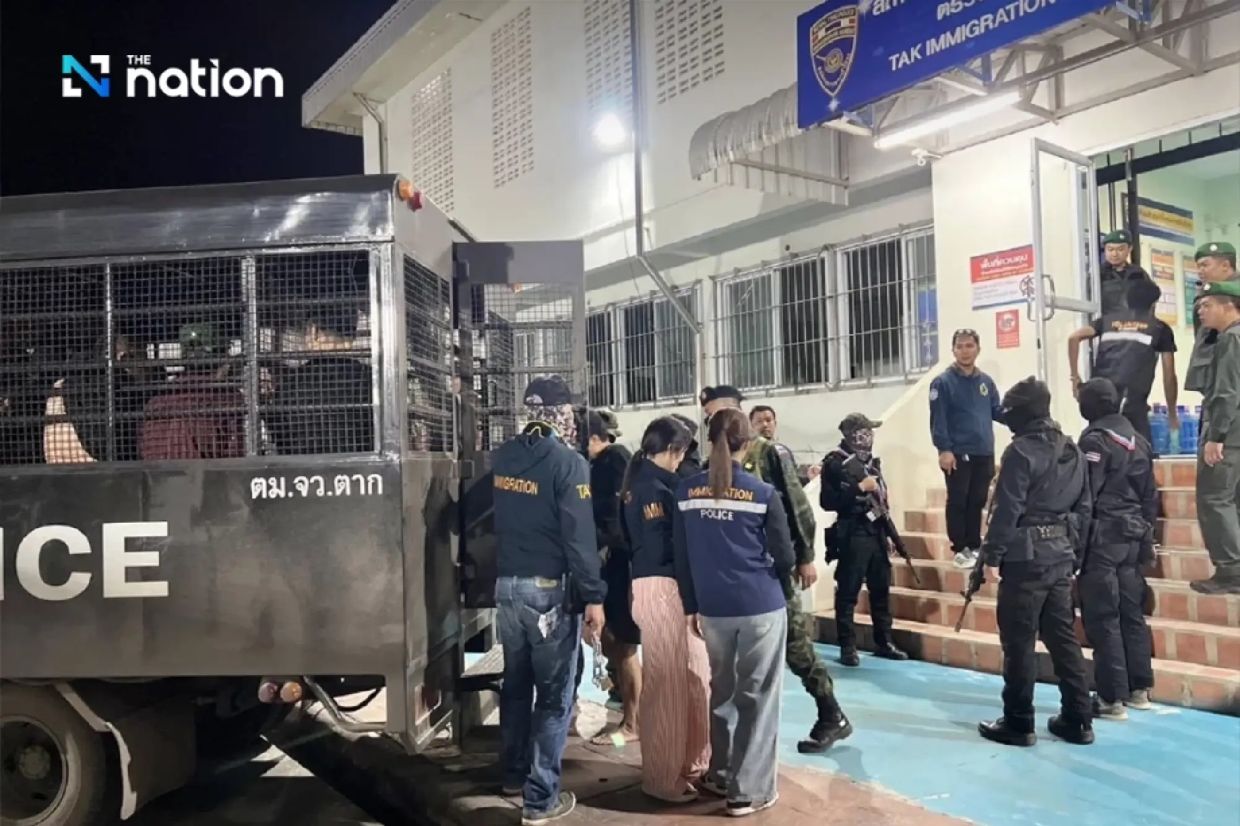
Thailand is moving to overhaul sections of its immigration legislation in a concerted effort to accelerate the removal of foreign nationals convicted of crimes, responding to growing security concerns that transnational criminal networks have established operations across the kingdom. The initiative reflects mounting frustration among Thai authorities that existing legal procedures have become bottlenecks, leaving foreign detainees languishing in state custody for extended periods whilst their cases wind through appeals, judicial reviews and diplomatic coordination with home countries.
The genesis of this enforcement challenge traces to July 2024, when the Srettha Thavisin administration introduced a 60-day visa exemption programme permitting visitors from 93 countries and territories to enter Thailand without advance visa applications. This streamlined arrival process created a critical vulnerability: Thai embassies lost the ability to screen travellers for criminal histories or financial backgrounds before they entered the country. The lack of pre-arrival vetting proved consequential, as some visitors exploited Thailand's porous borders by undertaking repeated border runs to reset their permitted stay duration rather than departing Thailand entirely, effectively circumventing normal visitor protocols.
Thailand's tourism appeal and relatively lenient enforcement environment have made the country an attractive base for various criminal enterprises. According to authorities, foreign nationals have leveraged these conditions to engage in call-centre fraud operations, money laundering schemes, grey-capital networks, illegal employment that directly competes with Thai workers in restaurants and resorts, and property acquisition through nominee arrangements. These activities have become particularly entrenched in major tourist destinations including Pai in Mae Hong Son, Pattaya in Chonburi, Koh Phangan in Surat Thani and Bangkok itself, prompting coordinated security responses from the Immigration Bureau, Royal Thai Police and related agencies.
When the Anutin administration assumed office, combating transnational crime became a designated security priority. The government implemented four proactive enforcement mechanisms: intensified scrutiny of travellers exhibiting unusual entry and exit patterns without clear justification; enhanced screening protocols for high-risk jurisdictions; deeper integration of international criminal databases with Interpol and domestic security agencies; and regulatory adjustments to eliminate overlapping visa rights that criminals had exploited. These administrative measures complemented legislative reforms, culminating in the Cabinet's decision on 19 May 2026 to cancel the 60-day visa exemption entirely. Thailand is reverting to bilateral country-by-country visa arrangements, with most visitors now receiving maximum stays of thirty days or fewer.
Government officials have justified this reversal by emphasising that Thailand must prioritise security and tourism quality rather than maximising visitor numbers. Analysis suggests the exemption scheme failed to generate proportionate increases in tourist arrivals or visitor spending whilst simultaneously exposing Thailand to expanded security vulnerabilities. Joint military, police and administrative operations have intensified enforcement against foreign nationals residing illegally, resulting in sustained arrests and deportation proceedings, yet the system remains constrained by legal and practical impediments.
These constraints warrant closer examination. Foreign detainees often cannot afford repatriation costs and must await coordination between Thai authorities and their embassies regarding financial assistance. More significantly, the Immigration Act of 1979 permits foreign nationals to lodge appeals within forty-eight hours of receiving deportation orders. Whilst appeals are under consideration, deportations are ordinarily suspended except in serious cases. Additionally, detainees may petition the Immigration Commission to postpone removal or extend temporary stay on humanitarian or legal grounds. These procedural safeguards, whilst essential for human rights protection, have inadvertently created conditions where offenders remain in Thailand for prolonged periods, sometimes resuming normal activities whilst legal processes unfold.
Prime Minister Anutin Charnvirakul has assigned Deputy Prime Minister Pakorn Nilprapunt, who holds responsibility for legal affairs, to spearhead consultations with the Royal Thai Police, Immigration Bureau and Interior Ministry regarding legislative revisions. The initiative specifically targets Sections 54 and 55 of the Immigration Act of 1979, which govern the removal of foreign nationals. The objective is to construct a framework enabling faster, more flexible and more effective deportations whilst remaining compliant with legal standards and international human rights obligations. Anutin publicly acknowledged that arrests and prosecutions alone prove insufficient; the underlying deportation machinery itself requires fundamental reform to prevent convicted offenders from effectively remaining in Thailand during protracted procedural delays.
However, implementing accelerated deportations involves navigating complex international legal architecture. Pol Lt Gen Trairong Phiwpan, the Royal Thai Police spokesman, explained that extradition procedures depend upon bilateral treaty relationships. When Thailand maintains extradition treaties with a detainee's home country, the attorney-general must evaluate the case before forwarding it to courts for extradition orders. Absent such agreements, the Foreign Ministry submits requests to the attorney-general, who then petitions courts for extradition orders. This multilayered process becomes further complicated by Thailand's international human rights commitments, including membership in the United Nations Human Rights Council and ratification of eight major international human rights treaties covering children's rights, women's rights, torture prevention, disability rights and protection from enforced disappearance.
These human rights frameworks create legitimate countervailing pressures against unrestricted deportation acceleration. Detainees retain rights to petition courts, oppose removal or request temporary release on humanitarian grounds. Trairong acknowledged that reforming the system whilst maintaining human rights standards presents genuine challenges; no single timeframe can appropriately govern all deportations, as individual circumstances vary significantly and legal avenues differ depending on applicable extradition treaties and human rights procedures. When detainees forego human rights procedures, repatriation can proceed expeditiously, but filed challenges and counterclaims necessitate court consideration, extending timelines considerably.
Any legislative overhaul must therefore balance competing imperatives. Thai officials recognise that reform should focus on eliminating unnecessary procedural steps, shortening decision timeframes and reducing administrative delays whilst preserving judicial consideration of case severity—whether involving illegal entry, visa overstay, transnational crime or organised fraud networks. Pakorn is expected to conduct comprehensive discussions with relevant agencies to assess how systemic reforms might function across legal and diplomatic dimensions without creating international friction or undermining commitments to human rights protections that Thailand has voluntarily assumed.
For Malaysian readers and Southeast Asian observers, Thailand's predicament illustrates the regional vulnerability that emerges when visa liberalisation outpaces security infrastructure. The situation also underscores how transnational criminal networks exploit jurisdictional gaps between countries, and the particular susceptibility of tourist economies where visitor screening is minimised to maximise arrivals. Thailand's experience suggests that neighbouring nations, including Malaysia, must carefully calibrate visa policies to avoid creating analogous security vacuums, whilst maintaining the legislative agility necessary to deport foreign offenders when existing frameworks prove cumbersome.