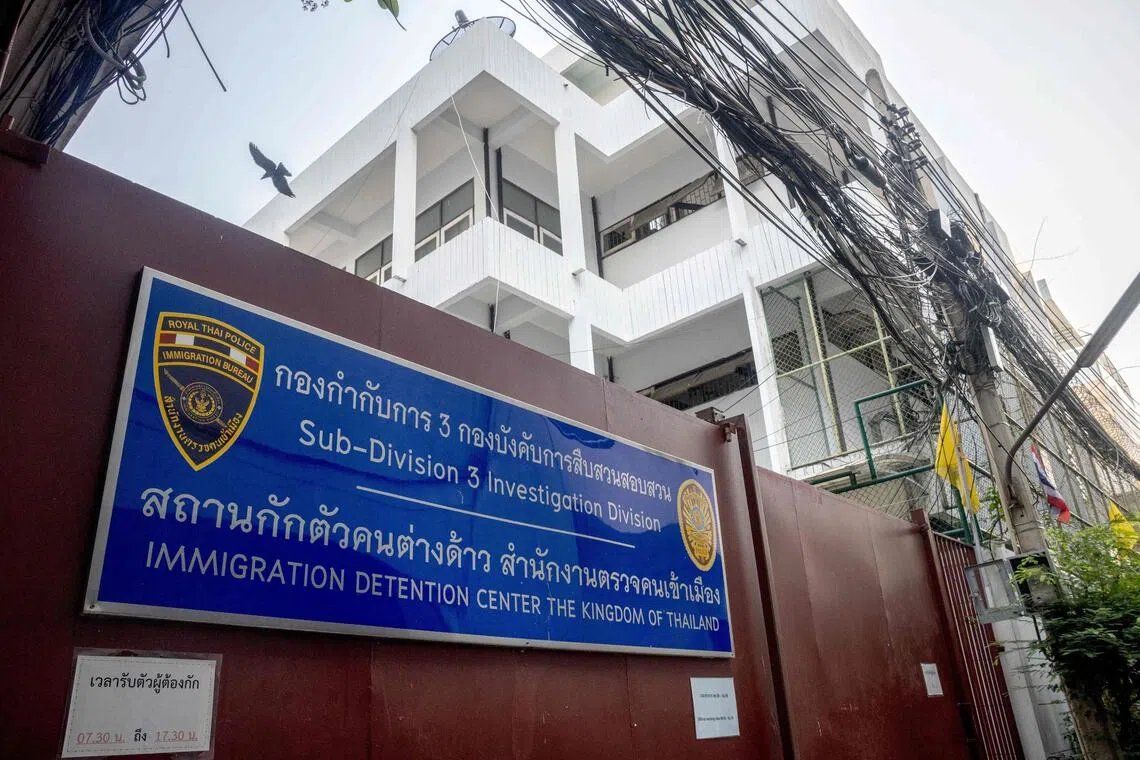
Thailand has implemented a new legal framework to streamline the deportation of foreign nationals found guilty of criminal offences or engaging in activities deemed detrimental to public order. Prime Minister Anutin Charnvirakul signed the Prime Minister's Office Regulation on Deportation B.E. 2569 on August 26, with the regulation taking effect on August 28 after publication in the Royal Gazette. The move represents a significant tightening of Thailand's immigration enforcement mechanisms at a time when the country continues to grapple with complex transnational crime and irregular migration challenges.
The regulation establishes a framework that distinguishes between foreigners who enter Thailand legally for tourism, residence, work or business purposes and those whose presence poses security or legal risks. Thailand has historically been a major hub for regional tourism and business, attracting millions of visitors annually, but the government has increasingly prioritized measures to address foreign criminal activity and illegal immigration networks that threaten public safety and economic stability. The new regulation acknowledges this dual reality by maintaining welcoming provisions for legitimate foreign entrants while creating more efficient mechanisms to identify and remove those who transgress Thai law.
Under the regulation, the Interior Ministry assumes primary responsibility for evaluating deportation cases, with the permanent secretary or an authorized representative tasked with reporting cases where a foreigner's conduct is deemed contrary to public order, good morals, or public welfare. This centralization of authority aims to reduce bureaucratic delays and conflicting decisions that might have hampered previous enforcement efforts. The regulation applies not only to principal offenders but also to individuals who act as instigators or supporters in illegal activities, potentially capturing broader criminal networks rather than isolated perpetrators.
The regulation specifies six categories of offences that trigger mandatory deportation consideration. These include unlawful entry or residence under immigration law, illegal employment, unauthorized business operations under the Foreign Business Act, document forgery, and offences carrying minimum five-year prison sentences. This categorization provides clear legal boundaries for enforcement officials and reduces discretionary decision-making, which is particularly significant given concerns about consistency in Thailand's judicial and administrative processes. The inclusion of forged documents and unlawful business operations suggests government concern about organized criminal networks and fraud operations involving foreign nationals.
Coordination between detention and immigration authorities forms a critical operational component of the new system. The Department of Corrections must notify the Interior Ministry at least fifteen days before releasing any foreign prisoner covered by the regulation, providing citizenship details and case records to enable swift deportation consideration. Where courts suspend sentences or impose fines rather than imprisonment, the Office of the Judiciary must immediately alert the permanent secretary, ensuring that even lesser sentences do not escape review. This inter-agency communication framework represents a significant departure from previous ad hoc coordination, potentially addressing gaps in Thailand's law enforcement infrastructure that regional observers have criticized.
The regulation acknowledges humanitarian and international legal obligations, particularly regarding asylum and non-refoulement principles. Any third country or international organization may request the deportee's transfer within seven days of the deportation order, provided they agree to cover all associated costs and the deportee consents in writing. Crucially, such requests must cite legitimate safety concerns, including risks of torture, cruel treatment, enforced disappearance, or violations of human dignity. This provision reflects Thailand's international treaty obligations and domestic human rights considerations, despite Thailand's mixed record on refugee protection and humanitarian standards.
The transfer mechanism incorporates specific timelines and safeguards. Relocations requested by third countries or international organizations must be completed within thirty days, with the Interior Minister authorized to grant up to two additional thirty-day extensions. If transfers cannot be finalized within the extended period, standard repatriation procedures apply. This framework balances the government's efficiency goals with practical constraints on international coordination, though critics may question whether such timelines adequately accommodate complex asylum investigations or inter-governmental negotiations.
For deportees whose destination remains unclear or who cannot be readily returned to their country of nationality, the regulation provides that they be sent to their last country of residence prior to entering Thailand. This approach may create complications for stateless persons or those with unclear citizenship claims, potentially passing along unresolved legal questions to neighboring nations. Malaysia and other Southeast Asian countries with substantial foreign populations have faced similar challenges, particularly regarding Rohingya and other vulnerable populations, suggesting that Thailand's approach may generate regional migration governance questions.
The regulation explicitly preserves the primacy of applicable Thai law, Cabinet resolutions, and international obligations in deportation decisions, indicating that enforcement must occur within broader legal and diplomatic constraints. The Interior Ministry will bear responsibility for establishing expense protocols, subject to Finance Ministry approval, suggesting that budgetary considerations will influence deportation operations. Any implementation disputes will be referred to the Interior Minister, whose decision becomes final, concentrating considerable discretionary authority in a single official without provision for independent review or appeal mechanisms.
For Malaysia and other Southeast Asian nations, Thailand's updated deportation framework carries significant implications. As a regional economic hub and tourist destination comparable to Malaysia's own tourism sector, Thailand's immigration enforcement decisions may influence cross-border migration patterns and influence regional security cooperation. The regulation's emphasis on document forgery and unlawful business operations suggests mounting concern about organized crime networks operating across mainland Southeast Asia, a concern shared by Malaysian authorities managing complex migrant worker and refugee populations. Thailand's experience implementing these procedures may offer lessons for Malaysian policymakers considering their own immigration enforcement mechanisms, particularly regarding inter-agency coordination and balancing efficiency with humanitarian obligations.

