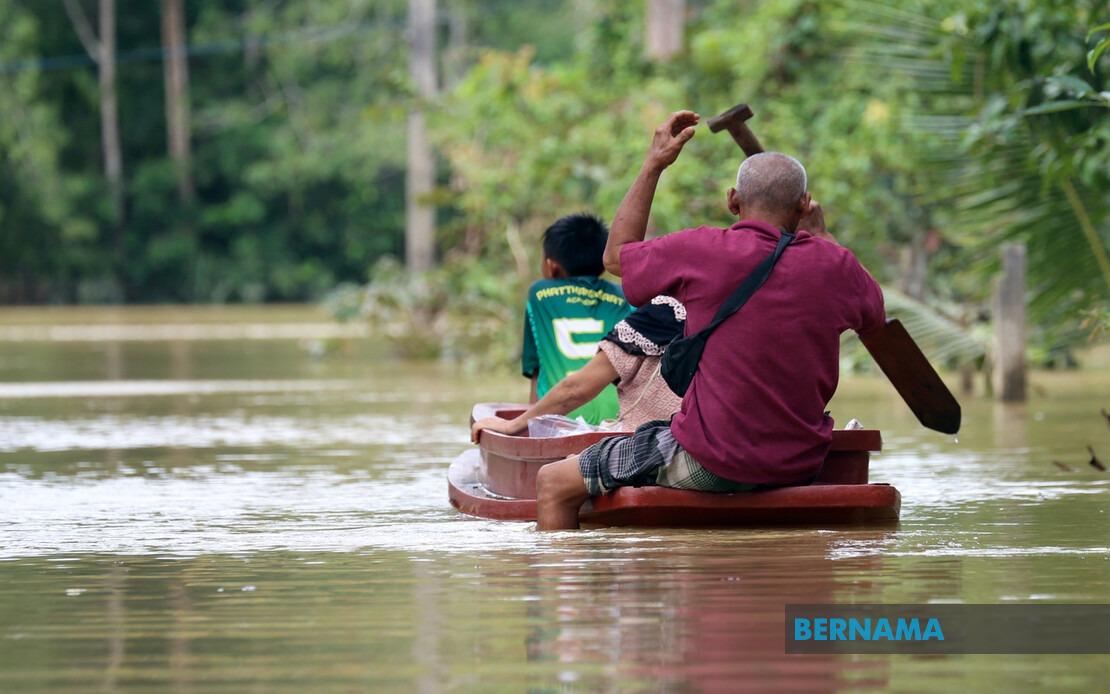
Thailand has significantly strengthened its institutional capacity to respond to natural disasters, moving beyond reactive crisis management towards a more systematic and coordinated approach. The kingdom's government has implemented a restructured disaster response apparatus designed to address the dual challenges of flooding and prolonged dry spells that have become increasingly prominent features of Thailand's climate landscape. This recalibration reflects growing recognition that effective disaster mitigation requires not just rapid response capabilities but also preventive monitoring and inter-agency synchronisation across multiple jurisdictions.
The newly established framework comprises four regional committees tasked with supervising disaster preparedness and response efforts across northern, northeastern, eastern, and central Thailand. Deputy government spokeswoman Capt Patdarasm Thongsaluaykorn outlined the strategic rationale behind this restructuring, emphasizing that the system aims to deliver assistance to affected populations with greater speed and efficiency while maintaining unified command authority across governmental agencies. This architectural change represents a significant departure from Thailand's traditionally fragmented disaster response structure, which has often been criticised for creating coordination bottlenecks during emergencies.
The scope of potential exposure is substantial. Thailand's authorities are currently monitoring 1,363 locations identified as presenting elevated flood risk, alongside 444 geographic areas classified as susceptible to extended drought conditions. This extensive surveillance network indicates the pervasive nature of climate-related hazards throughout the kingdom. The geographic distribution of these risk zones underscores why regional rather than purely centralized decision-making frameworks prove more effective—local conditions, water infrastructure, and socioeconomic vulnerabilities vary significantly between Thailand's diverse provinces.
Deputy Prime Minister Yodchanan Wongsawat chairs the northern regional committee and presided over its inaugural meeting at the Department of Disaster Prevention and Mitigation headquarters in Bangkok. His involvement signals high-level governmental commitment to this initiative, particularly given his responsibilities encompassing higher education and scientific research. This positioning suggests that Thailand may be integrating technical expertise and research capabilities more directly into operational disaster response, rather than maintaining artificial boundaries between academic institutions and emergency management agencies.
These regional committees operate with expansive mandates extending well beyond immediate crisis response. The bodies will continuously assess meteorological and hydrological conditions, coordinate field operations during emergencies, manage the delivery of relief supplies and compensation payments, and oversee longer-term reconstruction efforts in disaster-affected communities. Their authority includes capacity to direct government agencies operating within their geographic jurisdictions, suggesting a hierarchical command structure that should theoretically accelerate decision-making processes. Additionally, the committees bear responsibility for public communications, with emphasis on disseminating accurate information—a particularly important function in an environment where misinformation and rumours can exacerbate public anxiety and complicate relief operations.
The immediate trigger for this institutional reorganization derives from concrete weather threats currently developing across Thai territory. The Thai Meteorological Department has issued alerts warning of significant precipitation events, flash flooding scenarios, and potential riverine overflows affecting northern, northeastern, and eastern provinces throughout early August. Maritime safety authorities have simultaneously advised operators of smaller vessels to remain in port throughout the upper Andaman Sea region through 9 August, and across the upper Gulf zone between 6 and 9 August. These tactical warnings reflect meteorological modeling indicating genuinely dangerous conditions rather than routine precautionary measures.
However, the more strategically significant concern extends beyond Thailand's immediate seasonal flood cycle. Climate specialists and agricultural economists have flagged an anticipated Super El Niño phenomenon that modelling suggests will materialise during October and potentially persist through early portions of the 2027 southwest monsoon season. Research cited by the Bangkok Post indicates this climatic pattern could suppress rainfall across Thailand by no less than 10 percent, a reduction with profound implications for agricultural productivity, rice output, and freshwater availability throughout the kingdom. Such a scenario would particularly stress rural communities and provinces dependent upon rain-fed agriculture, potentially triggering secondary economic and social consequences beyond the immediate drought impact.
For Malaysian policymakers and regional observers, Thailand's upgraded disaster management system offers instructive parallels. Malaysia similarly confronts escalating climate volatility, with both flood and drought risks intensifying across different seasons and geographic zones. Thailand's emphasis on unified command structures and rapid inter-agency coordination addresses challenges that Malaysian state and federal authorities also navigate, particularly regarding monsoon-related flooding in peninsular and East Malaysian regions. The Thai model suggests that administrative restructuring—establishing clear hierarchical chains during disasters—may prove as important as accumulating additional financial resources or technological capabilities.
Thailand's forward-looking concern regarding El Niño impacts also resonates throughout Southeast Asia. Agricultural productivity across the region remains vulnerable to rainfall suppression, and water scarcity scenarios could trigger competition for shared river resources among riparian nations. Malaysia's own rice production and hydroelectric generation both depend critically on adequate precipitation patterns. The Thai government's early attention to these medium-term climate scenarios, combined with its simultaneous preparation for immediate flood risks, demonstrates recognition that effective disaster management requires maintaining simultaneous focus across multiple temporal scales—from hours-ahead meteorological forecasts through multi-year climate pattern analysis.
The effectiveness of Thailand's revamped system will ultimately depend upon implementation quality and sustained resource allocation. Structural reforms alone cannot compensate for insufficient funding, inadequate training, or persistent coordination failures among bureaucratic actors accustomed to competing rather than collaborating. Thailand's regional committees will likely face pressures balancing preventive activities against responsive operations, and allocating finite resources across 1,363 flood-risk locations and 444 drought zones simultaneously remains administratively complex. Yet the commitment to systematic monitoring and coordinated governance structures represents meaningful progress beyond earlier approaches characterised by episodic emergency declarations following disasters.
Thailand's experience also underscores how geographic vulnerability, institutional capacity, and climate dynamics interact to shape national resilience trajectories. The kingdom's demonstrated willingness to restructure disaster governance frameworks, even under political circumstances that often constrain institutional innovation, suggests that policymakers across Southeast Asia increasingly recognise climate adaptation as requiring more than technical adjustments or incremental budget increases. It demands fundamental reorganisation of how governments conceptualise and operationalise disaster response across administrative boundaries and hierarchical levels.

