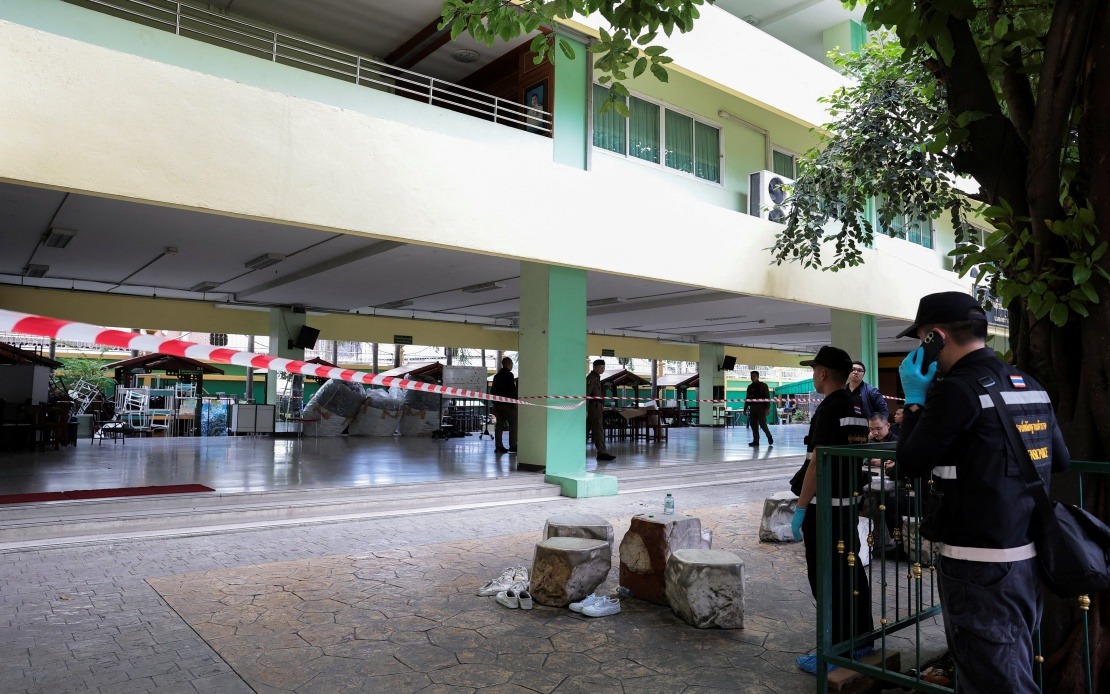
A devastating shooting at a school in Nonthaburi province northwest of Bangkok claimed seven lives on Friday morning, marking another tragic incident of school violence in Thailand. The incident unfolded at Debsirin Nonthaburi School in Bang Kruai district around 10 am, when a student turned a weapon on staff and fellow pupils. Among the dead were three teachers, three students, and the shooter himself, according to Royal Thai Police deputy inspector-general Lieutenant General Trairong Piwpan. At least fifteen additional people sustained injuries and were transported to hospital care, with two individuals reported to be in serious condition.
The shooter, identified as a student at the school, opened fire with a 9mm handgun that police investigations later determined belonged to the suspect's grandfather. Officers recovered 34 rounds of ammunition remaining outside the magazine at the scene. The firearm's ownership adds another layer to Thailand's ongoing struggle with gun control and enforcement of weapons regulations. Such incidents have prompted repeated calls for stricter permit policies and better oversight of private gun ownership across the kingdom, a concern that extends across the Southeast Asian region where school safety remains a pressing concern.
Emergency response teams quickly secured the school grounds and evacuated remaining students and teachers to the nearby Chanrat Wittaya School. Authorities reached out to parents and guardians, requesting them to collect their children from the evacuation point. The rapid response helped prevent further loss of life, though the psychological impact on the school community remains significant. National police headquarters deployed mental health professionals from Police General Hospital to provide immediate counselling and support services to traumatised students, teachers, and staff members affected by the violence.
Government officials moved swiftly to address the crisis and its broader implications. Prime Minister Anutin Charnvirakul, who holds the concurrent portfolio of interior minister, conveyed his condolences to bereaved families and pledged immediate government assistance for the injured. His response highlighted the government's commitment to enhanced security measures and victim support. Notably, Anutin linked the incident directly to his administration's firearms policy, emphasising that the shooting reinforces the rationale behind its decision to halt the renewal of civilian gun-carrying and possession permits—a stance aimed at reducing armed violence in schools and public spaces.
The timing of this incident carries significant implications for regional security discussions. Thailand has witnessed escalating school violence incidents over recent months, underscoring a troubling pattern that threatens both educational stability and public confidence. The shooting occurs less than six months after a similar attack in February, when an eighteen-year-old gunman opened fire at a school in Hat Yai in Songkhla province, fatally shooting the school director and leaving multiple others wounded before being apprehended. This recurring cycle of violence at educational institutions demands comprehensive policy responses beyond permit restrictions.
For Malaysian observers, the tragedy presents cautionary lessons about school security preparedness and the necessity of comprehensive prevention strategies. While Malaysia maintains stricter firearms regulations than Thailand, school safety protocols and threat assessment systems warrant continuous review and strengthening. The incident also reflects broader Southeast Asian challenges around juvenile access to weapons, inadequate mental health resources for troubled youth, and the intersection of family violence or personal crises with sudden violent outbursts in public settings.
The Nonthaburi shooting raises critical questions about how schools across the region can better identify warning signs among students experiencing psychological distress or extreme personal circumstances. The fact that the perpetrator was a student at the institution suggests the possibility of recognisable grievances or behavioural concerning that might have been addressed through intervention programmes. Southeast Asian educational systems increasingly recognise the need for trained school counsellors, peer support initiatives, and partnerships with mental health professionals.
Thailand's response strategy, emphasising immediate psychological support deployment, represents positive crisis management. However, longer-term solutions require sustained investment in mental health infrastructure, particularly in schools serving disadvantaged communities where access to counselling remains limited. The government's firearms policy reflects recognition that reducing civilian gun ownership can mitigate risks, though implementation consistency and enforcement effectiveness remain ongoing challenges that other regional governments monitor closely.
The incident underscores the vulnerability of educational institutions despite their role as protected spaces for learning and development. For Malaysia's education sector, the Thailand shooting serves as a reminder that comprehensive school security audits, emergency response training for staff, and clear protocols for threat reporting can substantially reduce casualty risks. Building a culture where students feel empowered to report concerning behaviours—whether from peers or within families—requires deliberate investment in trust and transparent communication channels.
As Thailand mourns and processes this tragedy, regional policymakers face renewed pressure to strengthen preventive frameworks addressing not merely firearm access but the underlying social, psychological, and familial factors driving youth violence. The intersection of academic stress, family dysfunction, bullying, or untreated mental illness with weapon availability creates particularly dangerous circumstances. Educational institutions across Southeast Asia must therefore adopt holistic approaches combining physical security enhancements with robust psychological support systems and evidence-based threat assessment protocols that prioritise early intervention over reactive responses.

