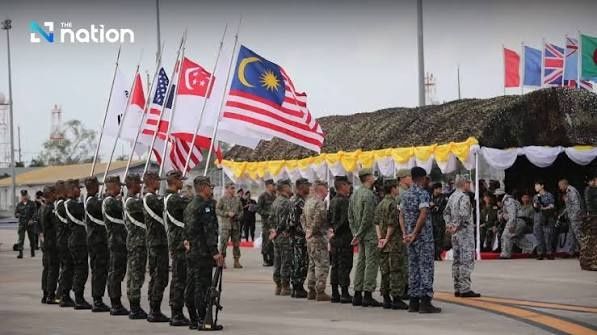
Thailand is preparing to leverage its longstanding military partnership with the United States as a bargaining chip in trade negotiations, according to government officials privy to the discussions. The Bangkok administration intends to caution Washington that if tariff increases imposed under Section 301 cause substantial economic hardship, it may need to reassess its participation in joint defence activities—a striking move that underscores how seriously Thai policymakers view the threat posed by American import duties. The position will form part of a comprehensive counterproposal expected to be tabled when reciprocal trade talks resume later this month.
Thailand's trade relationship with the United States is substantial, with the kingdom recording a US$51.4 billion trade surplus with Washington in the previous year. This asymmetry has placed Bangkok in the crosshairs as the Trump administration pursues broader protectionist policies against what it characterises as unfair trading practices. Most Thai exports now face a 12.5 per cent tariff, prompting the government to explore various negotiating strategies to secure more favourable terms. The nation is one of multiple countries worldwide scrambling to craft responses that might convince American policymakers to reconsider or modify the new duty regime.
To sweeten its negotiating position on trade, Thailand has already made significant concessions. The Commerce Ministry has signalled willingness to eliminate tariffs on selected American goods and harmonise local import standards with those favoured by the United States for beef, lamb and alcoholic beverages. These moves reflect Bangkok's eagerness to find middle ground on purely commercial matters. However, as the Trump administration widens its investigations into what it views as manufacturing overcapacity across global supply chains, Thai officials have calculated that commercial compromises alone may prove insufficient to secure meaningful tariff relief.
What sets Thailand's approach apart is the explicit intertwining of security considerations with trade diplomacy. Thailand stands as one of only two formal treaty allies of the United States in Southeast Asia, joined only by the Philippines in this distinction. The bilateral security framework has served as a cornerstone of American military presence throughout mainland Southeast Asia for decades, providing Washington with crucial strategic infrastructure and enabling sustained engagement in a region where Chinese influence has grown substantially. By signalling that this partnership could be affected by economic pressures, Bangkok is attempting to remind Washington of the geopolitical costs embedded within purely transactional trade disputes.
Cobra Gold represents the tangible manifestation of Thai-American defence cooperation. Co-hosted annually by both nations, the exercise stands as the largest multinational military drill conducted annually across mainland Asia, drawing approximately 8,000 military personnel from 30 countries during the previous edition. Beyond its operational significance, the exercise symbolises America's commitment to the region and reinforces Thai military capabilities through exposure to international standards and procedures. Any Thai withdrawal from or reduction in support for Cobra Gold would be interpreted throughout Asia as a weakening of the US security umbrella, with consequences rippling far beyond bilateral Thai-American relations.
Historically, the Thai-American alliance has demonstrated resilience even during periods of political strain. When Thailand experienced a military coup in 2014, the Pentagon initially scaled back Cobra Gold participation and suspended several military engagement programmes as an expression of disapproval. However, rather than allowing this setback to permanently damage the relationship, both nations gradually restored and ultimately deepened their defence ties over subsequent years. This precedent demonstrates that the alliance can withstand temporary disruptions, but it also illustrates how Thai-American military cooperation functions as both a strategic asset and a potential pressure point in broader bilateral negotiations.
Thailand's Commerce Minister Suphajee Suthumpun has publicly articulated the government's position that Thailand merits more favourable trade treatment given the broader strategic context. She has explicitly referenced the Treaty of Amity between the two nations, Thailand's significant investments within the United States economy, and the decades-long security partnership as justifications for preferential tariff treatment. This rhetorical approach represents a deliberate effort to reframe what might otherwise appear as a routine commercial negotiation into a conversation about alliance management and mutual security interests. The government has characterised these discussions as a whole-of-government endeavour involving the Commerce Ministry, Foreign Ministry, Defence Ministry and private business associations, underscoring the seriousness with which Bangkok approaches the matter.
Thai negotiators are reportedly targeting a maximum tariff rate of 19 per cent, a figure discussed in earlier frameworks, significantly lower than the current 12.5 per cent baseline now applied to most Thai exports. To address American concerns about labour standards, Thailand has also pledged to accelerate legislative action banning imports of goods manufactured through forced labour. These compliance measures represent attempts to demonstrate good faith and alignment with broader American policy objectives beyond simple tariff reduction.
Defence Ministry officials have maintained carefully calibrated public statements regarding military cooperation. Spokesman Surasant Kongsiri stated he could not verify the specific proposal about linking military exercises to trade negotiations, though he suggested that ongoing discussions were more likely to focus on enhancing bilateral defence cooperation rather than scaling it back. This measured public posture reflects Bangkok's need to avoid antagonising Washington while simultaneously maintaining credibility in private negotiations. The Pentagon similarly declined immediate comment, though Pentagon officials have previously emphasised the strength and importance of the alliance.
During a recent visit to Bangkok, Undersecretary of Defense Elbridge Colby reaffirmed with Thai Permanent Secretary for Defense General Tharapong Malakam that the United States viewed the Thai alliance as strengthened and renewed. Such high-level statements serve multiple purposes: they demonstrate Washington's continued commitment to the relationship while potentially providing diplomatic cover for negotiators to pursue tougher stances on trade without appearing to threaten the security partnership itself.
For Malaysia and other ASEAN nations, Thailand's approach carries significant implications. The effort to invoke security partnerships as leverage in trade disputes signals how the Trump administration's protectionist stance is forcing longstanding strategic allies to deploy unconventional bargaining tactics. If Thailand succeeds in using military cooperation as a negotiating tool, other regional partners might be emboldened to attempt similar strategies. Conversely, if Washington signals that security partnerships remain strictly separate from commercial arrangements, it could establish a precedent limiting the diplomatic options available to regional allies.
The outcome of these negotiations will likely reveal how the Trump administration balances its protectionist trade agenda against its broader strategic interests in maintaining the alliance network that has undergirded American power in Asia for seven decades. Should Washington prove willing to adjust tariffs in response to Thai warnings about reduced military cooperation, the message would reverberate throughout allied capitals worldwide. If instead the administration maintains a firm stance on tariffs regardless of security implications, it would signal that economic nationalism now takes precedence over traditional alliance management in American foreign policy calculus.

