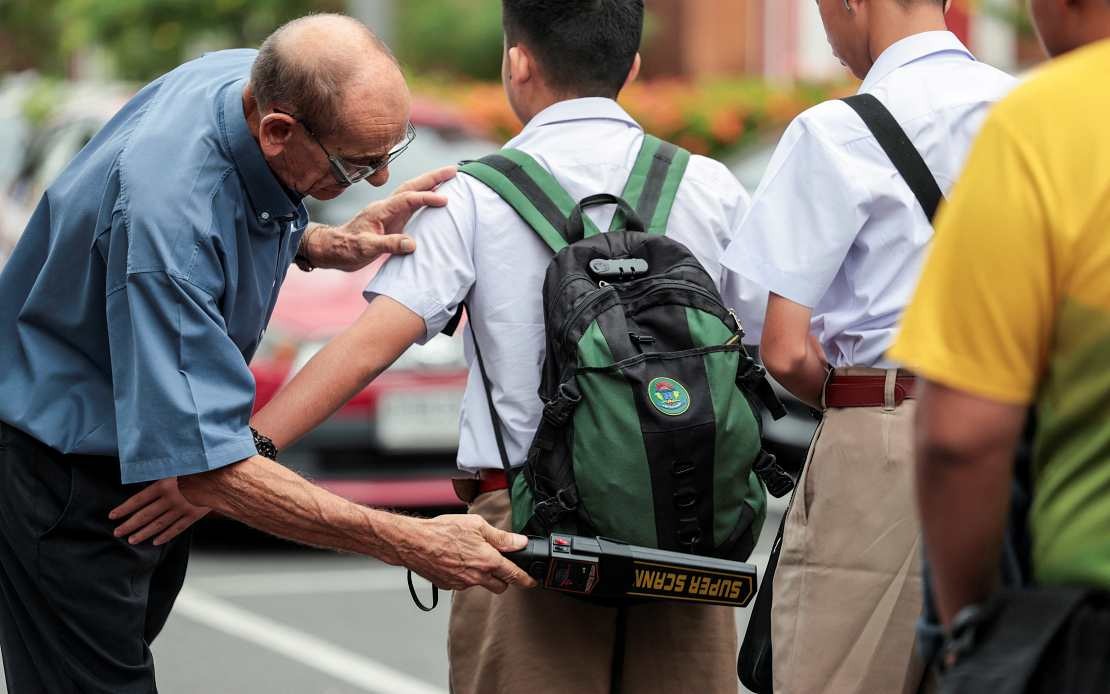
Thailand's government has taken decisive action to restrict access to firearms following a devastating school shooting that left nine people dead on Friday. Prime Minister Anutin Charnvirakul announced a nationwide one-year suspension of new firearm carry permits, citing the need to strengthen public safety and restore confidence in the country's security measures. The suspension represents a significant policy shift in response to one of the country's most tragic incidents of gun violence in recent memory.
The prohibition on new permits operates alongside strengthened regulatory scrutiny at multiple points in the firearms acquisition pipeline. The Ministry of Interior, working through the Department of Provincial Administration, has instructed local authorities to implement more rigorous vetting procedures for those seeking to purchase firearms. These enhanced screening measures now include comprehensive background checks conducted under Thailand's Firearms Act, creating additional barriers to gun ownership that extend beyond the simple suspension of carry permits. Officials have signalled that the evaluation process for firearm purchases will become substantially more demanding for prospective owners.
Beyond preventing new permits, the government has also moved to tighten oversight of citizens who already legally possess firearms and carry permits. Existing licensed firearm owners will face heightened supervision to ensure sustained compliance with all applicable legal requirements. This dual approach—restricting new access while monitoring established gun owners—reflects the authorities' determination to reduce circulation of weapons within the broader population. The combination of preventive and enforcement measures suggests a comprehensive reassessment of Thailand's gun licensing framework.
Thailand's firearm laws impose strict conditions on weapon usage and possession. Legally owned firearms must remain secured at home and cannot be transported or carried in public spaces unless justified by specific lawful purposes. Violations of these restrictions carry substantial penalties, including imprisonment of up to five years, monetary fines reaching 10,000 baht (approximately USD 301), or both sanctions combined. These penalties underscore the severity with which Thai authorities treat unauthorised firearm use, yet the recent tragedy has prompted officials to consider whether existing deterrents are sufficiently robust.
The Friday shooting that precipitated the government's response resulted in the deaths of nine individuals, including the shooter's own grandparents. The incident concluded when the gunman died by suicide, preventing further potential casualties but highlighting gaps in threat prevention and intervention systems. This particular case raises troubling questions about early warning signs and whether psychological screening or family intervention mechanisms might have prevented the tragedy had they been implemented earlier.
Education Minister Prasert Jantararuangthong has advanced a comprehensive six-point national safety framework, which he has submitted to the Cabinet for consideration. This wider package extends beyond firearm restrictions to address underlying factors that may contribute to school violence. The proposals mandate mental health assessments for students and staff, establish mandatory emergency response drills, institute zero-tolerance approaches to bullying, and enforce strict policies prohibiting weapons on school grounds. This holistic strategy recognises that gun access alone cannot explain school shootings; psychological vulnerability, institutional failures, and social dynamics also require attention.
The government's multi-layered response places Thailand within a broader regional and global conversation about gun violence prevention. Southeast Asian nations have undertaken varying approaches to firearm regulation, with Thailand now signalling a movement toward stricter controls. The policy decision reflects an implicit acknowledgement that existing frameworks failed to prevent a preventable tragedy, and that administrative changes, however burdensome, warrant implementation to protect public safety. Regional policymakers from Malaysia, Singapore, and other neighbouring states may observe Thailand's implementation closely to assess effectiveness and applicability within their own jurisdictions.
The suspension also has practical implications for Thailand's security apparatus and law enforcement. A one-year pause on new civilian carry permits will reduce the volume of weapons circulating in public spaces, potentially diminishing opportunities for spontaneous armed violence. However, criminal networks and those obtaining firearms through illegal channels remain unaffected by the civilian permit suspension, suggesting that the measure addresses only a portion of Thailand's broader firearms problem. The real efficacy of the suspension will depend substantially on the strength of border controls and the government's capacity to interdict illegal weapons trafficking.
Complementary to the firearm restrictions, authorities have simultaneously pursued action in an apparently unrelated incident. A former Thai lawmaker was arrested on Monday in connection with the murder of the president of the Nonthaburi Provincial Administrative Organisation. While this case operates within a different context, the concurrent law enforcement activity suggests a broader period of intensified governmental focus on violent crime and abuse of position. The juxtaposition of these developments underscores vulnerabilities within Thailand's security environment that extend beyond single-incident responses to systemic patterns requiring sustained policy attention.
The comprehensive nature of Thailand's response—encompassing permit suspension, enhanced background verification, strengthened oversight of existing permit holders, mandatory mental health programmes, school safety protocols, and zero-tolerance bullying policies—demonstrates governmental commitment to addressing multiple pathways to violence simultaneously. Whether this multifaceted approach will substantially reduce future incidents remains uncertain and will depend on implementation quality, resource allocation, and sustained political will. The suspension of firearm carry permits represents only one component of a larger preventive architecture that Thai officials are constructing to address vulnerabilities exposed by the deadly school shooting.

