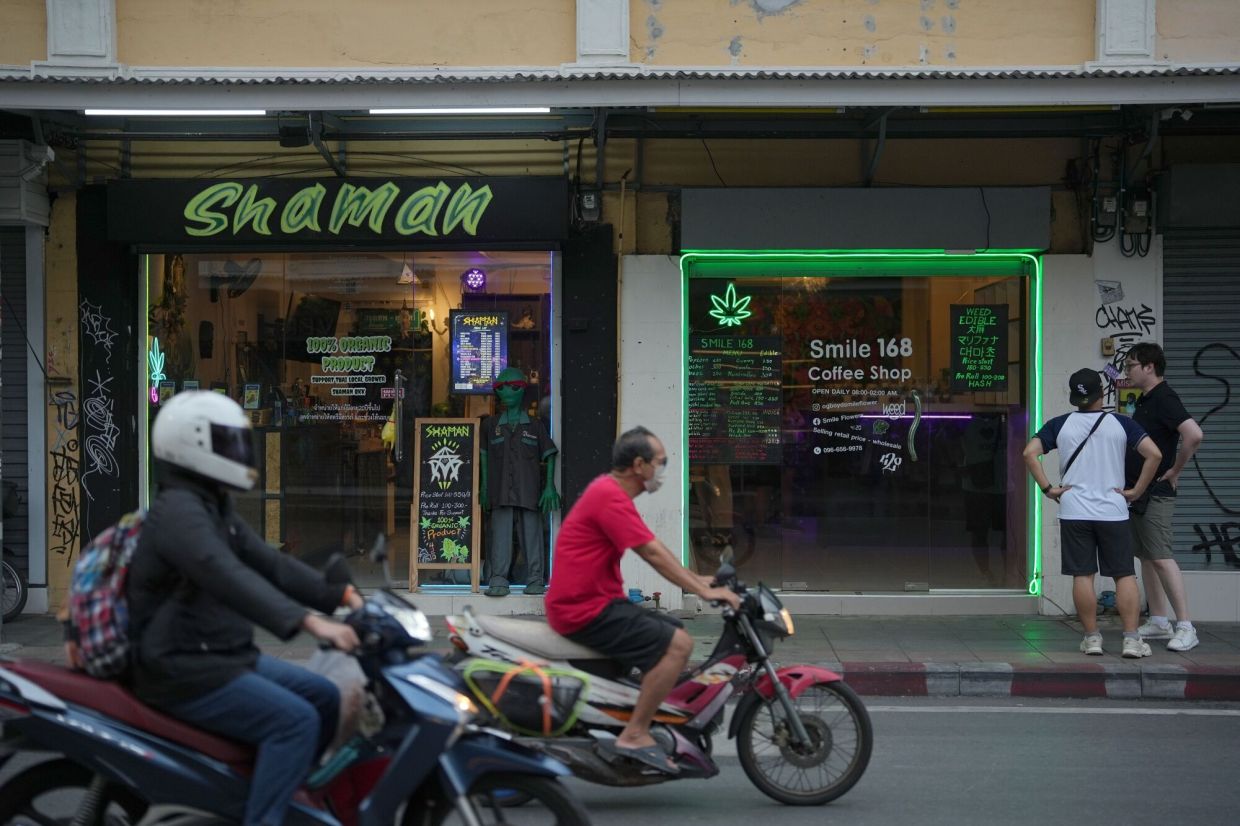
Thailand's push to restructure its cannabis framework represents a significant policy pivot that could reshape Southeast Asia's approach to regulated herbal products. Public Health Minister Pattana Promphat has advanced a comprehensive draft Cannabis and Hemp Control Act that signals the government's commitment to narrowing cannabis access to strictly medical channels while dismantling the informal retail sector that has flourished since initial liberalisation. The legislative effort addresses mounting problems with illegal cross-border smuggling, counterfeit licensing systems, and the explosion of unlicensed commercial outlets that have exploited regulatory gaps to serve recreational users across the kingdom.
The crux of Thailand's evolving cannabis policy lies in its deliberate rejection of recreational liberalisation despite initial signals of broader tolerance. The Bhumjaithai Party, which championed cannabis policy reform, has now clarified that its vision encompasses medical applications exclusively. This narrowing of scope reflects growing concerns within government circles that recreational access has spiralled beyond manageable regulation. The move also acknowledges uncomfortable realities: Thailand's relatively permissive approach has made it an attractive sourcing point for international drug networks, and enforcement agencies have been overwhelmed by the proliferation of shops operating with expired, fake, or entirely fraudulent credentials.
The draft legislation represents a fundamental structural overhaul compared to existing arrangements. Current regulation relies primarily on the Act on the protection and promotion of herbs supplemented by various ministerial orders, a patchwork approach that leaves significant oversight gaps, particularly regarding cultivation stages. Under the new framework, cannabis production would come under direct government purview from seed to final dispensing, closing loopholes that enabled bulk production for undocumented export. The legislation will impose substantially elevated penalties for violations, signalling serious enforcement intent. Parliamentary consideration has been delayed beyond the current session despite completion of public consultation in early June, suggesting either parliamentary scheduling constraints or lingering policy disagreements within coalition partners.
The scale of the enforcement challenge illustrates how quickly Thailand's initial experiment with cannabis liberalisation created regulatory chaos. Since 2023, approximately 18,000 retail outlets have emerged across the country. The government's own data reveals that roughly one-third of these, or approximately 6,000 establishments, allowed their operating licences to lapse at the end of 2023. Only around 1,500 outlets have successfully renewed credentials. This pattern exposes a critical vulnerability: licensing regimes with three-year cycles create predictable expiration windows where non-compliant operators simply cease formal registration while continuing illicit trading. With another 6,000 outlets facing expiration between 2026 and 2027, enforcement authorities acknowledge they are playing perpetual catch-up against a moving target.
Government strategy to reclaim regulatory territory relies heavily on technological infrastructure and dramatically expanded inspection capacity. The Department of Thai Traditional and Alternative Medicine has digitised the licensing process, now issuing credentials electronically rather than through physical documentation that facilitated counterfeiting. All legitimately registered outlets have been mapped with GPS coordinates and posted on an official website, with licence expiration dates displayed transparently. This approach creates clear legal categories: any establishment not appearing on the official registry faces immediate arrest exposure. The Ministry of Public Health has concurrently authorised tens of thousands of inspection officers drawn from police forces and local administrative organisations, reflecting recognition that routine compliance work requires massive personnel scaling. Minister Pattana acknowledged, however, that sophisticated smuggling operations moving large volumes may still evade detection despite these measures.
The enforcement problem extends beyond simple geographic regulation into managing patterns that indicate diversion to recreational consumption. Properly registered outlets now operate as medical facilities where qualified physicians must physically supervise all cannabis dispensing, a requirement designed to prevent repeat sales to individual consumers that would suggest recreational distribution rather than genuine medical application. Any transaction patterns indicating suspicious bulk provision to single customers trigger mandatory investigation, with legal consequences following confirmation of irregularities. This approach shifts enforcement focus from binary licensing compliance toward behavioural monitoring—a more sophisticated but resource-intensive model than simple outlet counts.
International complications add urgency to Thailand's regulatory recalibration. Although cannabis carries no narcotic classification within Thailand's legal framework, it remains prohibited as a controlled substance throughout most destination countries where Thai suppliers have historically operated. This jurisdictional mismatch creates liability exposure for both Thai exporters and government authorities supervising their activities. Minister Pattana indicated that ongoing coordination between the Department of Thai Traditional and Alternative Medicine, Thailand's Customs Department, and Airports of Thailand aims to prevent large-scale illicit export, though he candidly acknowledged that enforcement cannot eliminate all smuggling attempts when volumes approach commercial scales. The shift to electronic licensing theoretically provides another verification layer at border points, yet determined criminals adapt methodologies faster than regulatory systems typically evolve.
The possibility of returning cannabis entirely to narcotics scheduling remains under consideration, though this would require separate legislation under the Ministry of Justice's purview rather than falling within Public Health Ministry responsibility. Current policy evidently favours the restrictive medical regulation approach as an intermediate step, though this position could shift if black markets or cross-border trafficking problems intensify beyond acceptable tolerance levels. Such a reversal would represent a dramatic policy swing barely three years after initial liberalisation, creating substantial legal uncertainty for the compliant medical sector and undermining regulatory credibility. Minister Pattana's emphasis that any cannabis reclassification as a narcotic must await completion of the new control framework suggests institutional preference for regulatory tightening before considering more draconian approaches.
The regional implications of Thailand's recalibration deserve closer examination, particularly for neighbouring countries evaluating their own cannabis policy trajectories. Malaysia, with its substantially stricter prohibition regime and severe penalties for possession, watches Thai developments as a cautionary case study in how rapidly permissive policies can generate enforcement complexity. The proliferation of unlicensed Thai outlets demonstrates how quickly commercial incentives overcome regulatory frameworks absent sufficiently robust penalty architecture and inspection capacity. Vietnamese and Cambodian authorities similarly face pressure to develop cannabis policies while observing Thailand's struggle to manage the consequences of initial liberalisation without comprehensive pre-emptive regulatory infrastructure. Thailand's belated emphasis on cultivation-stage controls and comprehensive medical facility requirements offers other regional policymakers a template for more thoughtfully sequenced implementation should they pursue cannabis reform.
The draft legislation ultimately reflects Thailand's difficult position between international pressure to acknowledge cannabis's legitimate medical applications and practical recognition that rapid liberalisation without robust regulatory foundation creates law enforcement nightmares and cross-border complications. By narrowing policy focus to medical use exclusively and imposing stricter controls, the government attempts to salvage the core liberalisation rationale—therapeutic access—while preventing the recreational market dynamics that transformed Thailand into a de facto cannabis sourcing hub. Whether this recalibration succeeds depends entirely on enforcement execution and political will to prosecute violations consistently, capacities that remain questionable given the scale of non-compliance already embedded in Thailand's cannabis ecosystem. Regional observers, particularly in Malaysia and other Southeast Asian jurisdictions, will closely monitor whether Thailand's regulatory tightening achieves compliance transformation or merely illustrates the persistent challenges inherent in rolling back permissive policies once commercial networks become established.

