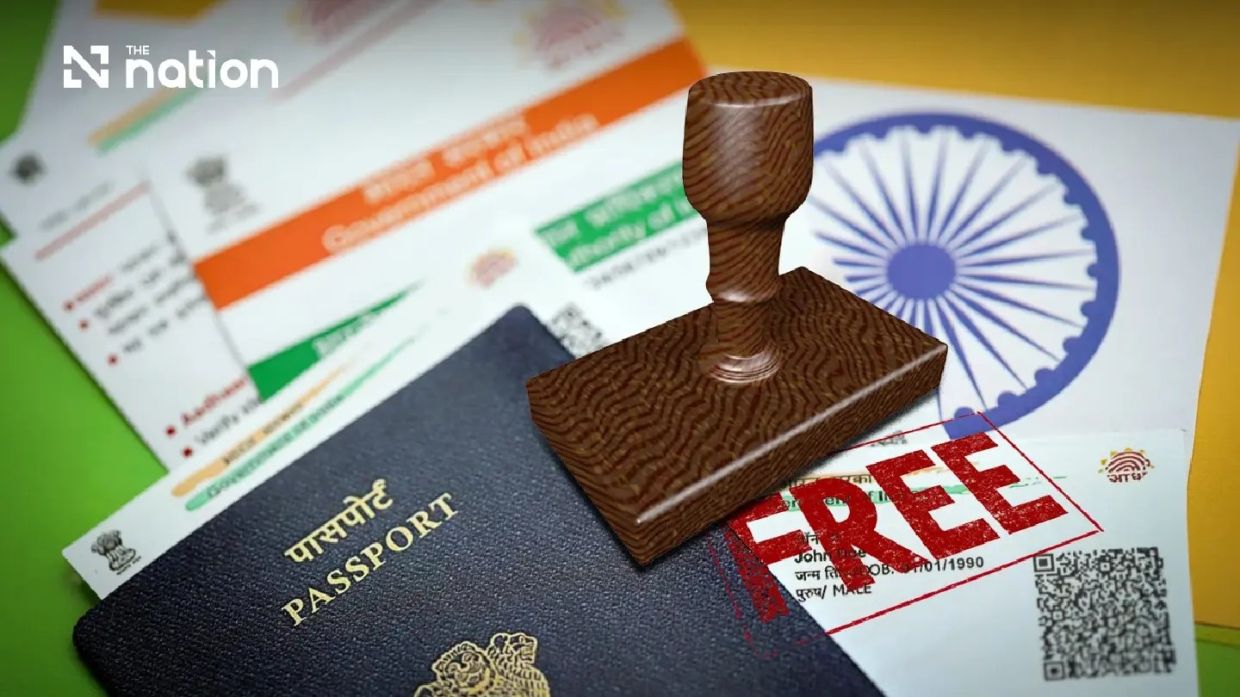
Thailand's Tourism and Sports Minister Surasak Phancharoenworakul has championed a 30-day visa-free entry policy for Indian nationals, viewing the concession as essential to capturing an increasingly lucrative segment of the subcontinent's outbound tourism market. The decision reflects Thailand's determination to secure 2.7 million arrivals from India by 2027, cementing the nation's position as a premier destination for Indian travellers. This policy pivot emerged after initial discussions that would have limited visa-free stays to just 15 days, a restriction the minister argued would have proven counterproductive for a market characterised by extended, celebration-focused trips.
The 15-day limitation would have directly undermined India's most valuable tourism niche: destination weddings and multi-week celebration events that require considerable preparation time and draw spending from affluent Indian families. By extending the visa-free period to 30 days, Thailand ensures parity with other major source markets and removes a potential competitive disadvantage. This alignment strategy addresses a fundamental concern among tourism operators that Indian visitors might otherwise face additional bureaucratic hurdles through a return to Visa on Arrival procedures. The extended validity period therefore serves both the practical needs of Indian travellers and Thailand's broader competitiveness objectives in an increasingly contested regional tourism landscape.
India's trajectory as a tourism source has accelerated markedly. The Tourism Authority of Thailand projects 2.55 million arrivals during 2026, followed by a 5.8 per cent increase to a record 2.7 million in 2027. These forecasts rest on solid ground: Thailand welcomed 2.48 million Indian tourists in 2025, representing a robust 16.82 per cent year-on-year increase from 2024. The momentum continued into 2026, with arrivals growing 3.06 per cent during the first half of the year and reaching approximately 1.3 million visitors by mid-July. The revenue implications are equally compelling—Indian tourists generated 90.425 billion baht in tourism expenditure during 2025 alone, underscoring the market's financial significance beyond mere visitor numbers.
The policy decision emerged from Thailand's July 14 Cabinet approval of a reformed visa framework designed to balance tourism promotion with immigration security. Rather than maintaining the temporary 60-day visa exemption covering 93 countries and territories, the government consolidated entry categories and assigned India to a standard visa-exemption grouping of 59 nations and territories. This restructuring aimed to eliminate overlapping privileges, prevent misuse of entry concessions, and strengthen screening procedures while preserving Thailand's appeal to genuine leisure travellers. The 30-day entitlement accommodates the typical Indian travel pattern—visitors currently remain in Thailand for an average of 7.17 days per trip—whilst permitting extended stays for wedding groups and cultural tourists with longer itineraries.
India now ranks as Thailand's third-largest source market, trailing only major neighbouring economies. The competitive environment, however, is intensifying across Southeast Asia. Vietnam has deployed competitive pricing and attractive incentives to lure Indian visitors, while Malaysia emphasises its own visa-free access arrangements. Singapore has strategically positioned itself within the family travel segment, fragmenting what Thailand once dominated. Thailand's response—cementing favourable visa terms for a growing, high-spending demographic—represents a recognition that ease of entry ranks among the decisive factors influencing Indian destination selection. The visa policy thus serves as both a practical facilitation tool and a symbolic demonstration of Thailand's commitment to the Indian market's expansion.
The financial profile of Indian tourists reinforces their strategic importance to Thailand's tourism evolution. Individual daily expenditure averages 6,203 baht per person, translating to approximately 36,354 baht per trip based on typical stay durations. These spending patterns exceed many conventional source markets and align perfectly with Thailand's stated pivot towards higher-value, experiential tourism rather than high-volume mass tourism. The market composition reveals additional nuances: independent travellers account for 68.63 per cent of arrivals, whilst organised tour groups represent 31.37 per cent. Nearly 60 per cent of Indian visitors experience Thailand for the first time, suggesting substantial untapped repeat visitation potential as satisfied first-time tourists return home and recommend the destination to social networks.
Indian travellers increasingly prioritise authentic cultural and culinary experiences over conventional sightseeing. Thai cuisine emerges as the leading attraction, followed by beaches and spa-wellness facilities. The Tourism Authority has identified particularly strong demand from Indian families and larger celebratory groups, with many visitors planning stays of seven to 15 days. This preference for extended, experience-focused itineraries again validates the 30-day visa window: a fortnight or longer permits meaningful engagement with local communities, food cultures, and wellness traditions rather than rushed, superficial tourism. The shift towards such engagement-based travel distinguishes the Indian market from price-sensitive segments and justifies Thailand's premium positioning and sustained investment in this source region.
Air connectivity remains foundational to India strategy realisation. The Tourism Authority's New Delhi office coordinates direct services from nine Indian cities to Bangkok, Krabi, and Phuket, generating 144 weekly flights and exceeding 32,000 available seats. The Mumbai region accounts for approximately 160 weekly flights and 33,000 seats. Combined weekly capacity reaches roughly 66,000 seats across all Thailand–India routes. Although some carriers temporarily suspended services during Middle East disruptions and high fuel periods, recovery is anticipated during forthcoming peak seasons. Indian airlines increasingly operate from secondary cities, whilst international carriers prepare capacity restoration, collectively improving accessibility for travellers beyond major metropolitan hubs.
The Tourism Authority's geographic expansion strategy extends promotional efforts into fast-growing Tier 2 and Tier 3 Indian cities beyond traditional strongholds like New Delhi, Mumbai, and Kolkata. Target markets include Lucknow, Chandigarh, Guwahati, Ahmedabad, Surat, and Pune, each offering distinct demographic and economic advantages. Surat's concentration of diamond industry wealth creates an affluent customer base, whilst Pune's automotive and industrial sectors provide access to upper-income professionals. This granular geographic targeting acknowledges that Indian outbound tourism increasingly originates from provincial cities and emerging economic centres rather than exclusively from metropolitan agglomerations. The strategy simultaneously encompasses neighbouring markets—Bhutan, Nepal, Bangladesh—recognising regional travel propensities and cross-border leisure patterns.
Thailand's competitive positioning emphasises distinctive attributes including food culture, local lifestyles, wellness experiences, and community engagement rather than generic resort amenities replicated across the region. This differentiation strategy responds to observed Indian traveller preferences and positions Thailand advantageously against regional competitors offering similar natural attractions. The emphasis on experiential, culturally-immersive tourism appeals particularly to younger Indian travellers who prioritise authentic engagement and personal growth over conventional leisure consumption. This demographic—expanding in purchasing power and travel frequency as India's middle class continues its rapid expansion—represents the frontier of India-outbound tourism growth and aligns perfectly with Thailand's evolving tourism positioning as a destination of depth and substance rather than merely pleasant beaches and temples.
The 30-day visa-free policy thus functions as more than a simple administrative convenience. It represents a strategic pivot acknowledging India's transformation into one of the world's most significant tourism growth engines. By removing friction from the travel decision process, Thailand removes a competitive disadvantage relative to regional alternatives. Combined with targeted geographic expansion within India, infrastructure development improving air connectivity, and positioning aligned with emerging preferences for experiential travel, the extended visa validity period anchors a comprehensive market development strategy. Success in capturing the projected 2.7 million Indian arrivals by 2027 would establish India as Thailand's primary source market by volume and reinforce the kingdom's position as Southeast Asia's preeminent tourist destination, particularly among affluent, experience-seeking demographics whose spending extends well beyond conventional tourism accommodation and attractions.

