Thailand's Prime Minister Anutin Charnvirakul and his wife Thananon have arrived in Malaysia for a two-day official visit that carries significant diplomatic weight for regional relations. The delegation touched down at Kuala Lumpur International Airport, where they received an official welcoming ceremony at the Bunga Raya Complex, signalling the importance Malaysia places on the engagement. The visit marks Anutin's first trip to Malaysia since his reappointment as Thai Prime Minister in March 2026, underscoring the timing and substance of the bilateral engagement at this juncture in both nations' political calendars.
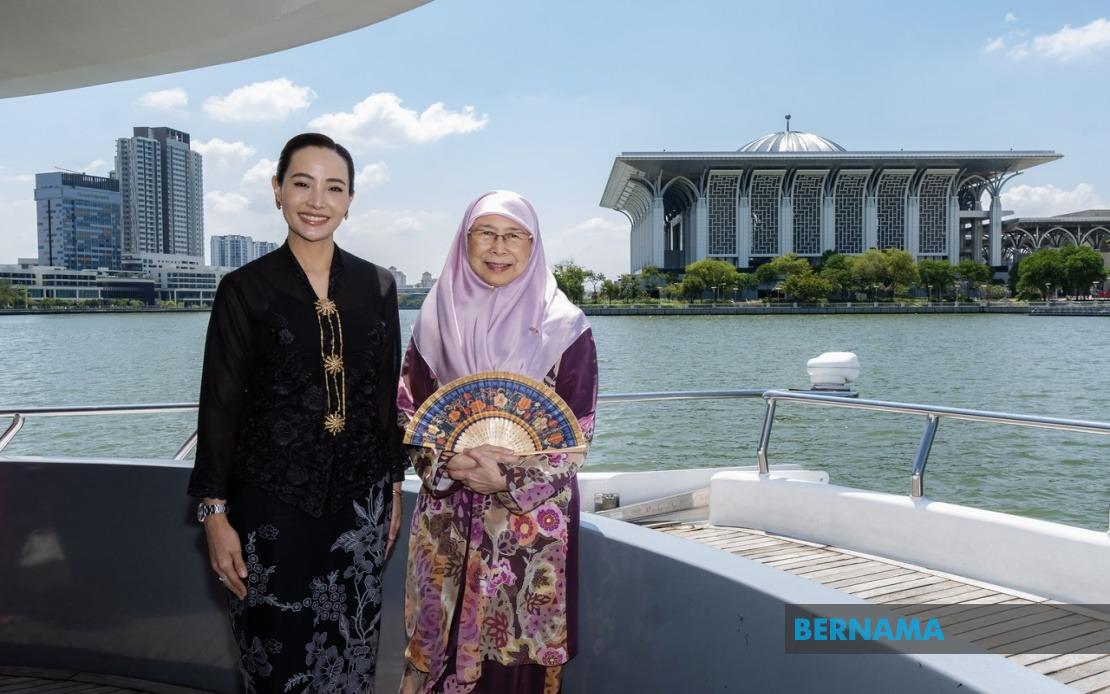
On Thursday, July 9, Thananon embarked on a guided cruise across Tasik Putrajaya, one of Malaysia's most recognisable waterfront experiences, offering visitors sweeping vistas of the purpose-built administrative capital. The 45-minute journey allowed the Thai First Lady to observe Putrajaya's carefully planned architecture and landmark structures from the vantage point of the lake, a setting designed to showcase Malaysia's modern governance hub. She was greeted upon arrival at approximately 12:10 pm by Datuk Seri Dr Wan Azizah Wan Ismail, wife of Prime Minister Datuk Seri Anwar Ibrahim, establishing an immediate diplomatic courtesy that reflects protocol between the two countries' senior leadership families.
Also attending the lake outing was Hannah Yeoh, who holds the portfolio of Minister in the Prime Minister's Department overseeing Federal Territories, which includes Putrajaya. Her presence underscores the federal government's intention to ensure high-level engagement during the visitor's stay, with the minister responsible for the administrative capital's oversight directly involved in the reception and itinerary. Throughout the cruise, Thananon and Dr Wan Azizah engaged in substantive conversation whilst observing the landscaped surroundings, an informal setting that often fosters candid diplomatic exchange between senior figures and their spouses.
The official visit reflects a deliberate effort by both governments to demonstrate and advance their shared commitment to deepening bilateral relations. Malaysia and Thailand have historically maintained close ties rooted in geographic proximity, cultural affinities, and shared regional interests within Southeast Asia. This particular engagement comes at a moment when both nations continue navigating post-pandemic economic recovery and the evolving geopolitical landscape of the Association of Southeast Asian Nations, making the visit's timing strategically significant.
Anutin's return to the Prime Minister's office in March 2026 represented a significant political development in Thailand, and his choice to undertake this Malaysian visit as his first international bilateral trip since that appointment carries symbolic importance. The decision to accept Anwar's invitation signals that Thai leadership views Malaysia as a priority partner for early engagement following domestic political transitions. For Malaysia, hosting Anutin and his delegation provides an opportunity to reset and reinvigorate bilateral cooperation frameworks that may have experienced shifts during periods of political flux in either country.
The stated purpose of the visit centres on expanding cooperation in areas of mutual interest, a formulation that encompasses trade, investment, security cooperation, border management, cultural exchanges, and people-to-people connections. Malaysia and Thailand share an extensive maritime boundary and have significant commercial interdependencies, making the relationship economically substantive beyond its political dimensions. The visit provides occasions for both delegations to discuss mechanisms for deepening integration in sectors ranging from tourism and transportation to manufacturing and digital economy development.
Putrajaya itself serves as a carefully curated symbol of Malaysian governance and modernity, and the decision to feature the lakeside cruise in the visit's itinerary speaks to the Malaysian side's desire to present the nation as a forward-thinking administrative entity. The administrative capital, developed over the past quarter-century, represents significant investment in infrastructure and urban planning, and showcasing it to senior Thai visitors aims to reinforce perceptions of Malaysia's capability and dynamism. The Tasik Putrajaya cruise is a standard offering for high-profile guests, combining leisurely recreation with instrumental messaging about national development.
Diplomatic visits at this level, particularly between Southeast Asian neighbours, serve multiple functions beyond public ceremony. They create formal settings for candid discussions between senior officials, allow working-level delegations to advance technical negotiations on trade agreements or security matters, and generate media coverage that reinforces public narratives about regional cooperation. The involvement of family members, including both First Ladies, adds a dimension of personal relationship-building that can humanise diplomatic engagement and create informal channels of communication that sometimes prove more flexible than rigid official structures.
For Malaysian audiences and observers across Southeast Asia, the visit represents a reaffirmation that Malaysia remains actively engaged in bilateral diplomacy within the region despite domestic political considerations. The two-day format suggests a packed agenda that likely extends beyond the publicly reported leisurely activities, with substantive meetings probably occurring behind closed doors. The presence of ministerial-level officials from both sides indicates that concrete discussions regarding cooperative frameworks are probably underway alongside the more visible cultural and ceremonial components of the engagement.
The broader context of Malaysia-Thailand relations includes ongoing border security cooperation, management of regional trade flows, and coordination on ASEAN matters where the two nations often coordinate positions. This visit provides a platform for renewing commitments to these established frameworks and potentially identifying new areas for collaboration. As Southeast Asian nations navigate shifting global supply chains and evolving geopolitical alignments, bilateral partnerships like those between Malaysia and Thailand become increasingly valuable as stabilising forces within the region.
Both nations have invested heavily in cultivating the perception that their relationship remains robust and forward-looking despite occasional frictions over resource management or border issues that periodically surface. Official visits such as this one serve to underscore continuity and commitment to dialogue-based approaches to resolving disagreements. The inclusive nature of the programme, featuring prominently both ceremonial welcomes and informal social interactions, reflects a diplomatic strategy that balances formal protocol with relationship-building in less structured settings.
As the visit continues, subsequent engagements and outcomes will likely include joint statements reaffirming bilateral partnerships and potentially announcements regarding specific cooperative initiatives in priority sectors. The presence of Thai and Malaysian officials at various levels throughout the two-day programme suggests that both governments have structured the visit to yield both symbolic and substantive results. For regional observers, the visit reinforces that Malaysia and Thailand maintain diplomatic engagement as a cornerstone of their foreign policy strategies, a reassuring message during periods when regional stability can sometimes appear fragile.

