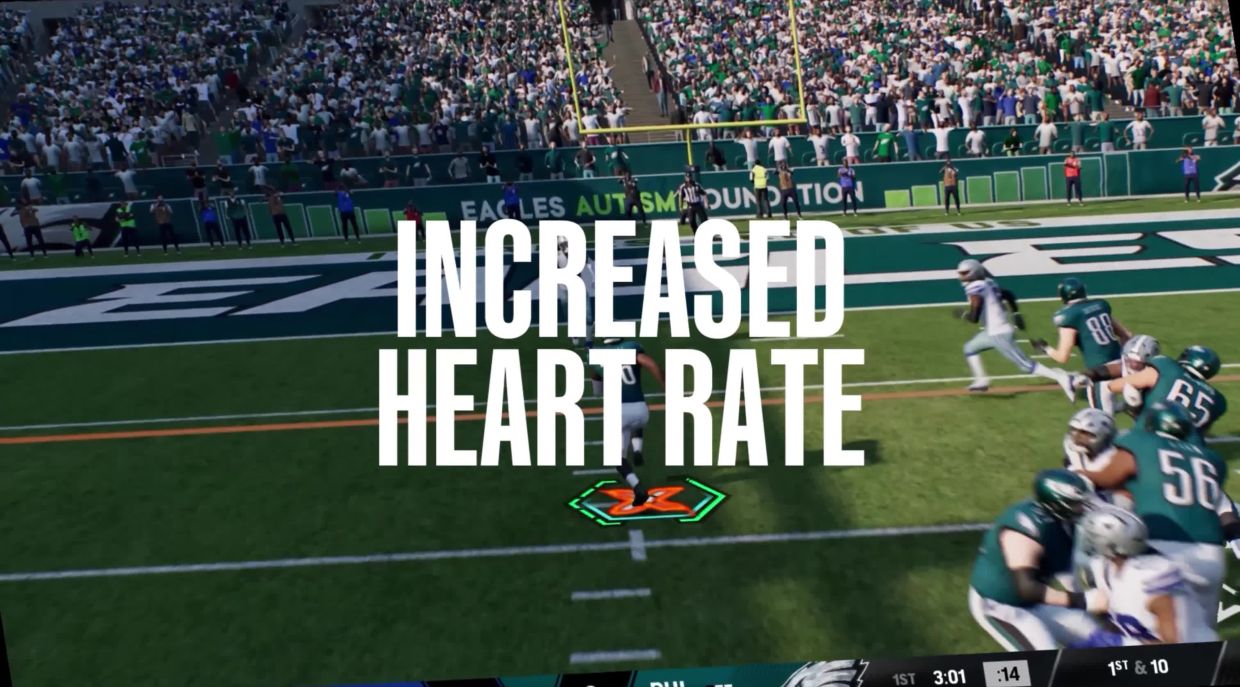
When a linebacker brings down New York Giants running back Cam Skattebo in a standard play during Madden NFL, his head strikes the turf with force. Yet unlike reality, those experiencing the game's standard version witness no lasting neurological consequence. A growing community of modders, however, has created an alternative experience that changes this fundamental disconnect between the simulation's violence and its consequences.
For players who install a freely distributed modification to the game, that same tackle transforms into something far more consequential. The screen blurs, light becomes overwhelming, nausea sets in, heart rate accelerates, headaches develop, breathing becomes laboured, dizziness clouds judgment, and tinnitus rings persistently. The visual field shakes in time with auditory distortion. This 9,000-line code alteration represents a deliberate attempt to bridge the gap between how Madden portrays football and what players actually experience when their brains suffer impact injuries.
The modification carries profound significance despite its modest reach. It demonstrates an uncomfortable truth about one of gaming's most successful franchises: the deliberate removal of a medical reality that occurs regularly in the sport it simulates. The NFL's own data shows 168 reported concussions during the most recent season, up from 129 the previous year, a spike the league attributed to rule changes that encouraged more kick returns. Yet Madden players encounter broken ankles, pulled hamstrings, and torn ligaments without encountering the one injury that most concerns medical professionals and neurologists studying the sport's long-term health implications.
Chris Borland, the former linebacker who abandoned his NFL career after his rookie season specifically due to concerns about chronic brain damage, recognises both the mod's value and its limitations. He praises its consciousness-raising intent while emphasising that no video game representation truly captures what concussion victims endure. The distinction matters profoundly: watching a digital avatar experience simulated symptoms while relaxing on a couch differs entirely from the genuine disorientation, cognitive impairment, and emotional turbulence that actual players navigate. Borland questioned whether genuine realism would require depicting the fractured relationships, workplace struggles, and personality changes that concussion survivors report years after their injuries.
The history of Madden's approach to head injuries reveals how external pressures shaped game design. During the 1990s, injured players departed the field via ambulance. Well into the 2010s, concussed players visibly winced while holding their heads, followed by what resembled sideline medical evaluation. This changed dramatically by decade's end, coinciding with the NFL's mounting legal crisis over brain injuries. The league settled a landmark lawsuit brought by thousands of former players and their families claiming organisational concealment of brain damage risks, ultimately paying over US$1.5 billion in claims. Will Smith's film dramatisation of this reckoning further elevated public consciousness about the issue.
Ben Utecht, a retired tight end who left professional football in 2010 specifically because of concussion concerns, articulated the league's unstated reasoning: removing head injuries from Madden served the NFL's commercial interests. Professional football requires parents to permit their children into youth programmes, coaches to emphasise athletic development, and fans to view the sport as worthwhile entertainment. Emphasising that talented athletes like those pictured on Madden covers—quarterbacks Michael Vick and Lamar Jackson among them—suffer career-altering head injuries contradicts this narrative. Yet Utecht identified the logical inconsistency: if developers include broken bones and muscle strains, omitting the injury most associated with long-term disability appears less like design philosophy than damage control.
Electronic Arts and the NFL maintain collaborative oversight through the league's licensing division, which conducts annual quality control reviews and offers suggestions to the developer. Former league executives acknowledged that discussions occurred regarding concussion mechanics, with the league preferring realistic incorporation rather than complete omission. The challenge proved complex: identical tackles produce different outcomes in actual football, with some players sustaining concussions while others absorb identical impacts without neurological injury. Implementing probabilistic concussion occurrence required designing systems that felt authentic rather than arbitrary, a complexity that apparently exceeded either party's willingness to address.
The modification's creators pursue a different objective entirely: expanding concussion awareness beyond traditional educational channels. Kristen Thomson Sheely, executive director of the Derek Sheely Foundation, recognised Madden's phenomenal reach among younger demographics who might never encounter formal concussion training materials. Her son, Derek Sheely, a fullback at Frostburg State University in Maryland, died at age 22 following a brain injury sustained during college football practice in 2011. After initially reporting headache symptoms—apparently following an earlier head impact—coaching staff dismissed his complaint. Sent back into a seven-on-seven drill, Sheely collided with a defensive back, walked to the sideline momentarily, then collapsed into unconsciousness from which he never recovered. The family ultimately reached a US$1.2 million settlement with the NCAA and university, which retired his jersey number 40.
The mod memorialises Derek Sheely in gameplay itself. When matches conclude, players see his jersey number unfurl across the screen, providing a moment of reflection about the real human cost of repeated head impacts. This integration of memorial function with gameplay mechanics reflects the creator's conviction that awareness requires emotional resonance, not merely statistical presentation. By making concussion symptoms experientially understood—however imperfectly—within a beloved entertainment medium, the mod attempts to reach audiences who may never encounter academic research papers, documentary films, or traditional health communications about traumatic brain injury.
The broader video game modification community has long traditions of extending gameplay beyond developer parameters. Enthusiasts alter character creation systems, update rosters in decade-old sports games with current athletes, and fundamentally transform gameplay mechanics through thousands of hours of volunteer coding. The concussion mod fits this tradition while pursuing decidedly activist aims. It challenges the assumption that games should sanitise uncomfortable realities, particularly when those realities directly affect the athletes depicted and millions of youth players seeking to emulate them.
For Malaysian and Southeast Asian readers, this debate illuminates how global entertainment properties—particularly those featuring wealthy Western sports—negotiate between entertainment value, commercial interest, and social responsibility. As esports and traditional sports gaming expand throughout the region, questions about how digital media depicts injury, recovery, and long-term health consequences become increasingly relevant. The tension between Madden's commercial obligations and authentic representation of football's dangers reflects universal challenges in how entertainment media handles topics that threaten their primary product's appeal.
The concussion modification ultimately represents more than a technical achievement. It embodies disagreement about what responsibility entertainment companies bear when simulating activities known to cause serious injury. By restoring a medical reality that the industry deliberately omitted, the mod's creators assert that reaching millions of young players with honest information about concussion risks matters more than protecting the NFL's preferred narrative about the sport's safety. Whether players who experience the mod's disorienting visual and auditory effects develop genuine understanding of concussion dangers remains uncertain, but the attempt itself signals that some communities refuse to accept sanitised versions of dangerous realities, even within entertainment contexts.

