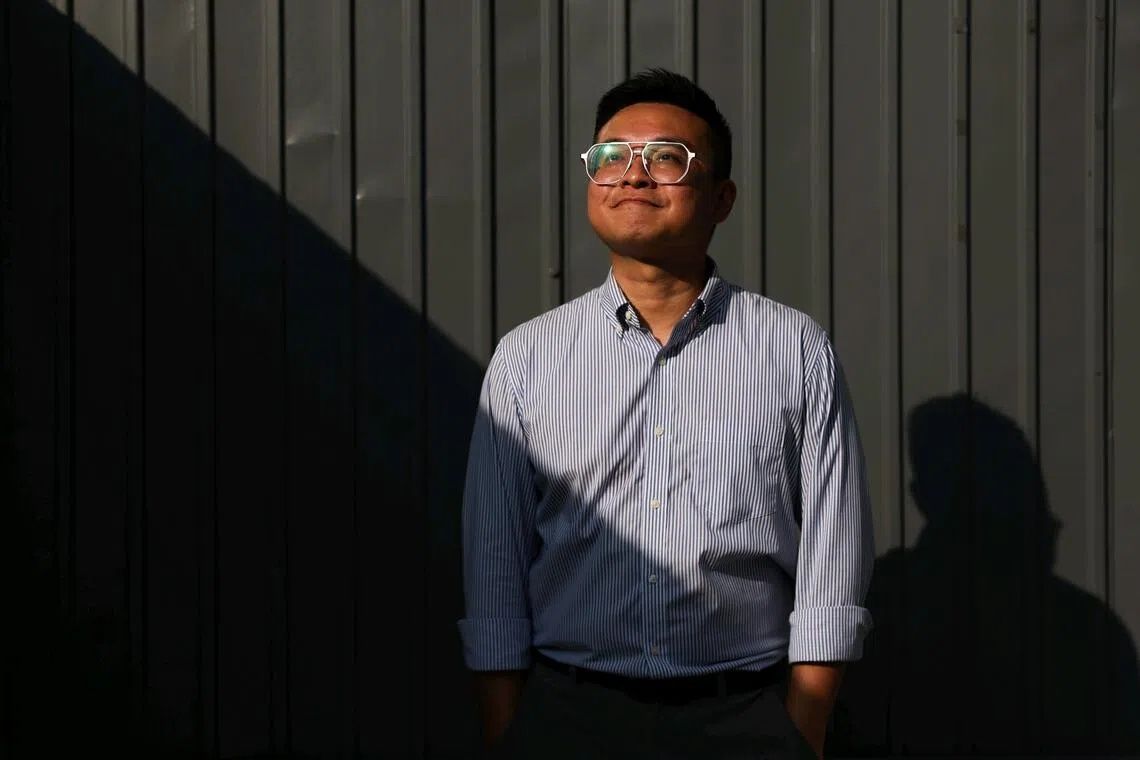
For marketing professional Cornelyus Tan, a double life of apparent success masked a devastating secret. For years, he maintained an enviable career trajectory whilst dependence on methamphetamine quietly consumed him, until his arrest in 2022 brought both worlds crashing down. His six-month detention at Changi Prison's Drug Rehabilitation Centre exposed him to an unexpected community: teachers, lawyers, and bankers—individuals whose credentials on paper suggested they should have been insulated from substance abuse, yet found themselves imprisoned for drug-related offences. The realisation struck Tan forcefully: education and professional achievement proved no barrier against addiction's reach. Speaking publicly about his experience for the first time, the 37-year-old articulated a profound insight that challenges widespread assumptions about who becomes vulnerable to drug abuse: "On paper, we look well. We are all very successful. But at the core of it, we had a common problem – the heart."
The statistics paint a sobering picture of shifting patterns in Singapore's drug landscape. Between 2021 and 2025, the number of inmates with tertiary education or advanced qualifications in the Drug Rehabilitation Centre surged from 204 to 293, representing a 44 per cent increase in just four years. These highly educated individuals now comprise approximately one in ten newly admitted inmates, compared with 8.8 per cent four years earlier—a trajectory suggesting the trend will continue. Their educational backgrounds span the full spectrum of tertiary qualification, from polytechnic diplomas through to doctoral degrees, indicating that drug addiction's reach extends across multiple strata of Singapore's professional class. This demographic shift reflects not merely changing patterns in who uses illicit substances, but signals a fundamental transformation in drug accessibility and social factors that previously seemed to protect educated populations from addiction.
Whilst authorities acknowledge that Singapore's overall population has become substantially more educated—with those aged 25 and above holding tertiary qualifications rising from 42.9 per cent to 54.5 per cent over the past decade—they note that highly educated inmates remain proportionally under-represented in rehabilitation facilities. Nevertheless, the absolute numbers tell a different story. The Central Narcotics Bureau cautiously attributes some of this trend to demographic shifts, yet the rise clearly outpaces simple population education increases. Recent cases involving prominent professionals, notably a medical doctor's conviction for drug use, have jolted public consciousness. These incidents shatter the illusion that education, professional status, and economic security create immunity against substance dependency, forcing a reconsideration of fundamental assumptions about addiction's socioeconomic boundaries.
Counsellors and addiction specialists working directly with drug offenders have long understood what the statistics now confirm: addiction operates indiscriminately across education levels and income brackets. Gopal Mahey, a senior counsellor at the Centre for Psychotherapy, emphasises that substance abuse cannot be dismissed as a problem affecting only the poorly educated, unemployed, or socially marginalised. The expansion of global illicit drug markets and the proliferation of synthetic narcotics have fundamentally altered the landscape, making previously scarce substances widely available. Methamphetamine, cannabis, Ecstasy, and heroin increasingly feature in cases involving tertiary-educated offenders, suggesting that the drug supply chain has evolved to serve diverse demographic markets. This professionalisation of drug distribution reflects a commercial reality: educated, employed individuals with disposable income represent lucrative consumers, and criminal networks have adapted their distribution strategies accordingly.
Technology has emerged as perhaps the most consequential enabler of drug accessibility across all social strata. We Care Community Services' executive director Tham Yuen Han identifies a fundamental shift in how people encounter illicit substances. Historically, drug initiation required personal networks—family members with addictive histories, neighbourhood peddlers, or friends embedded in drug-using circles. Geography and social connection constrained availability. Today, messaging platforms like Telegram and social media channels have dismantled these barriers entirely. A curious individual requires only an internet connection to discover suppliers and arrange transactions. This technological democratisation of access means that a lawyer in the central business district faces identical ease in obtaining drugs as someone in a traditional high-crime neighbourhood. The anonymity afforded by digital communication, combined with the passive experience of drug advertisements appearing in one's social feed, creates exposure pathways that previous generations never encountered.
Beyond accessibility, the Central Narcotics Bureau identifies additional social and cultural factors driving drug use among educated professionals. Peer influence remains potent regardless of education level, particularly when peers occupy positions of professional respectability that lend an air of normalcy to drug experimentation. Social media amplifies this effect by curating and distributing content from entertainers and influencers who either glamorise drug use or deliberately downplay its health consequences. International exposure also plays a role; educated Singaporeans with overseas experience or those following global trends absorb more permissive attitudes toward drugs prevalent in some Western contexts. These cultural imports, filtered through social networks and media consumption, gradually erode the protective stigma that previously discouraged drug use among aspirational professionals.
For those who first encounter methamphetamine or other stimulants, the initial experience often registers not as danger but as solution. Tan's introduction to the drug occurred in 2014 at a social gathering when he was 25, an aspiring photographer and arts college student. The substance delivered what he describes as a "Superman effect"—an intense adrenaline surge producing sustained efficiency, creativity, and euphoria. His photography work improved noticeably; colleagues praised his creativity and output; professional opportunities appeared. The drug did not feel like a problem requiring intervention; it felt like an enhancement enabling him to realise his potential. "Everything that I found was like 'Wow, it's an inspiration'," he recalls. When a news publication profiled him as a promising young photographer in 2015, his drug use had become integrated into his identity as a successful creative professional. He eventually ceased using methamphetamine for several years as physical consequences accumulated—severe weight loss, excessive perspiration—suggesting internal damage. But stress proved more powerful than caution when in 2020, working as a regional marketing manager for an e-commerce firm, the mental voice returned: "Why not use? You know how it might help you?"
The psychology of addiction among educated professionals differs subtly but significantly from patterns observed in other populations. Samuel Chua, principal counsellor at the Institute of Mental Health's National Addictions Management Service, observes that highly educated individuals experience the same fundamental drive toward addiction as others: the need to escape pain, stress, and emotional distress. Yet their education and professional accomplishment create additional psychological barriers to recognition and recovery. Educated individuals tend to harbour greater confidence in their capacity for self-control, believing they can manage drug use as they manage other aspects of their lives. This confidence becomes a trap. Tan developed a harm minimisation formula: after experiencing the depressive crash following drug-induced highs, he would abstain for weeks, creating the illusion of controlled use. The temporary periods of sobriety reinforced his conviction that he retained mastery over his substance use. This belief persisted until arrest made continued denial impossible.
Another case illustrates the particular challenges educated addicts face maintaining their double lives. A former junior college teacher, identified as John, managed to conceal his methamphetamine addiction for approximately six months whilst continuing to discharge his teaching responsibilities. He had been introduced to the drug in 2015 at a social gathering, initially framing it as a social connector rather than a substance of abuse. As his addiction intensified and his personal circumstances deteriorated—an abusive relationship compounded the toll of stimulant dependence—his work performance inevitably suffered. He began missing classes. When his reporting officer observed the pattern and inquired, his professional credibility and quick thinking enabled him to manufacture plausible explanations. For educated professionals, the skills that enabled career advancement—persuasiveness, articulation, the ability to construct convincing narratives—become tools for maintaining the fiction of functionality. Their professional identities possess sufficient social weight that colleagues and supervisors may extend extraordinary latitude before questioning the explanations offered.
The implications of this shifting pattern extend beyond individual cases of addiction and incarceration. As drug use becomes distributed across educational and professional strata rather than concentrated in disadvantaged populations, it challenges the frameworks through which Singapore's drug policy has traditionally understood and addressed substance abuse. Treatment and rehabilitation programmes designed around assumptions about educational levels, employment status, and social disadvantage may require recalibration. The social stigma that once protected educated populations by marking drug use as incompatible with professional identity has weakened, suggesting that prevention efforts must engage with the specific vulnerabilities of educated professionals: stress management, the productivity narratives surrounding stimulants, and the technological ease of access. Tan's experience demonstrates that recovery remains possible even after years of active addiction and professional success. His willingness to speak publicly about his struggles, despite the reputational risks, signals that some individuals who have experienced addiction are beginning to reshape the narrative, potentially reducing the shame that prevents others from seeking help before crisis forces intervention.
For Malaysia and the broader Southeast Asian region, Singapore's experience offers instructive warnings. As education levels rise across the region and technology penetration deepens, similar patterns may emerge in other countries. The globalised drug market does not respect borders or education levels. Malaysian policymakers and addiction specialists monitoring Singapore's trends should recognise that rising tertiary education rates correlate with rising substance abuse exposure through international networks, social media, and technology-enabled distribution channels. Prevention campaigns that rely exclusively on associating drug use with failure, poverty, or social marginalisation risk losing credibility and effectiveness as real-world evidence contradicts these narratives. Simultaneously, workplace drug testing and occupational health programmes may need reconceptualisation; the assumption that professional success indicates abstinence no longer holds. Singapore's rehabilitation system's willingness to accommodate educated professionals alongside other offenders, and the therapeutic approach emphasising individual pathology rather than social dysfunction, might offer models for other regional systems to examine. The challenge ahead involves acknowledging drug addiction's capacity to penetrate all strata of society whilst developing nuanced responses that address the particular vulnerabilities, denial patterns, and recovery needs of educated populations without diminishing attention to communities traditionally most affected by substance abuse.

