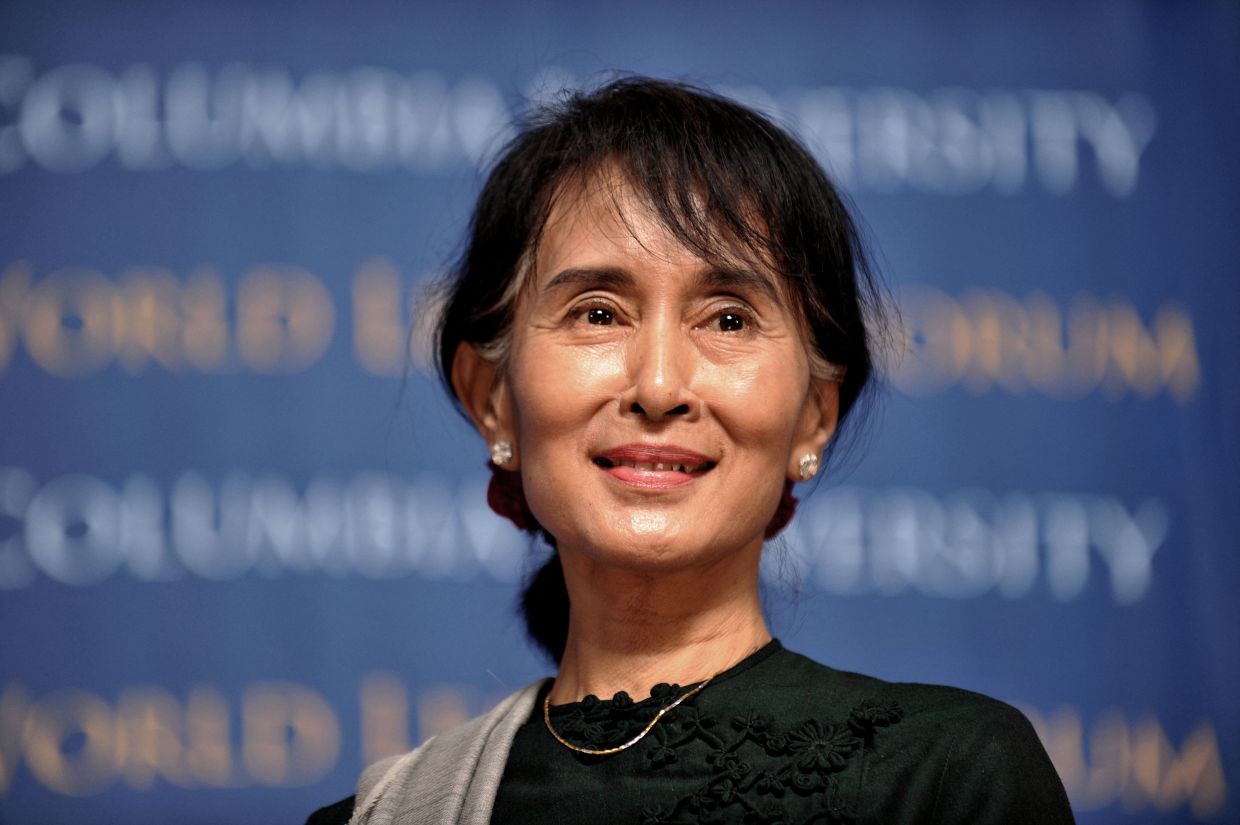
The question of where Aung San Suu Kyi actually is has become as elusive as the sprawling capital city itself. Myanmar's deposed democratic leader has officially been under house arrest in Naypyidaw since April, when General Min Aung Hlaing announced the transfer from prison as an ostensible humanitarian gesture. Yet pinpointing her precise location remains genuinely difficult in a metropolis that was deliberately engineered to obscure rather than reveal the movements and residences of those in power.
Naypyidaw presents a study in architectural opacity. With roughly one million residents scattered across a landmass nine times larger than New York City, the capital functions more as a series of disconnected enclaves than a cohesive urban centre. Twenty-lane highways stretch endlessly through jungle and rice paddies, connecting anonymous compounds where visibility and transparency are treated as threats rather than civic virtues. The city's very design reflects the strategic thinking of Myanmar's military establishment: isolation provides security, and isolation requires a landscape so vast and featureless that even permanent residents struggle to navigate their own surroundings.
The decision to relocate Suu Kyi from formal detention to house arrest appeared timed conveniently with Min Aung Hlaing's rebranding exercise. After staging heavily restricted elections in January 2025, the general transformed his appearance from uniformed military ruler to civilian president, with his hand-picked Union Solidarity and Development Party securing a predetermined victory. The move from prison to house arrest was presented as merciful treatment befitting an aging former leader, a way of allowing the strongman to project magnanimity on the international stage while maintaining absolute control over her movements and isolation.
Critics across Myanmar and beyond have dismissed this narrative entirely. At eighty-one years old, Suu Kyi's circumstances have not fundamentally altered through this bureaucratic reclassification. She remains confined to an undisclosed address in a city specifically designed to prevent unauthorised access and public observation. The shift from visible imprisonment to invisible confinement may offer better propaganda value, but it offers her no genuine freedom. The opacity that once served to hide government secrets now serves to hide one of Asia's most prominent political prisoners, transforming her status from officially acknowledged detainee to disappeared person within her own nation's capital.
When pressed on Suu Kyi's specific location, even senior government figures admit complete ignorance. Thein Tun Oo, an MP and spokesman for the ruling USDP, candidly stated that he does not know where she is being held, adding that his status as an ordinary party member presumably bars him from accessing such information. This remarkable admission reveals the compartmentalised nature of the security apparatus: information about the nation's most prominent prisoner is restricted to a vanishingly small circle, with even military brass claiming they lack the clearance necessary to know her whereabouts. One police source from the special branch suggested that even generals do not possess this information, indicating a security arrangement so secretive that it has become insulated from normal command structures.
Understanding Naypyidaw's deliberate design is essential to grasping how such comprehensive concealment operates in practice. The city was established as Myanmar's capital in 2005 by General Than Shwe, one of the military regime's previous leaders, who chose its remote central location specifically to distance power from the traditional ports and urban centres where popular movements might mobilise. Yangon, the former capital, held too many historical memories of protest and foreign contact. Mandalay, the second city, harboured its own independent traditions. By constructing an entirely new capital in the jungle, the military regime created geography as a tool of political control, a setting where urban design itself reinforces authoritarian imperatives.
The resulting city defies basic principles of urban planning that would normally apply anywhere else in the world. Its gilded parliament campus sprawls across eight hundred acres, representing one of the planet's most extravagant legislative complexes despite Myanmar's decades of non-democratic governance. Yet beyond this architectural showpiece lie countless empty streets where legions of groundskeepers vastly outnumber actual residents. Mobile internet jammers deliberately disrupt navigation applications, rendering GPS coordinates meaningless. The effect is profoundly disorienting: a resident as fundamental as a long-time inhabitant cannot reliably navigate even to her own home without certainty of direction. As one twenty-five-year-old Naypyidaw resident explained, everything appears identical, roads confuse, and even those permanently resident in the capital cannot consistently orient themselves within its monotonous landscape.
Urban theorists have analysed the city's psychological impact extensively. Galen Pardee, an architect and adjunct professor at Columbia University, has described being in Naypyidaw as constituting its own form of imprisonment. The city represents the complete antithesis of what conventional urban planning recognises as making human settlements functional and pleasant. Its deliberate sterility, vast empty spaces, and confusing sameness serve explicitly political ends rather than human needs. Every feature contradicts what would normally be considered good city design, not through incompetence but through conscious intention, embedding governance into concrete and asphalt. This becomes especially clear when considering how Suu Kyi, despite technically being under house arrest rather than in prison, remains fundamentally confined by the landscape itself.
Suu Kyi's personal history contextualises the particular cruelty of her current situation. She is the daughter of Aung San, Myanmar's independence hero, and spent much of her life abroad before returning in 1988 to spearhead the pro-democracy movement. Her earlier activism earned her fifteen years of house arrest during the 1990s, confined to her family mansion in Yangon where she became a symbol of resistance that inspired countless demonstrators. She received the Nobel Peace Prize in 1991 in recognition of her peaceful struggle. The international community watched as Myanmar's generals gradually permitted democratic transitions, allowing Suu Kyi to lead the nation during a decade of managed reform before the 2021 coup reversed those gains entirely.
Following her removal from office, Suu Kyi was jailed on charges that international human rights organisations universally describe as fabrications designed to neutralise her political threat. No credible evidence supports the accusations against her, and her extended absence from public view has raised fears about her health and safety among supporters worldwide. One villa where she previously stayed before taking office has been demolished, erasing physical evidence of her connection to the capital. Previously, as the nation's elected leader, she had been entitled to government residences in Naypyidaw situated behind security checkpoints inaccessible without proper clearance. Now her location remains concealed even from those checkpoints.
Her son, Kim Aris, speaking by telephone from London, has challenged the fundamental claim that her circumstances have changed. He argues that the reclassification from prison to house arrest represents mere theatrical repositioning rather than substantive improvement. Any residence where she is confined remains functionally a private prison rather than a genuine home, he suggested, and he cannot perceive meaningful distinction between her current situation and the extended house arrest she endured during the 1990s. His critique cuts past official rhetoric to highlight the continuity of her isolation across decades and across different iterations of Myanmar's political system.
The deliberate disappearance of Suu Kyi within Naypyidaw reflects broader patterns in Myanmar's authoritarian governance that hold significance for Southeast Asia more broadly. A region watching Myanmar's democratic backsliding must contend with the reality that isolation and concealment have become tools of state control, that legal terminology can mask unchanged oppression, and that architectural design itself can function as an instrument of political suppression. The inability of even military generals to locate their nation's most prominent prisoner speaks to the dysfunction and paranoia embedded within the regime's structures. As the Union Solidarity and Development Party declares that Suu Kyi's era has ended and Naypyidaw's parliament retires old magazines bearing her image, the question of her location remains not merely unanswered but deliberately unanswerable, a silence that speaks volumes about the nature of power in Myanmar.

