The Metropolitan Museum of Art convened an unusual assembly in May to deliberate over one of fashion's most delicate dilemmas: whether to proceed with a comprehensive retrospective dedicated to John Galliano, one of contemporary design's most influential yet deeply controversial figures. The closed-door gathering brought together prominent figures including Vogue's Anna Wintour and Jewish community leaders to explore the institutional, ethical, and social complexities surrounding the exhibition. These conversations represented just one strand in a broader consultation effort spanning the past year, reflecting the museum's recognition that simply showcasing Galliano's extraordinary body of work would not be sufficient—the institution needed explicit engagement and, ideally, approval from those most affected by his past transgressions.
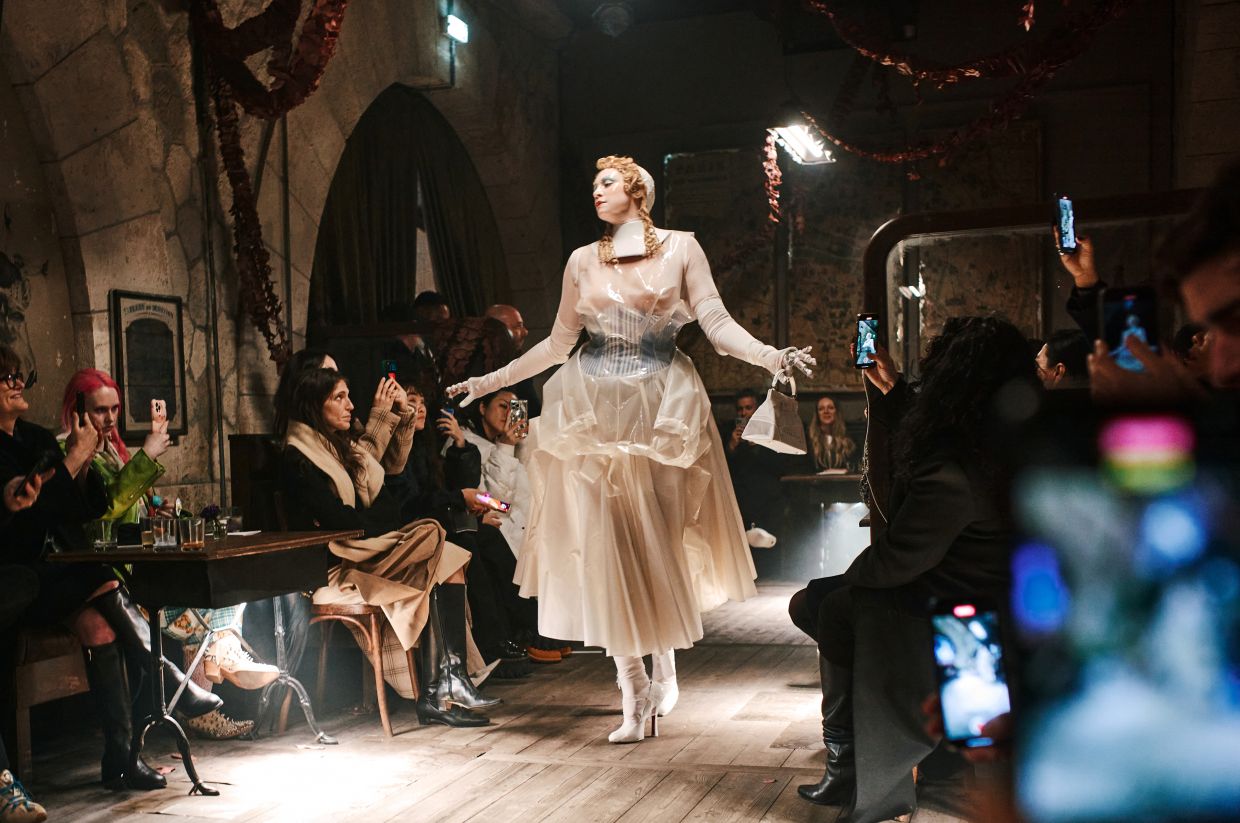
Galliano's position in fashion history is undeniable. During his tenure as head designer of Dior from 1996 to 2011, he fundamentally reimagined the storied French maison, transforming it from a respected heritage house into a global cultural phenomenon. His mastery of the bias-cut dress, combined with his theatrical world-building and imaginative vision, established him as a visionary capable of marrying commercial appeal with artistic integrity. His influence extended beyond the runway—his designs have graced celebrities from Zendaya to Amal Clooney, and his vintage pieces now set auction records. Yet this illustrious career trajectory was fractured in 2011 when a video surfaced capturing Galliano making deeply offensive antisemitic remarks, including declarations of admiration for Adolf Hitler, in a Paris bar. The fallout was immediate and severe: he lost his position at Dior, faced conviction on hate crime charges in French court, and became a cautionary tale about the consequences of hateful speech.
What complicates this narrative further is Galliano's subsequent path toward rehabilitation. Rather than retreating entirely from public life, he undertook a deliberate process of education and contrition. He entered rehabilitation, worked with a rabbi in London, and engaged with figures like Abe Foxman of the Anti-Defamation League to develop a deeper understanding of Judaism, the Holocaust, and the particular harm of antisemitism. In 2014, he returned to the fashion industry as creative director of Maison Margiela, rebuilding his professional reputation over the past decade through consistent artistic output. For many in the fashion establishment, this trajectory represents a legitimate narrative of accountability and personal transformation—yet the timing of a major retrospective remains fraught, particularly given the contemporary climate surrounding antisemitism and hate crimes.
The broader context amplifies the exhibition's sensitivity. Antisemitism in the United States and globally has risen markedly in recent years, creating heightened anxiety within Jewish communities. New York, home to the Met and a significant Jewish population, has witnessed disturbing incidents, including the recent stabbing of two men in broad daylight, with one victim leaving a Jewish community centre in Manhattan. The attack was prosecuted as a hate crime, reinforcing community concerns about safety and representation. Against this backdrop, the decision to mount a major exhibition celebrating Galliano—the third living designer ever to receive such an honour, joining Yves Saint Laurent and Rei Kawakubo—carries considerable symbolic weight and potential controversy.
Museum director Andrew Bolton has approached this challenge with apparent seriousness, indicating that hesitation about the exhibition was not merely about public relations management but reflected genuine institutional reflection. Bolton noted that while he had conceptualized a Galliano retrospective since 2010, serious planning commenced only in 2024, when both he and the museum's board determined that additional consideration was necessary. The delay, he insisted, was not motivated by fear regarding Galliano's past alone but rather by a commitment to presenting the exhibition responsibly and comprehensively. Now, Bolton argues, the current cultural moment makes such an exhibition particularly relevant and necessary, positioning it not as a simple celebration but as an opportunity for meaningful public discourse on design, accountability, and redemption.
The response from Jewish leaders consulted in the May meetings suggests cautious, conditional support rather than blanket endorsement. Rabbi Rick Jacobs, president of the Union For Reform Judaism in North America, emphasized that Galliano's engagement with the Jewish community leadership demonstrated genuine sincerity. "The word I come back to is 'sincerity,'" Jacobs stated, noting that Galliano had met their gaze directly and communicated clearly rather than relying on rehearsed talking points. Jonathan Greenblatt of the Anti-Defamation League offered measured support, stating that Galliano's efforts to repair damage caused by his words and to learn from the incident should be acknowledged. Some rabbis invoked the Jewish principle of teshuvah—repentance and restoration—which traditionally emphasizes the possibility of meaningful redemption and second chances for those who demonstrate genuine contrition.
Yet this qualified support comes with explicit conditions and concerns. Rabbi Joshua Davidson of Temple Emanu-El, located just blocks south of the Met, articulated a vision for the exhibition that transcends mere artistic celebration. He suggested that the museum leverage the retrospective as an educational opportunity to address the contemporary reality of antisemitism, incorporating discussions about resistance to prejudice and the dangers posed by hateful ideologies in the current moment. This framing transforms the exhibition from a straightforward artistic tribute into a more complex pedagogical intervention, one that uses Galliano's career—rupture and all—as a vehicle for broader social conversation.
Bolton's curatorial strategy appears to embrace this complexity. He plans to open the exhibition with an "orientation gallery" explicitly addressing what he terms "the rupture" that has become as defining to Galliano's career as the artistry of his designs. Bolton emphasized that clarity must supersede euphemism, and that the museum's responsibility is to present the most accurate version of events rather than Galliano's preferred narrative. He indicated an intention to draw extensively on Galliano's own words, allowing his statements to bear witness to his failings as well as his subsequent engagement with the learning process. Additionally, Bolton is considering creating an online forum to facilitate extended public discussion, recognizing that the exhibition space alone may be insufficient for the nuanced conversations the retrospective will provoke.
For Malaysian and Southeast Asian readers, this situation offers instructive lessons about the relationship between artistic merit, personal accountability, and institutional responsibility in an increasingly interconnected cultural landscape. The Met's deliberations reflect broader questions confronting museums, galleries, and cultural institutions worldwide as they navigate the tension between celebrating artistic achievement and acknowledging the ethical dimensions of artists' lives and statements. The decision to proceed with conditional support—contingent upon transparent engagement with historical harm—establishes a precedent that may influence how regional institutions approach similar dilemmas. It suggests that rehabilitation, while possible, requires sustained, visible commitment to learning and change, not merely the passage of time or career success.
Galliano's situation also highlights the particular vulnerability of Jewish communities to hateful rhetoric and the legitimate concerns about normalization when prominent figures who have expressed antisemitism are subsequently rehabilitated and celebrated. The Met's consultative process, while imperfect, demonstrates recognition that such decisions cannot be made unilaterally by cultural elites but require genuine engagement with affected communities. Yet questions remain about whether an orientation gallery and online forum adequately address the complexity of displaying work created by an artist whose offensive statements continue to carry emotional and historical weight for many viewers.
The fashion industry's apparent movement beyond discomfort with Galliano—evidenced by his continued prominence on red carpets and at auction houses—raises questions about whether industry forgiveness translates into broader social acceptance or whether it reflects fashion's particular tendency to prioritize aesthetic innovation over ethical consistency. As the Met prepares to open its doors to what will inevitably become one of fashion's most scrutinized exhibitions, the institution will likely find that no curatorial strategy fully resolves the fundamental tension between honoring artistic contribution and acknowledging historical harm. The exhibition's ultimate significance may lie not in resolving this tension but in demonstrating how cultural institutions can acknowledge it honestly, creating space for uncomfortable truths alongside aesthetic appreciation.

