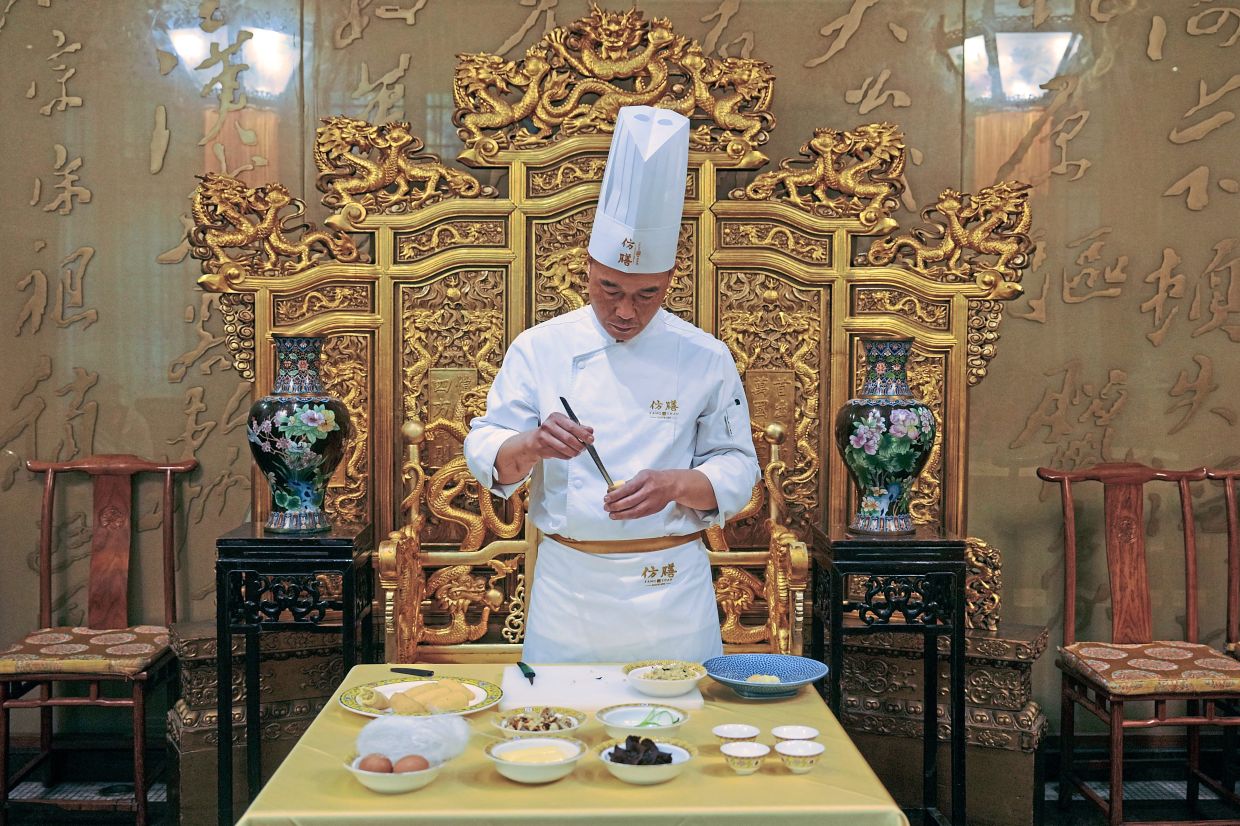
Centuries of imperial ritual, power dynamics and aesthetic refinement remain encoded in the dishes served at Fangshan Restaurant in Beijing, where chefs continue to prepare meals once graced the tables of China's emperors and empress dowagers. The establishment, founded in 1925 by former Qing Dynasty court chefs at Beihai Park, has become a custodian of culinary practices that shaped Chinese food culture for generations. Through careful preservation of recipes, techniques and the stories embedded within each dish, Fangshan demonstrates how cuisine transcends mere sustenance to become a vessel of historical memory and cultural identity—a lesson increasingly relevant as Southeast Asian nations grapple with preserving their own culinary heritage amid modernisation pressures.
The origin story of one iconic imperial dish illustrates the intimate relationship between power, creativity and cuisine in the Qing court. According to Zhou Tong, a chef at Fangshan, Empress Dowager Cixi once dreamed of a pastry during China's final imperial decades. The following morning, her kitchen staff presented her with the exact confection from her nocturnal vision. Delighted by this feat of culinary intuition, Cixi rewarded the chef with a silver ingot and renamed the creation from its original designation of "minced pork pancake" to the more evocative "dream pastry." This anecdote reveals how imperial courts operated as spaces where culinary innovation merged with political favour, where a chef's ability to divine and manifest the emperor's wishes could yield material rewards and lasting recognition.
The restaurant's name carries profound meaning rooted in this history. As assistant general manager Di Xin explains, "Fangshan" literally translates to "imitating the imperial cuisine," capturing the establishment's foundational mission to replicate and perpetuate the gastronomic traditions of the imperial household. Beyond Fangshan, other Beijing restaurants serve variants of imperial cuisine, while institutions like the Palace Museum preserve tangible artifacts of court dining culture, including the pastry moulds that shaped ceremonial creations. This multi-institutional approach to preservation demonstrates a sophisticated understanding that maintaining culinary heritage requires both living practice and material documentation.
Imperial Chinese cuisine encompassed far more than everyday meals; it constituted an elaborate system of ritual performance that reinforced hierarchical relationships and cosmological beliefs within the court. Teng Deyong, a researcher at China's Palace Museum, notes that drinking milk tea represented a crucial ceremonial opening to Qing Dynasty banquets, establishing the formal tone for what followed. During these elaborate gatherings, emperors would bestow wine or food upon princes and officials, who were obligated to perform respectful rituals and kowtow before consuming what had been gifted to them. Food thus became currency in a carefully choreographed system of patronage and subordination, where accepting nourishment from the emperor's own hand reinforced loyalty and social hierarchy.
Parallel to celebratory feasts, sacrificial meals constituted another significant dimension of imperial dining culture, operating under entirely distinct protocols. The most important such ritual occurred at the Palace of Earthly Tranquillity, where sacrificial pork was boiled without salt and subsequently distributed among honoured guests. Receiving this particular meat was regarded as an exceptional distinction, and the deliberate absence of seasoning carried deep symbolic weight. Wandi Wang, a professor of Chinese at Lehigh University, explains that this practice connects to classical texts like the "Book of Rites," which describes unseasoned dishes served during sacrificial ceremonies. The absence of flavouring was itself meaningful: it invoked an imagined ancient simplicity and expressed ritual reverence for cultural antiquity and origins. This demonstrates how seemingly minor culinary choices functioned as powerful acts of commemoration and cultural transmission.
Pastries achieved particular prominence within imperial cuisine, leading the court to establish a dedicated institution for their production. The techniques employed remain labour-intensive and uncompromising in their rejection of modern convenience. Zhou Tong, who specialises in these preparations, insists that traditional imperial methods require entirely handcrafted processes—no blenders, food processors, or electrical equipment. Beans must be pulverised using sieves, while certain flours are worked in custom-made copper pots. This insistence on manual labour produces distinctly textured results impossible to replicate through mechanisation. "A machine may be more convenient," Zhou observes, "but the texture is completely different. You lose the delicate graininess and sandy mouthfeel that handcrafted pastries are supposed to have." This tension between efficiency and quality articulates a broader philosophical position about the irreducibility of tradition to mere recipe, suggesting that process itself carries cultural meaning.
Fangshan's most celebrated creations reflect this commitment to labour-intensive tradition. The pea flour cake and red bean roll rank among bestselling items, with the kitchen preparing more than 200 pea flour cakes daily during peak seasons, each requiring individual hand-shaping and careful attention. These are not novelty items marketed primarily through historical narrative, but rather dishes that have sustained sufficient consumer demand to justify their production at scale. This commercial viability proves significant: it suggests that even in contemporary China, consumers value the sensory and cultural experiences these dishes provide sufficiently to pay premium prices and accept longer preparation times.
Executive chef Fan Liangliang's professional trajectory illuminates the demanding nature of imperial culinary transmission. Upon joining Fangshan as a kitchen apprentice, he discovered that his culinary school training had prepared him inadequately for the refined techniques required. Rather than accelerating output through the efficient methods he had learned, he was compelled to remaster fundamental skills through slower, more deliberate processes. One such technique is "Nizihuo," involving the meticulous mincing of ingredients such as fish, shrimp or chicken into extremely smooth paste, which is then reshaped into elaborate decorative forms—frogs, birds, flowers. Fan describes this as "one of the hallmarks of imperial cuisine," capturing the principle that every dish served on the imperial table required simultaneous achievement of innovation, visual beauty, nutritional value and presentation excellence.
Imperial cuisine has necessarily undergone adaptation while maintaining its essential character. Rare ingredients like bear paws, once central to imperial tables, no longer appear on Fangshan's menus due to conservation concerns and modern ethics. Rather than viewing such modifications as degradations, Fan frames them as necessary evolutions that preserve the spirit of each dish despite altered material conditions. This approach to tradition—as something alive and capable of meaningful modification rather than static preservation—offers useful models for other Asian culinary heritage sites navigating ethical, environmental and contemporary dietary concerns.
The cultural significance of imperial cuisine extends beyond gastronomic technique into the symbolic and political meanings historically encoded within specific dishes. Poet Du Fu once composed verses celebrating cold noodles made with pagoda-tree leaves, a composition that Wandi Wang argues functions not merely as culinary description but as political allegory. Du Fu transformed a modest, verdant dish into an expression of loyalty and thwarted ambition to serve the emperor, demonstrating how Chinese cuisine has long carried meanings extending far beyond basic nutrition. Chinese food culture has consistently reflected broader ideas about politics, culture and aesthetics, evolving in response to changing circumstances. This suggests that studying what people chose to eat—and how they remembered eating—reveals fundamental truths about how they understood power, tradition and identity.
At Fangshan's core lies a deliberate synthesis of Manchu and Han culinary traditions, bringing together the food practices of the Qing rulers with those of China's majority population. This fusion reflects the multicultural composition of the imperial court itself and demonstrates how cuisine can serve as a medium for negotiating and expressing cultural coexistence. For Southeast Asian readers particularly, this model carries implications as nations navigate questions about which culinary traditions to preserve, whose food practices to elevate as national heritage, and how to balance preservation with adaptation. Preserving culinary tradition, Wang emphasises, requires taking its history seriously. "Culinary heritage tells us not only how people ate in the past, but also how people in the present choose to remember and give meaning to that past." This formulation shifts focus from the past itself to contemporary acts of remembrance, suggesting that what Fangshan preserves is ultimately not simply history, but a continuous conversation between past practices and present choices about what deserves preservation and why.

