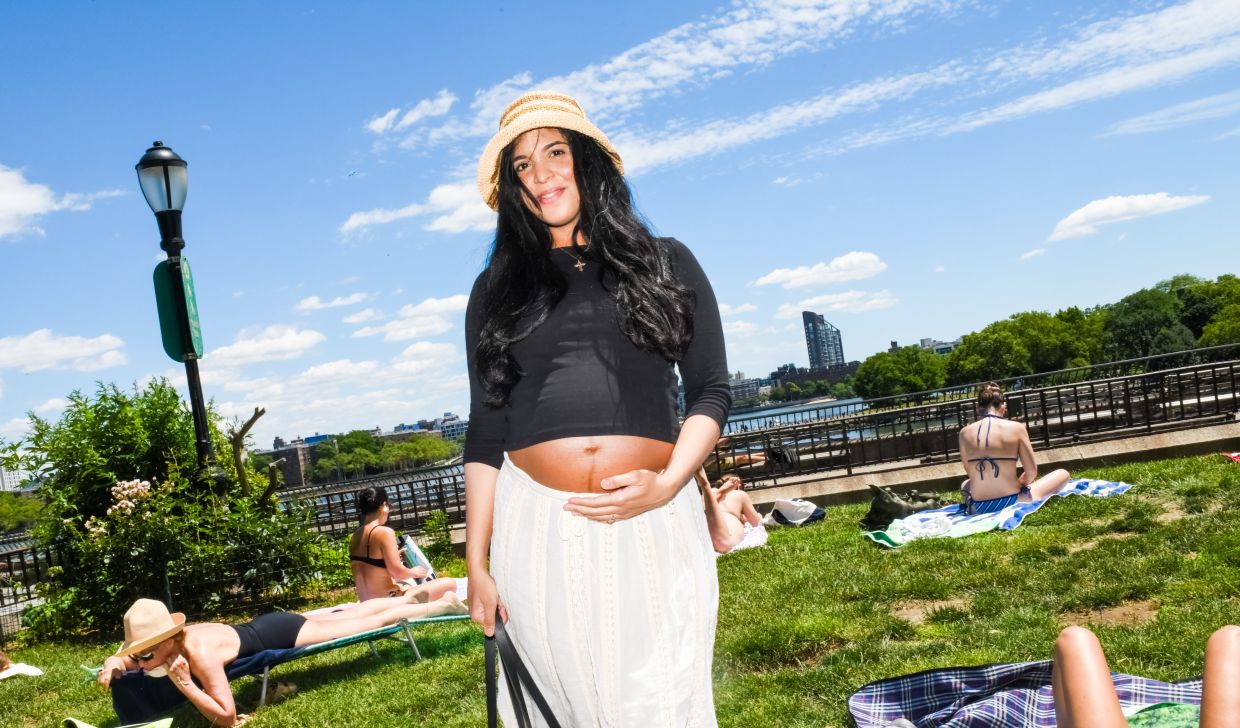
The way expectant mothers present themselves has undergone a striking transformation in recent years, with pregnant bellies now displayed as fashion statements rather than something requiring concealment. This cultural shift reflects deeper changes in how younger generations view their bodies during pregnancy, moving decisively away from the oversized, shapeless maternity wear that dominated wardrobes for generations. The change is evident everywhere—from concert stages and Instagram announcements to everyday street wear—where pregnant women increasingly style their visible bumps with intention and pride rather than attempting to hide them beneath voluminous layers.
When stylist and handbag designer Sarah Brown began sharing photos of her pregnant form on social media at 22 weeks gestation, she deliberately showcased her rounded midriff. Pairing a grey T-shirt worn high enough to expose her belly with a beige blazer and low-slung jeans, Brown was making a conscious fashion choice. Her mother's well-meaning suggestion to purchase maternity jumpsuits missed the point entirely—Brown wasn't dressing out of necessity or attempting to conceal her pregnancy. Instead, she was styling specifically around her changing silhouette, treating her belly as an integral part of her overall aesthetic rather than an obstacle to work around. This distinction reflects a broader philosophical change about how young women approach their pregnant bodies.
Fashion scholars attribute much of this transformation to generational attitudes shaped by decades of body-positivity messaging. Laura McAndrews, an associate professor studying maternity wear attitudes at Kent State University, notes that Generation Z and millennials have internalized messaging about embracing all body stages in ways their predecessors did not. Previous generations, particularly those who came of age in the 1990s and earlier, relied on oversized, tent-like garments to completely obscure their changing forms. The contrast is striking: whereas concealment once seemed like the obvious—even necessary—approach to pregnancy dressing, younger women now view visible pregnancy as something worth celebrating rather than hiding.
The celebrity influence on this trend cannot be overstated. Demi Moore's iconic 1991 Vanity Fair cover featuring her seven-months-pregnant naked form became a watershed moment, but the impact intensified exponentially through social media in subsequent decades. Beyoncé's 2017 baby shower appearance showcasing her bare belly during her second pregnancy sparked widespread conversation, and Rihanna's 2022 pregnancy announcement—made while wearing an unbuttoned bright pink Chanel puffer jacket that left her bump fully visible—effectively crystallized a new maternity aesthetic. The singer's approach resonated powerfully with younger women, who began understanding pregnancy display as fashionable rather than immodest. Anne Hathaway's 2023 announcement in a white crop top and skirt continued this trajectory, establishing visible pregnancy as a legitimate style choice across multiple celebrity platforms.
Musician and author Michelle Zauner became another vocal advocate for this approach when she performed at New York's Governors Ball festival in June while visibly pregnant, wearing an unbuttoned cardigan that revealed both a lacy black bra and her bare belly. Zauner was intentionally channeling Rihanna's aesthetic, having been directly inspired by the singer's willingness to display rather than conceal. She was equally motivated by practical fashion considerations, noting her aversion to maternity clothing that amounted to "giant muumuu sacks"—shapeless garments designed purely for coverage rather than style. For Zauner, the choice represented both a political statement about body acceptance and a straightforward preference for clothing that actually looked good, rather than garments explicitly marketed as maternity wear.
The historical context illuminates just how recent this transformation truly is. For most of human history, visible pregnancy was treated as inherently problematic, not primarily because of modesty concerns in the modern sense, but because pregnancy itself constituted evidence of sexual activity. As fashion historian Isabel Davis has documented, this fundamental discomfort with pregnancy meant that concealment served deeper cultural purposes. Even relatively recently, women concealed pregnancies from employers due to legitimate fears of workplace discrimination or termination. This reality shaped the entire maternity fashion industry around a single principle: making pregnancy as invisible as possible.
Ariane Goldman, who founded the maternity clothing company Hatch in 2011, witnessed this transition firsthand. She launched the business during an era when discussing pregnancy openly remained somewhat taboo, and women routinely hid their pregnant status from supervisors and colleagues out of self-protection. Over the subsequent decade, Goldman observed a remarkable cultural shift toward celebrating and acknowledging the power of pregnancy. The company's leadership team regularly grapples with what this transformation means for the maternity wear industry itself. If younger women increasingly bypass purchasing maternity-specific clothing in favor of styling their own wardrobes—whether through borrowing partners' oversized items or mixing pieces from non-maternity brands—the traditional market fundamentally shifts.
Yet despite this revolution in pregnancy display, the maternity clothing industry hasn't become obsolete. Goldman argues that even women enthusiastically embracing visible pregnancy eventually recognize that certain functional garments prove necessary. The key difference lies in how contemporary maternity wear presents itself: not as concealment, but as garments specifically engineered to support changing bodies while maintaining aesthetic appeal. Brown herself, despite her deliberate styling approach, ultimately relied on functional pieces including Los Angeles Apparel elastic-waist pants and Paloma Wool tops featuring side-buttoning designs that accommodated her changing shape while maintaining visual interest.
This evolution reflects a more nuanced relationship with maternity fashion than simple binary thinking suggests. Young mothers aren't rejecting all specialized maternity clothing; rather, they're rejecting the shame and concealment ethos that historically shaped the category. They want garments that work for their bodies while allowing them to feel stylish and authentic. The crop tops, cutouts, and revealing silhouettes aren't expressions of recklessness or poor judgment, but deliberate choices to celebrate rather than apologize for pregnancy. For Southeast Asian readers, this trend carries particular significance as these markets increasingly grapple with balancing traditional cultural values around modesty with younger generations' embrace of body positivity and self-expression.

