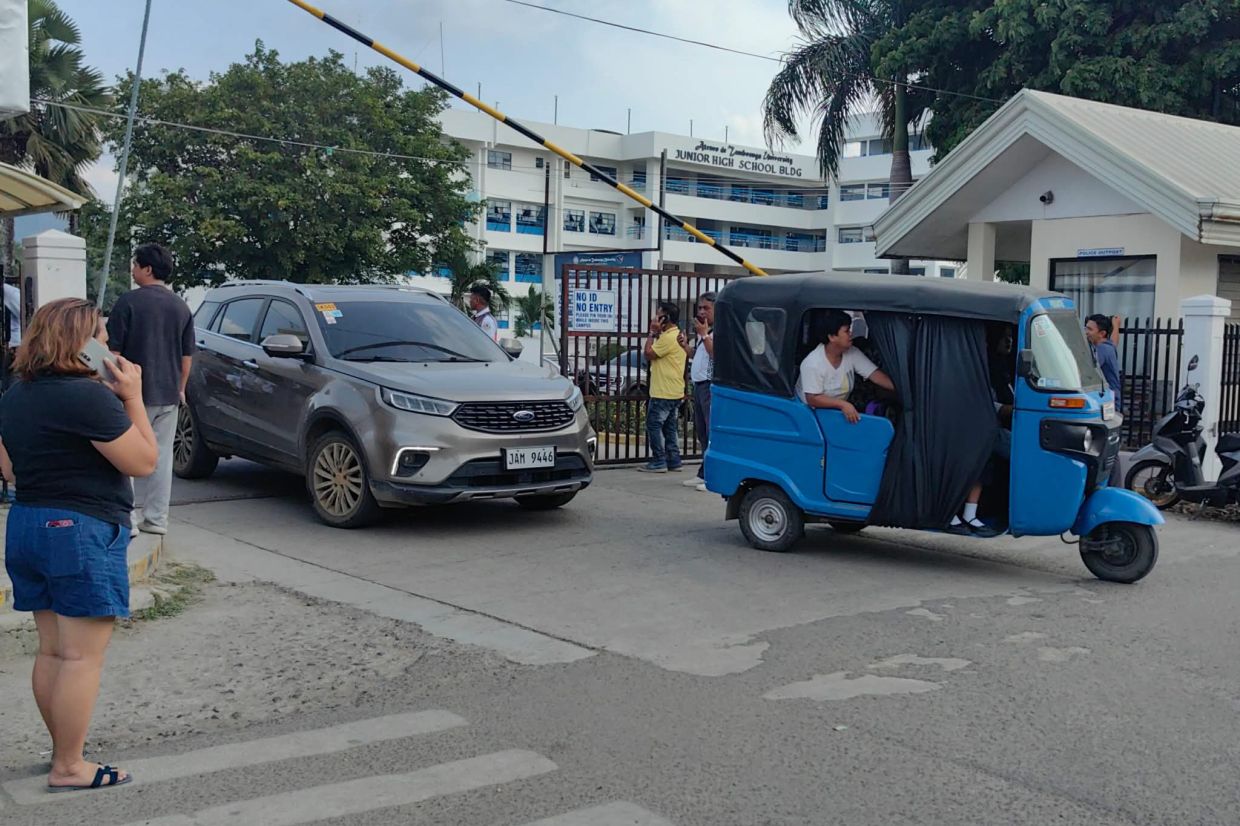
The Philippines is grappling with an unfamiliar crisis. Two shooting incidents at schools—one in Tacloban in July and another in Zamboanga in August—have shattered the nation's historical immunity to this particular form of violence, prompting urgent soul-searching among policymakers, academics and mental health professionals. Though gun violence itself is not new to the archipelago and the country maintains one of Southeast Asia's highest rates of civilian gun ownership, school shootings have remained comparatively uncommon until now. The flurry of subsequent incidents, including bomb threats, a stabbing and the discovery of firearms on multiple campuses, has forced authorities to confront questions about what has fundamentally shifted in Filipino society to create fertile ground for such attacks.
The Department of Education initially planned comprehensive active shooter drills nationwide for August 25, only to abandon the initiative after psychological experts warned that such exercises risked traumatising children who had already witnessed or heard about real school violence. This reversal itself underscores how the recent incidents have pierced the national consciousness, transforming an abstract threat into a tangible concern affecting educational institutions across the country. The psychological toll of these events extends far beyond the immediate victims and witnesses, touching the entire student population and raising critical questions about school safety frameworks that were never designed to address this particular challenge.
Experts analysing the phenomenon identify a convergence of troubling factors rather than a single cause. Psychologists, sociologists and legislative investigators, including Senator Risa Hontiveros who conducted hearings into both incidents, point to what might be described as a perfect storm—the intersection of normalised violence within the broader culture, the deep digital immersion characteristic of contemporary Filipino youth, and insufficient adult capacity to identify warning signs in young people experiencing profound isolation or psychological distress. Simultaneously, online extremist networks have become increasingly sophisticated in identifying and exploiting these vulnerabilities, using social media algorithms and gaming platforms as hunting grounds for potential recruits.
A significant part of this analysis traces back to the legacy of the drug war campaign implemented under former president Rodrigo Duterte from 2016 to 2022. During those years, the anti-drug initiative resulted in tens of thousands of deaths, many of which occurred with minimal accountability or judicial oversight. Senator Hontiveros framed this historical moment as central to understanding current events, asking whether a political climate that appeared to glorify violence from the nation's highest offices could have fundamentally altered Filipino cultural attitudes toward killing, death and weapons as problem-solving mechanisms. She suggested that rather than reversing this normalisation, the culture of violence "seeped deeper" into society and has now reached the schoolyard. Duterte himself currently faces trial at the International Criminal Court in The Hague for alleged crimes against humanity stemming from his administration's anti-drug operations.
University of the Philippines Diliman sociologist Filomin Gutierrez characterises the drug war as establishing a broader cultural framework in which violence functions as a legitimate solution to social problems, making the idea of killing and lethal force seem like ordinary tools for addressing conflict. However, both Gutierrez and psychologist Peejay Bengwasan, who specialises in working with children involved in the criminal justice system, resist drawing a simplistic causal arrow directly linking the drug war to the school shootings. Rather, they suggest that living through a political era when violence appeared valorised by state authorities may have altered the psychological environment in which young people develop their understanding of acceptable behaviour. As Bengwasan explains, exposure to a political climate that seems to celebrate violence "increases your chances to become more aggressive or to see aggressive acts or tendencies as more normalised", essentially lowering the psychological barrier to considering violence as an option.
The second major vulnerability layer involves the intensely digital lives of contemporary Filipino adolescents. Government data indicates that approximately 60 percent of children aged 10 to 17 possess internet access and actively use online platforms—a demographic segment that has grown up with social media as a constant presence rather than a later-life acquisition. The suspects in the Tacloban shooting were 14 and 15 years old, while the Zamboanga shooter was 14. Unlike older generations who encountered the internet and social media after developing extensive face-to-face social skills and identity anchors, Filipino teenagers today have been navigating digital spaces since early childhood, often without the maturity or support systems to manage the psychological complexities this creates.
This extended digital immersion creates specific vulnerability to exploitation. Social media algorithms connect young people to individuals with radically different worldviews and values than their offline peer groups, at precisely the developmental stage when adolescents are most susceptible to external influence and seeking identity definition. Cybersecurity expert Angel Redoble provided Senate committees with a detailed picture of how extremist networks operate, beginning with patient identification of isolated or lonely children on conventional platforms such as online gaming communities. Once initial contact is established, recruiters gradually transition potential recruits into private servers and encrypted messaging applications where trust can be systematically built in isolation from other protective figures. The process deliberately creates psychological separation from family and school authority figures while building belonging within the extremist group. This calculated progression eventually reaches what Redoble termed "status through brutality", where increasingly extreme online behaviour earns elevated standing within the group hierarchy, and where the final threshold into real-world violence represents a final validation of group membership.
Police data presented to senators on August 20 revealed that authorities have documented 74 cases involving nihilistic violent extremism and successfully rescued 42 minors, with 30 of those being 15 years old or younger, demonstrating that recruitment is actively occurring among very young adolescents. Compounding the concern is evidence of copycat dynamics, with online posts celebrating the Tacloban shooters emerging within hours of the incident, while footage from the Zamboanga shooting has been repeatedly reposted and circulated, potentially inspiring further incidents through a process of narrative reinforcement and social contagion.
Yet the internet itself does not create all the vulnerabilities that extremist recruiters exploit. Sociologist Gutierrez identifies a paradox in Filipino society that simultaneously prides itself on strong family bonds and tight community cohesion while simultaneously creating profound isolation for youth who fall outside conventional social structures. She observes that while many Filipinos enjoy strong relational ties, the minority who struggle to form such bonds—those perceived as "weak", "strange", "delinquent" or "problematic"—experience severe social isolation with "sealed" pathways back to integration within mainstream society. For such individuals, alternative subcultures and online communities offering unconditional acceptance become powerfully attractive, representing the only available source of belonging.
This alienation can be further intensified by the various traumas that Filipino children encounter through natural disasters such as typhoons, earthquakes and flooding, as well as exposure to community violence. Psychologist Bengwasan notes that children respond to such distress through different psychological pathways—some internalise their difficulties as anxiety or depression, while others express their psychological pain through outwardly aggressive behaviour. School constitutes perhaps the most significant social laboratory for adolescents, the environment where they discover whether they are perceived by peers and teachers as "popular", "accepted", "visible" or fundamentally "invisible". Academic analysis of rampage shooters internationally suggests that some perpetrators employ spectacular public violence as a means of reversing perceived social exclusion, using the violent act to destroy an imposed identity and "write their own biography" through an act of terrible visibility.
Addressing this multifaceted crisis requires intervention at multiple levels simultaneously. The normalisation of violence must be reversed through deliberate political and cultural messaging that rejects the framework established during the drug war years. Support systems must be strengthened to identify isolated and distressed youth before they encounter extremist recruitment. Digital literacy and online safety education must be woven into school curricula, teaching young people to recognise manipulation tactics and building resilience against extremist messaging. Parents and educators require training to spot warning signs of isolation, distress or involvement in concerning online communities. Finally, mental health resources must be dramatically expanded to serve adolescents experiencing psychological difficulty, and alternative pathways to belonging and status must be created for youth currently excluded from mainstream social circles. Only through this comprehensive, coordinated approach can the Philippines address the complex convergence of factors that has transformed school violence from an alien phenomenon into an urgent domestic concern.

