The final stretch of campaigning for Johor's 16th state election has shifted decisively into the digital realm, with candidates from the Pakatan Harapan, Barisan Nasional, Perikatan Nasional, and independent contenders leveraging Facebook, TikTok, Instagram and X to make their closing pitch to voters in an increasingly connected electorate. With just three days separating campaigners from Saturday's polls, the intensity of online activity has become the defining characteristic of this election's endgame, reflecting a broader transformation in how Malaysian political parties mobilise support in the internet age.
The scale of this election underscores why digital engagement matters. Across 56 state assembly seats, 172 candidates are competing for the mandate of 2,727,926 registered voters, a constituency far too dispersed for traditional ground operations alone to effectively reach in the closing days. The decision by campaign teams to prioritise social media platforms represents both a pragmatic recognition of this reality and a strategic acknowledgement that undecided voters—particularly younger ones—now expect their candidates to meet them where they already spend considerable time online.
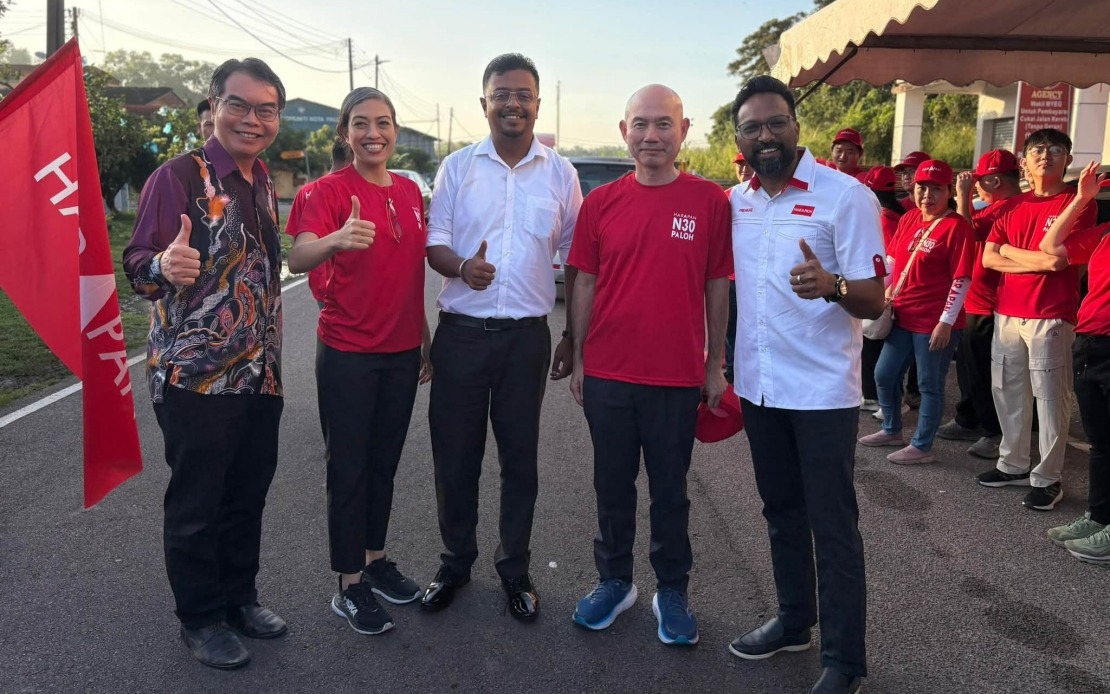
Pakatan Harapan's approach has been notably varied in its execution across different constituencies, reflecting local dynamics and candidate strengths. Dr. A Ruban, contesting the Paloh seat, has used his social media presence to articulate a vision centred on rural modernisation and youth empowerment, framing development not as a present-tense achievement but as groundwork for future generations. Significantly, Ruban has maintained campaign momentum despite being hospitalised with a spinal condition, with his team ensuring that digital operations continue uninterrupted—a testament to how heavily contemporary campaigns now depend on online infrastructure rather than personal appearances.
The creative packaging of campaign messaging has become increasingly sophisticated. Rather than simply broadcasting manifestos or policy positions, candidates are employing what amounts to lifestyle branding on social platforms, sharing informal moments and community interactions designed to humanise their public personas. In the Simpang Jeram seat, PH candidate Ir Nazri Abdul Rahman's breakfast visit to a local warung went viral precisely because it captured an unscripted moment of genuine interaction rather than staged pageantry. Similarly, in Tanjung Surat, Faizul Abdul Ghani's emphasis on documented community visits presents a narrative of constant, attentive engagement with constituents.
Barisan Nasional has adopted a somewhat different tone, with emphasis on experience and institutional credibility. Johor Menteri Besar Datuk Onn Hafiz Ghazi's social media messaging centres on the coalition's candidates possessing the necessary experience and understanding of local needs, a framing that aligns with BN's traditional appeal to voters valuing stability and proven administration. This tonal difference—BN positioning itself as the experienced custodian of governance versus PH's emphasis on generational change and localised development—plays out distinctly across the digital platforms where both coalitions operate.
Dr. Maszlee Malik's campaign for the Puteri Wangsa seat exemplifies how candidates are weaponising detailed policy records on social media. The former education minister has been prolific in uploading content documenting his previous achievements in higher education and school infrastructure, demonstrating a calculated strategy to convert his ministerial track record into electoral advantage. The inclusion of initiatives like subsidised school shoes serves a dual purpose—showcasing tangible, bread-and-butter policy outcomes while simultaneously highlighting the human dimension of governance that resonates with families navigating cost-of-living pressures.
The strategic imperative driving this digital acceleration lies partly in the campaign calendar itself. With the formal campaigning period concluding at 11:59 pm on July 10, the 48 hours immediately preceding this deadline represent a final window for reaching persuadable voters. Online platforms offer an efficiency that door-to-door canvassing cannot match at this stage, enabling campaigns to target specific demographic segments—particularly youth voters who remain crucial swing constituencies—with tailored messaging delivered at scale and minimal cost.
Smaller coalitions and independent candidates have not been left behind in this digital pivot. Perikatan Nasional, Parti Bersama Malaysia, and independent candidates have all embraced live streaming and short-form video content, recognising that the algorithmic architecture of platforms like TikTok can provide visibility disproportionate to traditional media resources. The democratisation of broadcast capability through smartphone technology means that even resource-constrained campaigns can produce and distribute content that reaches meaningful audiences, fundamentally altering the competitive landscape of electoral campaigns in Malaysia.
The content strategies being deployed reveal sophisticated understanding of platform-specific engagement. Infographics and short TikTok videos dominate because they conform to how contemporary social media users consume information—quickly, visually, and in fragmented sessions between other activities. This shift away from lengthy written posts or long-form video represents not merely a change in medium but a fundamental reconceptualisation of how political messaging must function to penetrate the attention economy.
For Malaysian voters, this digital intensification presents both opportunities and challenges. The proliferation of political messaging across platforms offers unprecedented access to candidate positions and visions, with direct engagement possible through comments and direct messages in ways traditional media could never facilitate. However, it also creates an environment where misinformation, unverified claims, and algorithmically-driven echo chambers can flourish without the gatekeeping function that traditional journalism once provided, a dynamic particularly concerning given the stakes of electoral decision-making.
The Johor election ultimately serves as a barometer for how Malaysian electoral politics is evolving in the digital age. The candidates' embrace of social media in these final days is not a temporary tactic but reflective of a permanent shift in campaign strategy. The 2,727,926 Johor voters will decide the election's outcome, but the methods now used to reach them—intimate, immediate, and algorithmically optimised—bear little resemblance to electoral campaigns even a decade ago. As Saturday approaches, the battle for Johor's future is being waged not primarily at rallies or in newspapers, but in the feeds and messaging applications where Malaysia's voters increasingly live.

