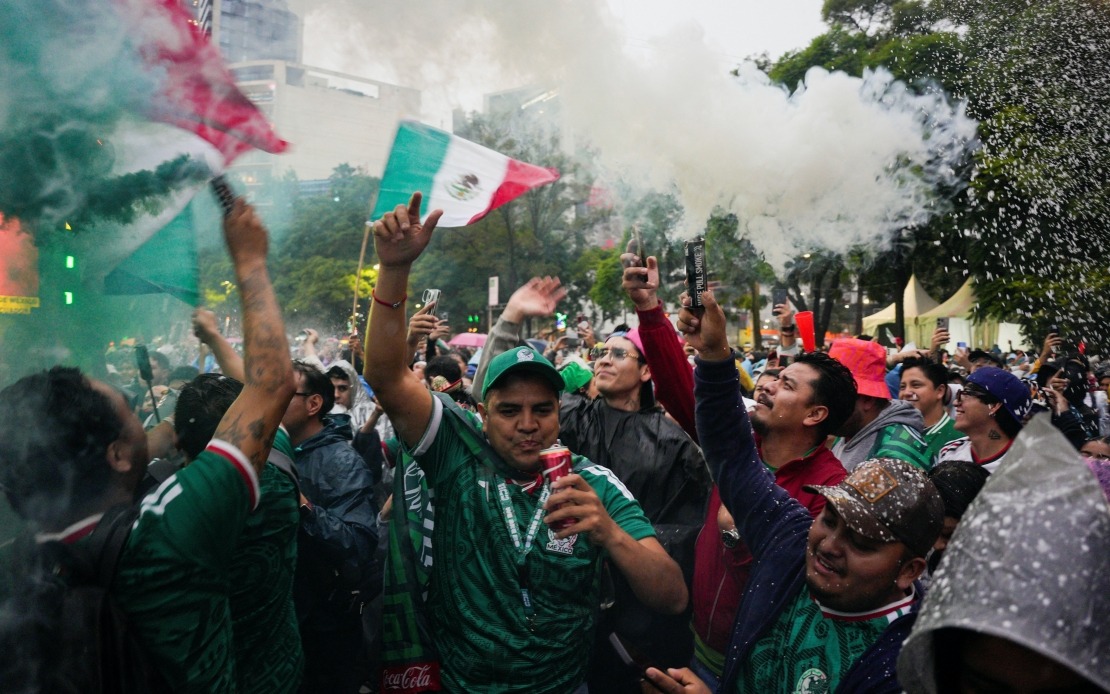
A night of jubilation in Mexico City ended in tragedy on Tuesday when three people lost their lives during street celebrations following the national team's World Cup progression. The deaths occurred in the heart of the capital as supporters gathered to mark Mexico's 2-0 victory over Ecuador at the Estadio Azteca, which secured the team's place in the tournament's final 16 teams.
The three victims—a 44-year-old man, a 19-year-old woman, and a 48-year-old woman—all suffered fatal asphyxiation at various locations near Paseo de la Reforma, a major thoroughfare running through Mexico City's central zone. According to the city's public health secretary, emergency response teams were dispatched immediately upon receiving reports of multiple unconscious individuals in the area, yet despite medical intervention protocols being fully activated, all three could not be revived.
Mexico's victory on Tuesday night represented a significant achievement in the tournament, establishing the team as a genuine contender in the competition's knockout phase. Should England manage to overcome DR Congo in their upcoming fixture on Wednesday, Mexico would face the English side at the same Estadio Azteca venue on Sunday, transforming Tuesday's celebrations into a precursor to what could be a momentous encounter between two football powerhouses at the same stadium.
Clara Brugada, Mexico City's head of government, publicly acknowledged the tragic deaths through an official statement on social media platform X. She confirmed that her administration's emergency teams had responded swiftly to multiple reports across the central district, emphasising that all standard medical protocols had been rigorously followed in attempts to save the victims' lives.
Brugada's statement reflected the dual nature of Mexico City's governance response to the incident—acknowledging both the scale of the tragedy and the city's commitment to supporting affected families. She extended formal condolences to the victims' loved ones and announced that city authorities were actively maintaining contact with the families to coordinate necessary support services and assistance during this period of grief.
The incident underscores a recurrent challenge facing authorities during major sporting celebrations across the world, particularly in densely populated urban centres. Large-scale public gatherings, while typically expressions of community spirit and national pride, can occasionally create dangerous crowd dynamics or hazardous conditions that compromise public safety, especially when organisational oversight becomes overwhelmed by spontaneous congregation.
Brugada's appeal for celebratory responsibility carries particular weight in a nation where football commands extraordinary cultural significance. Her call emphasised three key principles—responsibility, care, and empathy—as essential components of how supporters should channel their enthusiasm during moments of national sporting achievement. This messaging reflects recognition that enthusiastic celebration and public safety need not be mutually exclusive objectives.
The specific location of these deaths along Paseo de la Reforma suggests the gathering may have concentrated in this prestigious thoroughfare, which is flanked by high-rise commercial buildings and typically accommodates large crowds during public events. The fact that three separate asphyxiation incidents occurred at different points along this route indicates the potential scale of the crowd gathering and the spontaneous nature of crowd formation during celebrations.
For Malaysian and Southeast Asian observers, this incident carries resonance beyond Mexico's borders. Regional football communities regularly witness similarly passionate celebrations following World Cup qualification or tournament progression, with major cities throughout Asia experiencing comparable crowd surges during football's most prestigious international competition. The tragedy serves as a cautionary reminder of the importance of crowd management protocols and public safety coordination during such emotionally charged occasions.
The incident also raises questions about how host authorities prepare for the psychological and practical challenges that accompany sudden, spontaneous public gatherings. Unlike organized stadium events with controlled access and established safety protocols, street celebrations can rapidly escalate in scale and intensity, potentially creating dangerous situations if adequate precautions are not in place.
Government authorities in Mexico City have signalled their commitment to learning from this tragic incident. The emphasis placed on coordinating family support and maintaining transparent communication reflects a recognition that effective crisis response extends beyond immediate medical intervention to encompass comprehensive community care and acknowledgment of loss.
As Mexico's football team continues its World Cup campaign, the nation will process both the pride of sporting achievement and the sorrow of these preventable deaths. The incident may ultimately reshape how Mexico City approaches major sporting celebrations, potentially introducing enhanced crowd management strategies and public safety measures for future high-intensity public gatherings.

