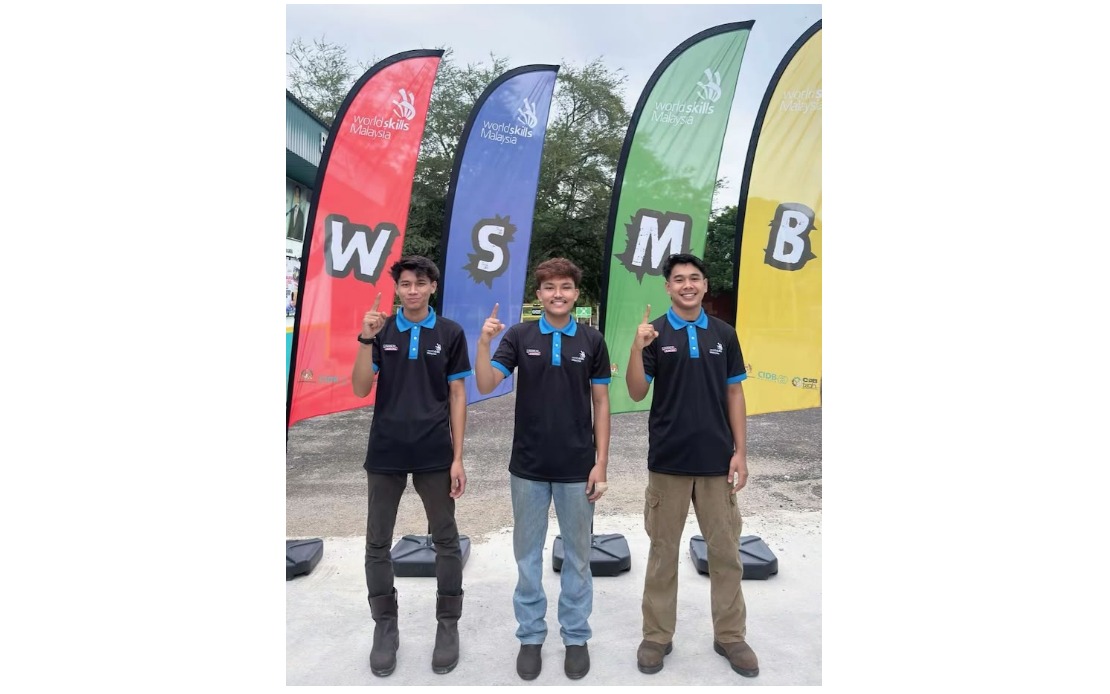
Three and a half decades after its inception as the Malaysian Skills Champion Competition under the administration of Tun Dr Mahathir Mohamad, WorldSkills Malaysia Belia has evolved into a cornerstone institution for nurturing construction sector expertise. The programme, which launched in 1990, has undergone multiple transformations—adopting the Anugerah Tangan Emas Perdana Menteri nomenclature from 1991 to 2006, rebranding as MySkills between 2007 and 2013, and operating under its current WSMB banner since 2014. This succession of identities reflects not merely administrative shifts but a deepening commitment to align Malaysian vocational excellence with global standards.
The pathway to international recognition begins locally. Competitors who secure WSMB champion status progress through comprehensive structured development and training initiatives, positioning them as representatives of Malaysia at the WorldSkills international competition platform. This journey represents far more than individual achievement; it embodies a systematic investment in human capital designed to elevate Malaysia's competitive standing in global markets. The Malaysian Construction Academy and CIDB Technologies, operating as CIDB-accredited training facilities, provide the institutional backbone, offering infrastructure and equipment benchmarked against international specifications.
Mohd Hafiz Dasahi, chief executive of CIDB Technologies, articulates the strategic philosophy underpinning the initiative. Rather than functioning merely as a competitive showcase, WSMB operates as an incubator for constructing a generation of industry professionals equipped to drive transformative change across Malaysia's construction landscape. The underlying premise is straightforward yet consequential: talent investments made today determine tomorrow's economic competitiveness. This perspective carries particular resonance for Malaysia, which aspires to position itself as a regional engineering and construction hub.
The training methodology emphasises alignment with genuine industry requirements. Every curriculum component integrates technological innovations whilst prioritising work-ready competency. Graduates emerge prepared to meet international benchmarks—a critical differentiator in an era where Malaysian firms compete for regional and global contracts. This commitment to relevance prevents the common pitfall where vocational training becomes disconnected from workplace realities, ensuring that WSMB participants develop capabilities immediately applicable to actual job sites.
Welding, a foundational construction trade, exemplifies how the competition assesses comprehensive professional competence. CIDB Technologies' Welding division, under Zarulhakim Abdul Rahim's leadership, evaluates participants across multiple dimensions: measurement precision, workmanship calibre, procedural adherence, scheduling efficiency, analytical problem-solving, and occupational safety compliance. This multidimensional approach recognises that technical proficiency alone proves insufficient; construction demands professionals who combine precision with resilience, knowledge with practical judgment.
Beyond technical mastery, the competition cultivates personal attributes equally valuable in demanding work environments. Participants develop enhanced self-assurance, disciplinary habits, psychological resilience, and commitment to continuous improvement—qualities that distinguish exceptional professionals from merely competent ones. Exposure to cutting-edge international technologies and methodologies further prepares competitors for workforces increasingly characterised by advanced equipment and cross-border collaboration.
From an industrial perspective, WSMB generates workforce capabilities addressing sector-wide gaps across construction, manufacturing, oil and gas, energy, and maritime industries. The competition strengthens institutional partnerships between training centres and industry operators, ensuring curricula remain responsive to technological evolution and market dynamics. This ecosystem approach prevents training institutions from operating in isolation, instead embedding them within industry networks that clarify evolving skill requirements.
Private sector participation underscores this collaborative model. Putra Faisal Ashraf Idris, representing welding technology suppliers, emphasises corporate responsibility for developing competent young professionals. Companies like Lincoln Energy and Vinxus Mark contribute equipment, consumables, and technical mentorship, enabling participants to train on machinery and processes mirroring actual industrial conditions. Such partnership transforms WSMB from a purely educational programme into a bridge connecting classroom instruction with workplace realities.
Participants themselves articulate the programme's transformative impact. Ahmad Syafie Dasuki, a twenty-year-old from Tumpat, Kelantan, accumulated nearly two years of workshop experience before joining WSMB, where structured training elevated his technical capabilities beyond what informal apprenticeship alone could provide. His narrative reflects broader patterns: young Malaysians from modest backgrounds accessing professional development pathways previously unavailable. The exposure to latest technologies and diverse practical applications prepares individuals for career trajectories extending across multiple sectors.
Muhammad Fazran Md Rashid, currently employed at a welding enterprise in Kulim, Kedah, exemplifies how WSMB bridges education and employment. His participation enhanced both technical knowledge and psychological qualities—confidence, discipline, persistence—that employers consistently identify as critical for advancement. Competition participation catalyses not merely skill acquisition but professional identity formation, wherein participants internalise standards and expectations characterising high-performing industries globally.
Mohd Sahmi Irfan Sulaimi, representing a cohort of young Malaysians recognising opportunities within vocational pathways, advocates for broader participation. His testimonial encapsulates WSMB's comprehensive value proposition: competitive experience, confidence development, technical competency enhancement, expert knowledge exposure, professional networking, and career advancement possibilities. These interlocking benefits extend beyond immediate employment prospects, creating foundations for lifelong learning and career mobility.
The persistence and evolution of WorldSkills Malaysia Belia reflects national recognition that construction industry transformation requires deliberate human capital investment. As Malaysia pursues higher-value economic positioning and regional infrastructure leadership, initiatives nurturing skilled professionals become increasingly vital. WSMB demonstrates how structured competition, industry partnership, and international benchmarking converge to produce workforces capable of executing sophisticated projects and competing effectively across borders. After 36 years, the programme's continuing relevance suggests that prioritising vocational excellence remains central to Malaysia's development strategy.

