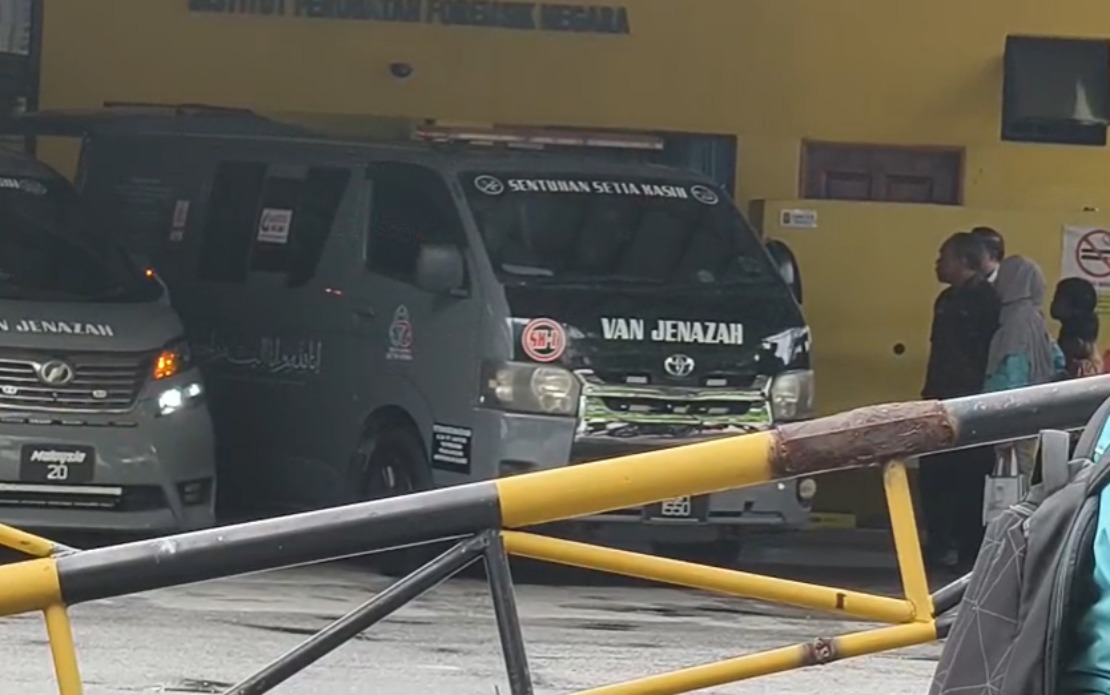
The bodies of three family members who died in a collision involving a Malaysian Immigration Department lorry on Jalan Sultan Ismail in Kuala Lumpur have been released from the National Institute of Forensic Medicine at Kuala Lumpur Hospital following the completion of post-mortem procedures. The remains of Shaik Mohd Firdaus Shaikh Yahya, aged 53, and his two daughters Siti Nor Sazlin, 25, and Siti Darwisyah Auni, 12, left the facility at approximately 5.45 pm on Monday evening, transported in three separate hearses to be handed to family members for funeral preparations.
The tragic incident occurred in the early hours of Monday morning when the unoccupied JIM Black Maria lorry, operating with its beacon lights and sirens activated, struck multiple vehicles at the Maju Junction intersection. The vehicle was en route to Chow Kit to conduct an enforcement operation targeting undocumented migrants. Investigators believe the lorry proceeded through a red light signal before colliding with a Proton Saga that was lawfully crossing the intersection on a green light, resulting in the Immigration Department vehicle losing control and skidding across the roadway.
The collision's force was sufficient to cause the lorry to strike four pedestrians who were in the vicinity, and subsequently struck an Inokom Matrix multi-purpose vehicle. One additional family member sustained serious injuries in the incident, bringing the total casualties to five people affected by the crash. The severity of the impact underscores the dangers posed by heavy vehicles when involved in road accidents, particularly in urban areas where pedestrian traffic is concentrated.
For Malaysian readers, this incident raises significant questions about road safety protocols for government vehicles engaged in enforcement operations. The activation of warning lights and sirens, while intended to alert other road users, does not provide immunity from traffic regulations. The allegation that the lorry proceeded against a red traffic signal suggests that despite the emergency nature of the operation, standard road rules remained applicable and binding on all drivers, regardless of their official capacity. This principle is fundamental to maintaining public safety and preventing the kind of catastrophic collisions that devastate families and communities.
The investigation into the incident is proceeding under Section 41(1) of the Road Transport Act 1987, which addresses traffic-related offences and liability. This statutory framework will guide authorities in determining whether any criminal or administrative culpability attaches to the operation of the vehicle or the actions of its driver. The investigation process itself carries implications for how government agencies structure their enforcement operations and establish safety protocols for staff deployed on raids and similar activities.
The funeral arrangements reflect the Islamic practices observed by the deceased family members. The remains are scheduled to be taken to Jamiul Ehsan Mosque on Jalan Pahang in Kuala Lumpur, where ritual bathing, shrouding, and funeral prayers will be conducted in accordance with Islamic tradition. Following these ceremonies, the deceased will be transported to Kampung Air Hitam Labu Muslim Cemetery in Kampar, Perak, for burial, suggesting the family may have historical or residential connections to the state.
This tragedy serves as a sobering reminder of the inherent risks that accompany high-speed pursuits and enforcement operations conducted in populated urban centres. While immigration enforcement and border control operations are necessary functions of government, they must be balanced against the overriding imperative to protect public safety. The incident occurs within a broader Southeast Asian context where many nations grapple with coordinating multiple enforcement agencies and ensuring that operational priorities do not override fundamental safety considerations.
The loss of three family members in a single incident, including two young women in their prime, represents an immeasurable human tragedy. Beyond the immediate shock and grief experienced by the extended family, the incident raises questions about compensation mechanisms available to victims of accidents involving government vehicles. Malaysian law does provide remedies for such incidents, though the process of pursuing claims against government agencies often involves complex administrative and legal procedures.
For the Immigration Department, the incident likely prompts internal review of operational procedures, vehicle maintenance standards, and driver training protocols. Government agencies across Southeast Asia are increasingly adopting improved safety management systems to minimise risks during high-priority enforcement operations. These may include mandated speed restrictions in certain areas, enhanced driver vetting and training, and improved communication protocols with other law enforcement agencies to ensure coordinated response that minimises dangers to the public.
The broader implications extend to road safety governance in Malaysia's major urban centres. The intersection where the collision occurred, like many busy junctions in Kuala Lumpur, experiences significant traffic volume and pedestrian movement throughout the day and night. Enhanced traffic management, clearer signage, and potentially improved lighting or physical road design features might reduce the likelihood of similar incidents in the future. Investment in traffic infrastructure and enforcement of existing road regulations remains vital for protecting citizens in high-risk areas.
This incident also underscores the importance of comprehensive accident investigation and transparent reporting. Public understanding of how and why such accidents occur, combined with lessons learned and implemented changes to prevent recurrence, builds public confidence in government accountability. Families who have lost loved ones in traffic accidents expect not only individual legal remedies but also systemic improvements that protect others from similar tragedies.
As the investigation proceeds and facts emerge regarding the circumstances of the collision, attention will likely focus on whether driver fatigue, mechanical failure, inadequate training, or procedural shortcomings contributed to the incident. These factors collectively inform how government agencies should approach future operations and what additional safeguards might prove necessary to balance enforcement effectiveness with public safety obligations.

