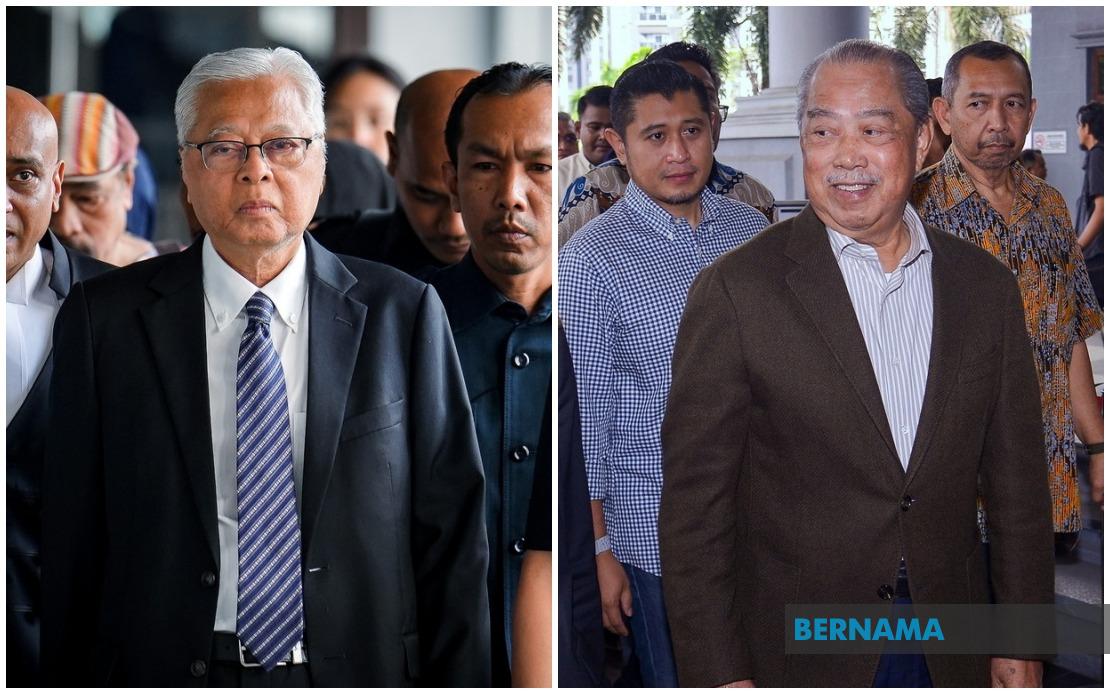
The simultaneous appearance of three former prime ministers at the Kuala Lumpur Court Complex on August 27 has produced what veteran journalists describe as an unprecedented convergence in Malaysian legal history. Datuk Seri Najib Tun Razak, Tan Sri Muhyiddin Yassin, and Datuk Seri Ismail Sabri Yaakob each attended distinct court hearings on the same day, drawing extensive media coverage and presenting significant logistical and security challenges for court administrators and law enforcement personnel.
The rarity of this occurrence cannot be overstated. V. Anbalagan, a seasoned court reporter with Free Malaysia Today, characterised the day as genuinely historic, noting that his decades covering judicial proceedings had never yielded such a convergence. According to Anbalagan, the phenomenon represents more than a mere coincidence of scheduling—it encapsulates a defining moment in Malaysian constitutional and political history. He suggested that such an alignment of former heads of state appearing in court simultaneously may represent a singularly rare event, unlikely to recur, establishing a record that would prove exceedingly difficult to replicate in subsequent years.
The logistics of managing media access and security proved exceptionally demanding. By 7 am, the Jalan Duta court complex had already begun filling with journalists, television crews, photographers, and reporters anticipating coverage of the three separate proceedings. Siti Zanariah Nor Zin, a news officer with Bernama TV, reflected on her sixteen-year journalism career, emphasising that this situation represented an extraordinarily rare occurrence. She praised the orderliness of the staggered arrivals, which allowed the media contingent sufficient opportunity to transmit updates to their respective newsrooms and maintain comprehensive coverage of movements throughout the day's proceedings.
Amirul Aiman Osman, reporting for Utusan Malaysia, acknowledged the initial anxiety surrounding whether media personnel could adequately cover all three separate court proceedings simultaneously. Despite the hectic atmosphere and considerable crowding, he noted that enhanced security protocols prevented any disruptive incidents. Having arrived at the complex before dawn to secure optimal positioning, Amirul Aiman observed that the controlled environment enabled journalists to track developments efficiently despite the challenging circumstances.
Security preparations began well in advance of the proceedings. A court official, speaking on condition of anonymity, revealed that comprehensive preparations commenced the previous afternoon to ensure seamless movement of the three former leaders throughout the court complex. Police personnel from Sentul district headquarters coordinated with court security officers and Palace of Justice police to establish a multi-layered security framework. The arrangement incorporated between three and six categories of security passes distributed according to different categories of access, including general public attendance, journalists covering open proceedings, and those requiring access to video-link courtrooms.
Security coordinator Nik Zainab Jusoh emphasized that a dedicated briefing held on August 26 ensured all deployed personnel remained appropriately vigilant and prepared for the substantial turnout. The security focus concentrated particularly on upper floor zones adjacent to courtrooms, whilst ground floor operations maintained stable, orderly conditions throughout the day. This stratified approach proved instrumental in preventing congestion or security breaches despite the unprecedented media concentration.
Najib's attendance related to a United States Dollar 5.64 billion civil suit initiated by 1Malaysia Development Berhad (1MDB) and its subsidiary against him and multiple co-defendants. Judicial Commissioner Mohamad Redzuan Idrus presided over this complex proceeding involving allegations concerning the sovereign wealth fund's financial mismanagement. This case represents one of several interconnected legal matters arising from the 1MDB scandal, which fundamentally altered Malaysia's political trajectory and international reputation during the preceding years.
Muhyiddin's court appearance addressed seven criminal charges encompassing allegations of abuse of power and money laundering specifically linked to the Jana Wibawa programme. Judge Noor Ruwena Md Nurdin oversaw these proceedings, which represent part of broader investigative actions undertaken following political developments in recent Malaysian political history. The charges carry substantial implications for questions of governance accountability and institutional integrity within the executive branch.
Ismail Sabri faced distinct charges before Judge Suzana Hussin concerning failure to declare substantial personal assets. According to court documentation, the undeclared holdings included RM14.7 million in cash, multiple foreign currency holdings valued in the millions, and quantities of gold bullion. The specificity of these asset categories raises broader questions about asset declaration protocols and enforcement mechanisms governing public office holders. Following proceedings, Ismail Sabri secured bail at RM300,000 with single surety and departed the complex at 11.43 am.
The convergence of these three judicial proceedings illuminates broader dimensions of Malaysia's contemporary political and legal landscape. Each former premier's court appearance stems from substantive allegations reflecting different categories of legal concern—corporate malfeasance, executive misconduct, and regulatory non-compliance. For Malaysian observers and regional analysts, the simultaneous presence of three former heads of government navigating the judicial system simultaneously underscores the complexity of managing transitions of power and accountability mechanisms in established democracies facing internal institutional challenges.
The media's successful coordination in covering these proceedings demonstrates institutional resilience within Malaysia's free press. Despite logistical constraints and competing demands on journalistic resources, major news organisations maintained comprehensive coverage, ensuring public visibility of judicial processes. This transparent access reinforces principles of open justice whilst enabling informed public discourse concerning governance accountability. For regional media practitioners, the day illustrated both the exceptional nature of such occurrences and the preparedness required to document moments of genuine constitutional significance.
From a governance perspective, the August 27 proceedings represent ongoing manifestations of Malaysia's post-2018 political recalibration. Each proceeding reflects distinct legal questions arising from periods of executive authority, yet collectively they document the mechanisms through which institutions address allegations of wrongdoing by former office holders. Whether such convergences will recur remains speculative, but the day unquestionably established a historic benchmark in Malaysian judicial and political annals, marking an unprecedented moment when three former prime ministers simultaneously engaged with the court system on matters of substantial constitutional import.

