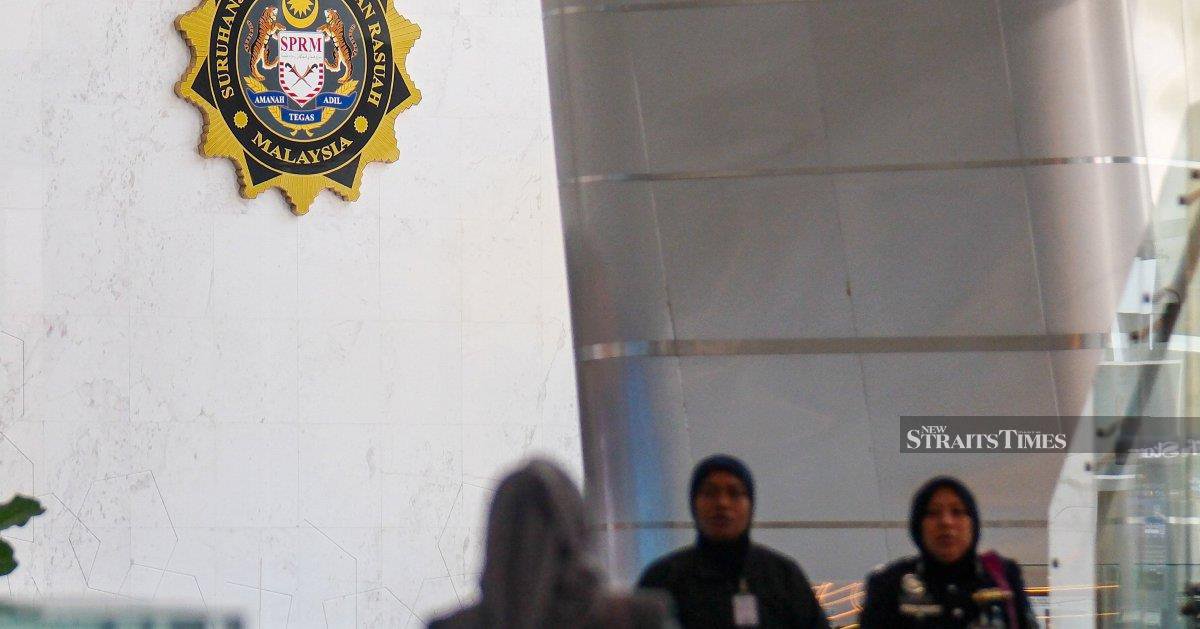
The Malaysian Anti-Corruption Commission has broadened its crackdown on the Tabung Haji scandal by taking three more individuals into custody as investigators deepen their examination of alleged financial irregularities uncovered by the Royal Commission of Inquiry. The arrests, announced in Putrajaya, centre on accusations of improper handling and possible embezzlement amounting to roughly RM450,000 in Notice of Penalty charges, marking a significant escalation in the agency's push to hold accountable those implicated in the pilgrimage fund's governance failures.
The expansion of the inquiry demonstrates the MACC's determination to pursue every lead emerging from the RCI's findings into Tabung Haji, Malaysia's revered institution entrusted with managing savings for millions of Muslim pilgrims. The RM450,000 in penalty notices at the centre of this latest investigation reflects systematic irregularities that warrant examination at multiple levels of the organisation's management and administrative hierarchy. By securing these additional arrests, investigators signal that culpability extends beyond initial suspects, suggesting a broader pattern of misconduct that may have involved coordination among multiple actors.
Tabung Haji has faced mounting scrutiny following the Royal Commission's investigation, which exposed serious governance weaknesses and financial mismanagement spanning several years. The pilgrimage fund, which holds savings from over three million Malaysians preparing for the Hajj pilgrimage to Mecca, occupies profound cultural and religious significance in the national consciousness. Any erosion of public trust in the institution carries implications far beyond financial metrics, threatening confidence in a fund that represents not merely money but devotion and spiritual preparation for millions of Malaysian Muslims.
The RCI's mandate extended to examining how senior management and officials stewarded these assets, with particular focus on suspicious transactions, unauthorised disbursements, and administrative lapses that may have created opportunities for misappropriation. The RM450,000 in penalty notices suggests a deliberate scheme rather than isolated accounting errors, pointing towards potential coordination to obscure problematic transactions through the penalty mechanism. This distinction matters significantly, as it indicates whether investigation should focus on incompetence or deliberate fraud.
Prior to these latest arrests, the MACC had already apprehended several individuals connected to the Tabung Haji investigation, building what appears to be an expanding web of accountability. Each new arrest provides opportunities to corroborate evidence, cross-reference testimonies, and establish chains of responsibility that may implicate individuals further up the administrative ladder. The sequential nature of these detentions suggests investigators are following a methodical path through documentary evidence and witness statements.
The penalty notices mechanism itself warrants scrutiny, as the RM450,000 sum represents a substantial volume of charges that ostensibly served to punish violations but may have instead functioned as vehicles for misappropriation. Understanding how these notices were generated, authorised, and processed could reveal systemic vulnerabilities in Tabung Haji's internal controls and oversight mechanisms. Malaysian regulators will likely use findings from this investigation to strengthen governance frameworks across similar financial institutions managing public or religiously-motivated savings.
For Malaysian pilgrims already sceptical following earlier revelations about Tabung Haji's financial troubles, these continuing arrests reinforce concerns about institutional integrity. The organisation's reputation rests on demonstrating that it has fundamentally reformed its practices and that accountability mechanisms now function effectively. Public confidence cannot be rebuilt through statements alone; it requires visible prosecutions, convictions, and structural reforms that prevent recurrence of similar misconduct.
The MACC's investigation intersects with broader regional concerns about institutional governance and anti-corruption enforcement in Southeast Asia. Malaysia's willingness to pursue high-profile investigations into culturally significant institutions sends important signals about the independence of anti-corruption agencies and commitment to accountability regardless of the organisation's religious or social importance. Neighbouring countries facing similar governance challenges observe how Malaysia's institutions respond to such scandals.
As investigations proceed through the Malaysian court system, stakeholders will scrutinise not only the outcomes of individual prosecutions but the adequacy of sentences imposed and reforms implemented at Tabung Haji. The penalty phase carries significance equal to the conviction phase, as inadequate sentencing could undermine deterrent effects and suggest that institutional positions provide protection from serious consequences. Conversely, vigorous prosecution and meaningful penalties could restore public confidence and demonstrate that no organisation stands above the law.
The three latest arrests represent a continuation rather than a conclusion of the MACC's work on this matter. Investigators will likely pursue additional leads, examine related transactions, and assess whether misconduct extended into areas not yet thoroughly scrutinised. Each person apprehended provides potential intelligence about others involved, gradually constructing a comprehensive picture of how RM450,000 in penalty notices were diverted from their intended purposes.
Stakeholders including the Ministry of Islamic Affairs and Hajj, parliamentary oversight committees, and civil society organisations focused on institutional accountability will monitor developments carefully. These arrests vindicate calls for thorough investigation and demonstrate that governance failures in culturally significant institutions receive equivalent investigative intensity as corruption cases in secular entities. This institutional evenhandedness reflects Malaysia's commitment to rule of law principles.
The investigation underscores uncomfortable truths about how financial misconduct operates within organisations enjoying public trust and regulatory oversight. Trust, while essential for institutional functioning, can paradoxically create vulnerabilities by reducing external scrutiny and fostering assumptions that internal controls function adequately. Restoring Tabung Haji to its intended purpose of serving millions of Muslim Malaysians will require sustained commitment to transparency, robust auditing, and genuine accountability extending to those in positions of authority.

