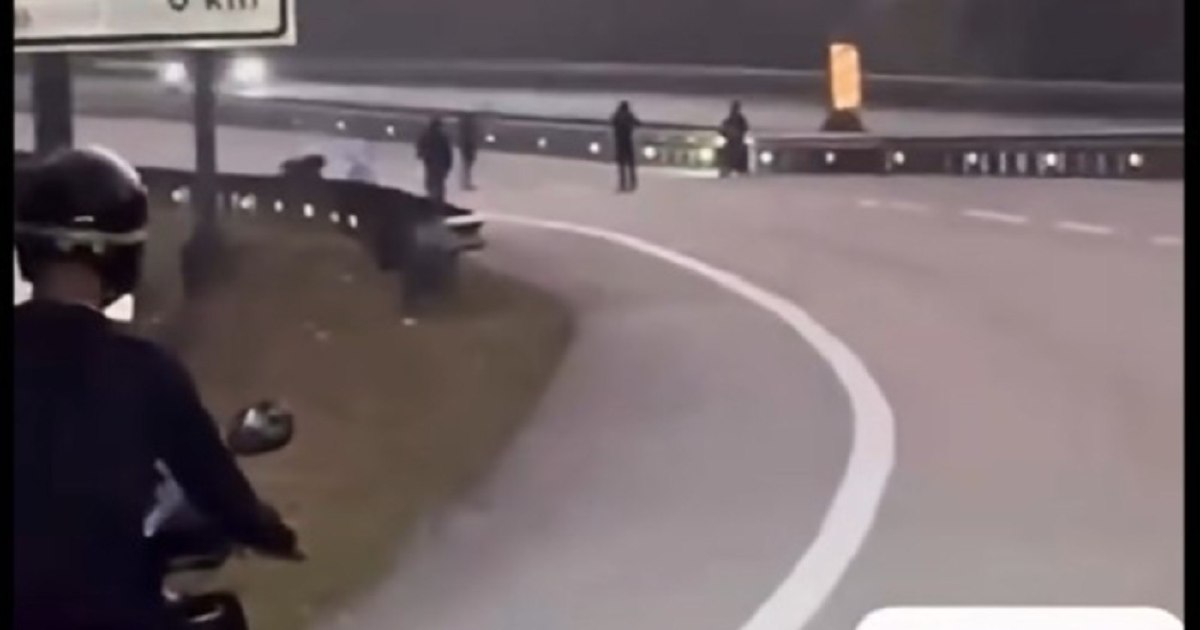
Police in Kuala Lumpur have apprehended three more individuals suspected of involvement in an illegal high-speed motorcycle race that brought traffic to a standstill on the Second Link expressway. The arrests represent an intensified enforcement response to a video that circulated widely on social media, depicting a group of riders apparently commandeering the busy cross-border highway connecting Malaysia and Singapore for an impromptu street racing event.
The viral footage shows participants allegedly closing off lanes on the Second Link, one of the region's most critical transport corridors, to facilitate their dangerous racing activities. Such actions pose severe risks not only to the riders themselves but to all motorists transiting the highway, which handles tens of thousands of vehicles daily in both directions. The brazen nature of the incident—captured and shared online—prompted swift action from authorities determined to crack down on illegal street racing and public safety violations.
The Second Link, officially known as the Sultan Iskandar Bridge approach, represents a crucial economic artery facilitating trade, tourism, and cross-border commerce between Malaysia and Singapore. Any disruption to traffic flow on this expressway carries immediate implications for both nations' economies and the logistics networks that depend on uninterrupted passage. The incident underscores a persistent challenge facing road authorities: managing organised street racing networks that operate with apparent coordination and confidence.
These three arrests follow earlier apprehensions related to the same case, indicating authorities are systematically identifying and detaining individuals involved in organising or participating in the illegal race. Police investigations typically focus on establishing roles within such incidents—whether suspects were organisers, active participants, or accomplices who aided in blocking traffic or recording the event for social media circulation. The expanding arrest toll suggests investigators are building a comprehensive case that may lead to additional charges.
Illegal street racing remains a persistent problem across Southeast Asia, with Malaysia experiencing particular challenges in enforcing traffic laws and prosecuting offenders under existing legislation. The phenomenon reflects a subculture that views public highways as venues for performance and competition, often livestreaming or recording races to gain social media attention and establish reputations within racing communities. Such activities directly contradict road safety initiatives and endanger innocent motorists.
The motivation behind staging such events on major expressways rather than designated tracks appears twofold: the thrill of high-speed riding in restricted spaces where conventional traffic rules are momentarily suspended, and the substantial online audiences these recordings attract. Video content from illegal races frequently garners millions of views, creating perverse incentives for riders to stage increasingly audacious events. The viral nature of the Second Link incident likely contributed to rapid police response and public pressure for arrests.
Malaysia's traffic and criminal justice systems provide several avenues for prosecution in such cases. Depending on specific charges, suspects may face penalties ranging from fines to imprisonment under the Road Transport Act and other relevant legislation. Organisers of such events may face more severe charges than passive participants, and charges could extend to anyone who deliberately obstructed traffic or endangered public safety. The legal framework aims to deter such behaviour through meaningful consequences.
The enforcement approach being demonstrated here—active investigation, systematic arrests, and public communication of law enforcement action—forms part of a broader strategy to address the street racing problem. Police presence at known racing hotspots, cooperation with digital platforms to remove content glorifying illegal racing, and public awareness campaigns all complement investigative work. However, police resources remain stretched across multiple enforcement priorities.
For Malaysian commuters and businesses relying on the Second Link, such incidents represent genuine concerns. Beyond the immediate traffic chaos and danger, they highlight vulnerabilities in highway security and enforcement capabilities. The incident also carries implications for the bilateral relationship with Singapore, which depends on secure, reliable cross-border movement. Any disruption to the Second Link, however temporary, attracts scrutiny from both governments committed to maintaining smooth regional logistics flows.
These arrests signal authorities' commitment to protecting critical transport infrastructure from being misused for recreational activities regardless of the risks involved. Whether the enforcement intensity will deter future illegal racing remains to be seen, particularly as online communities often celebrate participants who evade capture. The case will likely serve as a benchmark for how police handle similar incidents, and the eventual court outcomes may set precedents influencing penalties for future offenders.
For a broader audience concerned with road safety and public order, the incident illustrates how social media amplification of dangerous behaviour creates enforcement challenges beyond traditional policing. When illegal acts attract massive online engagement, they inspire imitators and create cultural momentum around dangerous activities. Breaking this cycle requires coordinated approaches involving law enforcement, platform moderation, community education, and swift, visible consequences for participants. The three arrests represent a beginning, though sustained enforcement patterns will ultimately determine whether such incidents become rarer on Malaysian highways.

