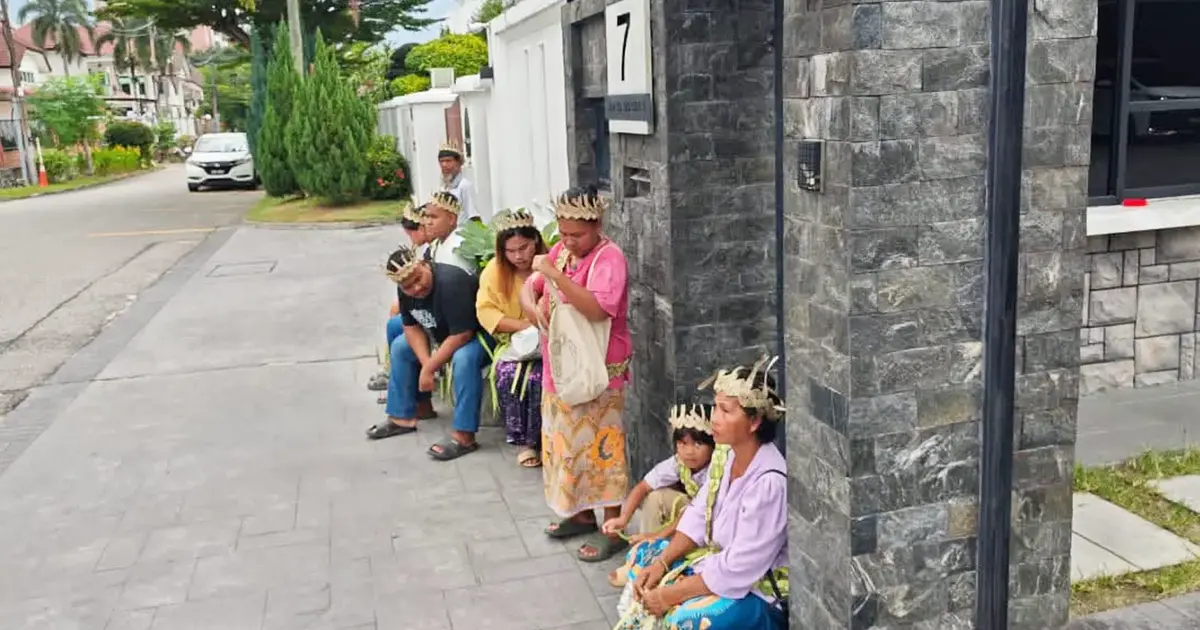
Prime Minister Anwar Ibrahim has confirmed that three Orang Asli have been freed from detention following their arrest in a land dispute centred on Pahang, marking a potential breakthrough in a case that has drawn attention to the contentious overlap between indigenous land rights and state jurisdiction. The release comes as federal authorities signal intent to escalate discussions with the Pahang state government regarding the circumstances of the detention and the underlying land claim that precipitated the crisis.
The case underscores the persistent tension within Malaysia's federal system when indigenous land rights collide with state-level authority over property matters. Land affairs in Malaysia remain exclusively within the purview of state governments under the constitutional division of powers, a reality that frequently complicates federal-level intervention in disputes involving Orang Asli communities. This structural constraint has historically forced federal leaders to navigate carefully when addressing grievances from indigenous populations, particularly when state governments have already taken enforcement action.
Anwar's public commitment to raise the matter directly with Pahang's leadership suggests growing federal concern about how state authorities are handling indigenous land claims. The prime minister's decision to highlight the case publicly indicates recognition that the detention had generated sufficient controversy or legal scrutiny to warrant high-level political attention. The move reflects broader efforts by his administration to position itself as responsive to Orang Asli concerns, an important constituency that spans multiple states and often lacks effective institutional representation.
The release of the three individuals, while welcome to their supporters and advocacy groups, does not resolve the underlying land dispute that prompted their detention. Questions persist regarding how the original conflict emerged, what evidence authorities cited in initiating the arrest, and whether the land in question involves competing claims from development interests, government projects, or private entities. These details remain crucial for understanding whether the case represents an isolated incident or part of a pattern of how Orang Asli land claims are adjudicated within the Malaysian system.
Orang Asli land rights have emerged as an increasingly visible issue in Malaysian politics, particularly as indigenous communities have become more organised in documenting historical land use and asserting claims against encroachment. Cases involving Orang Asli invariably attract the attention of civil society organisations, international observers monitoring indigenous affairs, and opposition political figures seeking to highlight governance shortcomings. The detention itself, preceding the release, likely generated sufficient external pressure to warrant reconsideration by authorities handling the matter.
The prime minister's determination to engage the Pahang government formalises a process of intergovernmental dialogue that may influence how such disputes are managed going forward. Whether this discussion yields substantive changes to how state land authorities approach Orang Asli claims remains uncertain, particularly if the Pahang government views its land governance as falling entirely within state prerogative. Federal-state relations on matters where both levels claim legitimacy frequently result in compromise positions rather than clear-cut resolutions.
For Malaysian readers, this case illustrates the practical complications that arise when constitutional theory meets real-world policy implementation. Indigenous populations seeking to protect ancestral lands must navigate a bureaucratic maze involving state land offices, federal courts of varying jurisdictions, and political actors with competing interests. The three detainees' release provides temporary relief but does not address the systemic factors that enabled their detention or that shape how Orang Asli grievances are processed through official channels.
The incident also carries implications for how other states observe federal responses to similar situations. If Anwar's intervention successfully reframes state handling of indigenous disputes, other Orang Asli communities facing comparable pressures might expect comparable federal engagement. Conversely, if the matter resolves without substantial changes to state procedures, the precedent suggests that detention remains a tactic available to state authorities in contested land matters, subject to federal pressure only when cases achieve sufficient political visibility.
The broader context involves Malaysia's international obligations regarding indigenous rights, including commitments made under various regional frameworks and human rights mechanisms. The detention of Orang Asli individuals raises questions about whether detention served legitimate law enforcement purposes or functioned primarily as a mechanism to suppress indigenous land activism. International observers and advocacy networks monitoring Malaysia's implementation of indigenous rights protections will likely scrutinise the federal government's follow-up actions and the actual outcomes of the promised discussions with Pahang.
Moving forward, the effectiveness of Anwar's intervention will be measured by whether the promised engagement with the Pahang government produces tangible changes in how land disputes involving Orang Asli are managed. This might include clearer protocols for handling such cases, greater consultation with affected communities before enforcement action, or legal reforms clarifying Orang Asli land rights within the state system. Without such follow-through, the release risks appearing merely as a public relations response to political pressure rather than a catalyst for systemic improvement in how Malaysia's legal and administrative apparatus treats indigenous land claims.

