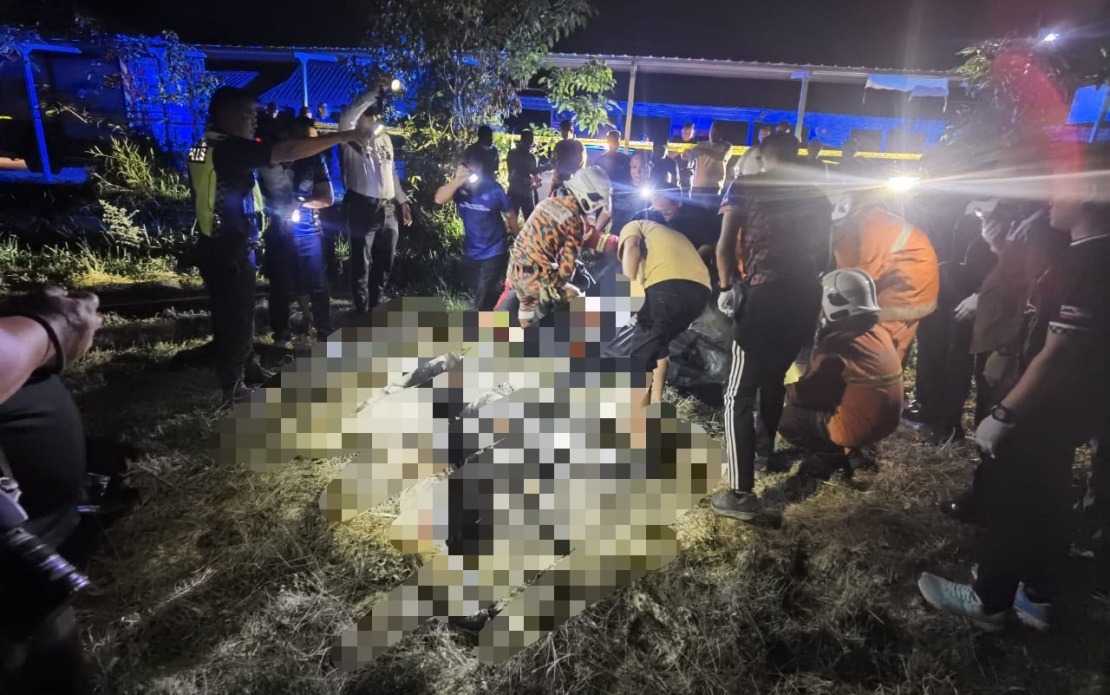
A tragic incident unfolded in Beaufort, Sabah on August 6 when three police officers died in what authorities suspect was an electrocution. The incident occurred along Jalan Weston in Kampung Weston, drawing swift response from emergency services and prompting widespread attention across social media as bystanders documented the scene.
Emergency responders received notification of the emergency at 5.56 pm, triggering immediate action from the Sabah Fire and Rescue Department (JBPM) Operations Centre. The Beaufort Fire and Rescue Station mobilized a specialized fire rescue vehicle accompanied by seven personnel to reach the location, which sits approximately 28 kilometres from the station. Operations Commander PBK I Irwan Abdul coordinated the rescue effort, working alongside personnel from the Royal Malaysia Police and Sabah Electricity to manage the crisis and ensure scene safety.
The incident rapidly gained visibility through social media platforms, with multiple video recordings capturing the aftermath and generating public concern about the circumstances leading to the officers' deaths. These recordings showed emergency responders and civilians gathered at the scene as rescue operations commenced. The swift spread of information through digital channels reflected both the shock value of the incident and the immediate community engagement typical in rural areas of Sabah.
Electrocution incidents involving utility infrastructure represent a serious occupational hazard across Malaysia, particularly when officers respond to emergency situations without full knowledge of electrical hazards present at a location. The involvement of Sabah Electricity in the response indicated that investigation into the electrical source would form a critical component of understanding what transpired. The proximity of utility lines to the roadway and potential weather conditions preceding the incident would require careful examination by authorities.
The identification of the victims remained incomplete at the time of initial reporting, with authorities indicating that personal details and comprehensive casualty information would be released following proper procedures and notification of next of kin. This measured approach reflects standard protocol in law enforcement fatality cases, ensuring families receive information through appropriate channels before public disclosure. The withholding of identities temporarily also allows authorities to conduct preliminary investigations without compromising operational security or ongoing inquiries.
The coordination between multiple emergency services and utility providers demonstrated the established protocols for responding to electrocution incidents in Sabah. The Royal Malaysia Police's involvement extended beyond simply cordoning the scene; officers would assist in managing traffic flow, securing the perimeter, and gathering initial witness accounts. Sabah Electricity's participation proved essential for assessing power line status, isolating potentially dangerous sources, and advising rescue teams on electrical safety measures.
Electrocution deaths among emergency responders, while tragic, underscore the unpredictable nature of hazardous duty work. Police officers responding to distress calls or investigating incidents may encounter electrical hazards not immediately apparent from ground level. The Beaufort incident raises questions about pre-response briefings, hazard assessments, and whether utility infrastructure near roadways carries adequate warning markers or protective barriers.
From a broader Malaysian perspective, incidents like this occasionally prompt reviews of electrical safety standards and public awareness campaigns regarding downed or exposed power lines. In Sabah, where infrastructure spans diverse terrain and weather patterns can damage utility systems, such reviews prove particularly relevant. The incident adds to the occupational risk profile that police personnel accept when joining the force, alongside traffic accidents, assault, and other duty-related hazards.
Authorities indicated that ongoing investigations would illuminate the precise circumstances, the electrical source involved, and any contributing environmental factors. Whether the officers inadvertently touched live wires, stood in a conductive medium that facilitated electrical transfer, or encountered structural collapse near power lines would form crucial investigative details. Weather conditions, including any recent rainfall that might have created conductive pathways, could also feature in the analysis.
The incident serves as a sobering reminder of the dangers inherent in emergency response work and underscores the importance of hazard identification and safety protocols before personnel enter potentially dangerous environments. For law enforcement agencies across Malaysia and Southeast Asia, such tragic incidents often prompt renewed emphasis on training, equipment provision, and inter-agency coordination to prevent similar occurrences. The Beaufort tragedy will likely inform discussions within Sabah Police contingents regarding electrical hazard awareness and response procedures.

