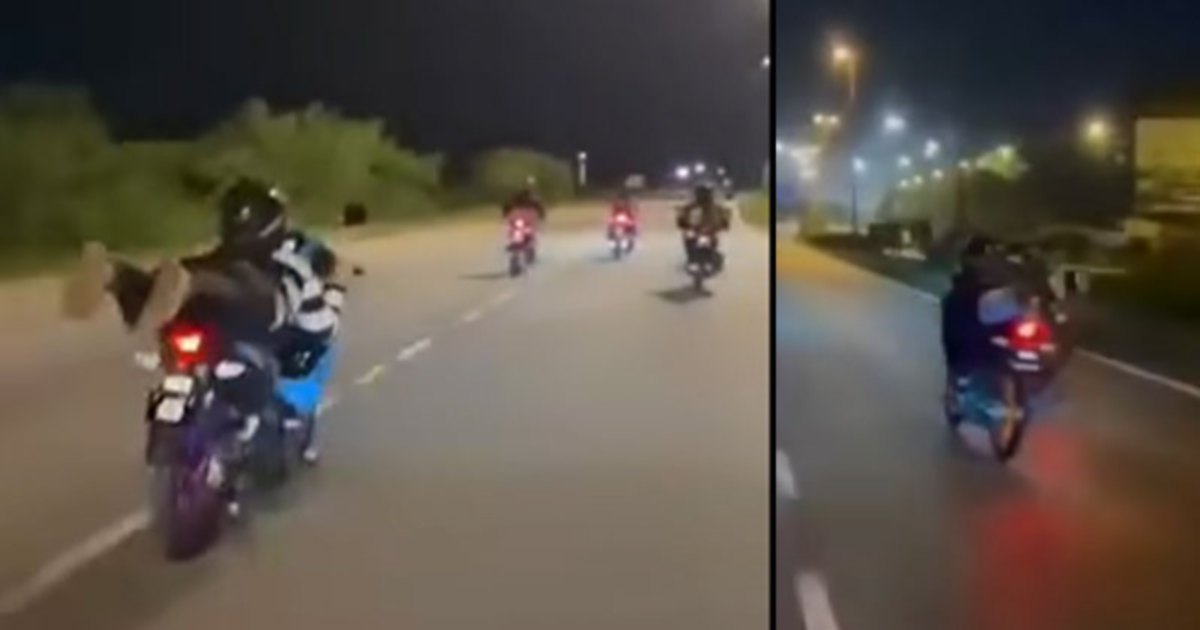
Three teenage girls have been taken into custody following their involvement in a high-risk motorcycle stunt that captured widespread attention on social media last week. The dangerous exhibition, performed along the Kuantan Bypass-Gebeng route in Pahang's capital, featured the riders executing 'Superman' manoeuvres—a particularly hazardous technique where motorcyclists lean far forward on their bikes whilst moving at considerable speed, creating the illusion of flying horizontally. The incident highlights an ongoing concern about reckless driving behaviour spreading through viral social media trends, particularly amongst younger road users across Malaysia.
The 'Superman' stunt has become an increasingly prevalent phenomenon on Malaysian roads, gaining traction through video sharing platforms where clips of daring riders accumulate thousands of views and shares within hours. What began as an obscure riding trick has evolved into a challenge that appeals to thrill-seeking youths, many of whom attempt to replicate the moves for online fame and peer recognition. The stunt itself involves dangerous body positioning that severely compromises a rider's ability to control their motorcycle, substantially increasing the risk of catastrophic accidents affecting not only the perpetrators but also innocent road users sharing the thoroughfare.
The Kuantan Bypass-Gebeng corridor is a major traffic artery connecting the port city to surrounding industrial and residential zones, making it a particularly inappropriate venue for such hazardous displays. This busy route accommodates substantial daily traffic volumes, with commuters, commercial vehicles, and families traversing it during various times of the day. The decision to perform these stunts on such a frequently-used road amplifies the danger considerably, placing multiple road users at potential risk despite the stunt-performers' apparent focus on generating online content.
Law enforcement authorities have intensified their focus on motorcycle-related offences following a series of viral incidents that have endangered public safety. The arrests represent a coordinated response by Kuantan police to address what has become a broader societal challenge—the normalisation of dangerous driving behaviour through social media amplification. Police investigations aim to establish the full scope of the riders' activities, including how long they had been engaging in these stunts and whether they had planned the Kuantan Bypass performance specifically to document it for online audiences.
The detention of these teenage girls underscores an important reality about viral trends: whilst the content itself may seem thrilling and entertaining to viewers, the underlying behaviour carries genuine legal and safety consequences. In Malaysia, performing dangerous stunts on public roads violates multiple traffic laws and can result in charges ranging from reckless driving to endangering lives. The involvement of juveniles in this case raises additional concerns about how young people consume and respond to risk-glorifying content circulating through social networks.
Parents, educators, and social media platforms face increasing pressure to address the role they play in either encouraging or preventing such dangerous trends. Whilst individual riders bear ultimate responsibility for their choices, the broader ecosystem—from algorithm-driven content promotion to peer pressure exerted through likes and shares—creates powerful incentives for increasingly dangerous performances. The psychological appeal of instant online recognition, particularly to teenagers navigating issues of identity and social acceptance, makes these viral challenges particularly seductive and difficult to resist.
The incident also reflects a concerning gap in road safety awareness amongst younger Malaysians. Despite extensive public campaigns promoting safe driving practices, the allure of social media validation often outweighs considerations of personal safety or public responsibility. Educational interventions focusing on consequences and liability may prove more effective than warnings alone, especially when paired with active parental engagement and responsible content moderation by social platforms.
From a Southeast Asian perspective, Malaysia is not alone in grappling with this phenomenon. Similar viral stunt trends have emerged across the region, suggesting that social media dynamics transcend national borders and create shared challenges for traffic authorities and policymakers. The coordinated enforcement approach increasingly adopted by Malaysian police—combining arrests, public awareness campaigns, and cooperation with online platforms—may offer valuable lessons for neighbouring countries experiencing comparable issues.
The case also raises broader questions about platform responsibility. Social media companies hosting these videos have faced criticism for allowing content that encourages dangerous behaviour to proliferate. Whilst free expression remains important, algorithms optimised for engagement frequently amplify risky and sensational content, inadvertently funding and promoting the creators of such material through monetisation schemes. Some platforms have begun removing or limiting the spread of stunt videos, though enforcement remains inconsistent.
Moving forward, sustaining progress on this issue requires multifaceted intervention combining legal consequences, community engagement, parental supervision, and platform accountability. The arrest and investigation of these three Kuantan teenagers sends a clear message that viral trends do not shield participants from legal responsibility. However, prevention ultimately requires addressing the underlying appeal of such stunts—the desire for recognition, excitement, and peer validation—through constructive channels that do not endanger lives or public safety.

