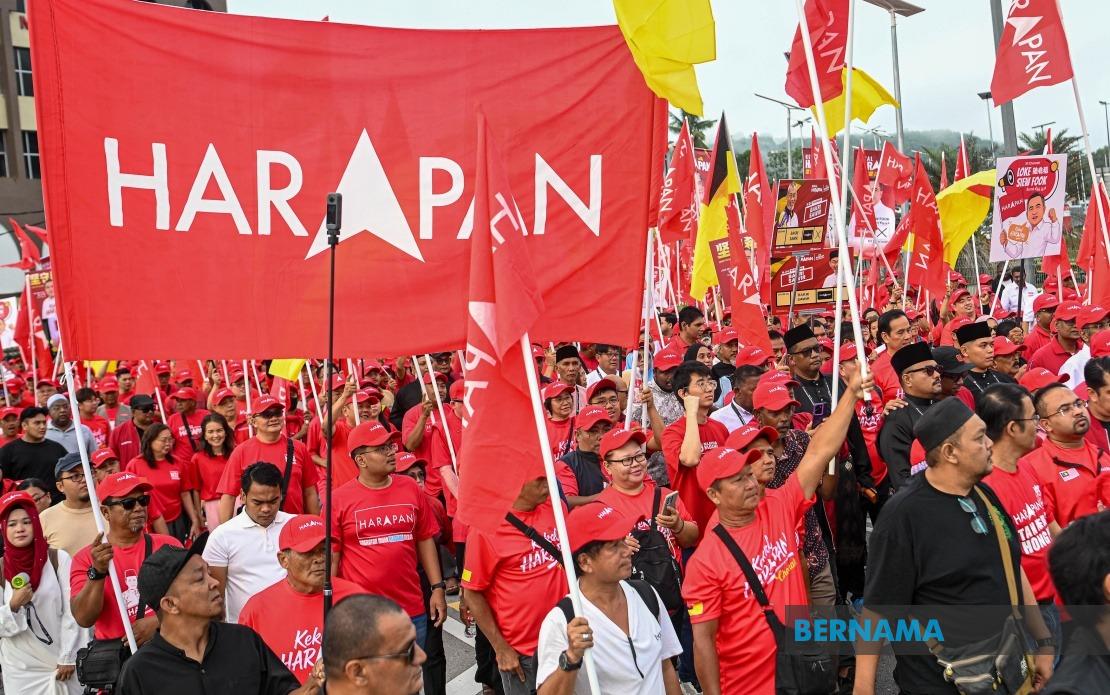
The 16th Negeri Sembilan State Election will feature three-cornered fights across three constituencies, with nomination proceedings now concluded and the field set for an intriguing political contest in the state. According to Jelebu Parliamentary returning officer Abdul Rahim A Aziz, who announced the results after nomination closed at 10 am, the constituencies of Pertang, Klawang and Sungai Lui will each feature a three-way battle involving competing political coalitions.
In Pertang, incumbent Datuk Seri Jalaluddin Alias of Barisan Nasional seeks to retain his seat against a resurgent opposition. He faces a challenge from Mohd Umry Abdul Khois, representing Pakatan Harapan, and Mohd Faizal Fadli Mohd Idrus from Bersatu, the splinter group that has emerged as a force in Malaysian politics. Jalaluddin's previous victory came with a comfortable margin of 2,844 votes, when he secured 5,634 votes against Perikatan Nasional's Amirudin Hasan in the preceding election. Whether he can maintain that winning formula while managing a more fragmented opposition remains uncertain, particularly given Bersatu's growing electoral presence in recent years.
The Sungai Lui seat presents one of the more unusual dynamics in this election cycle, pitting three former classmates against one another in a reminder of how personal history often intersects with electoral politics. Datuk Mohd Razi Mohd Ali represents the Barisan Nasional ticket, while Zainal Fikri Abd Kadir carries the Pakatan Harapan standard and Mazrulhisham Abd Mansor contests on behalf of Bersatu. This constellation of candidates suggests a genuinely competitive three-way race rather than a two-front battle, which could make predictions particularly difficult and may favour tactical voting or turnout variations among different voter demographics.
Klawang similarly stands poised for a closely contested election featuring incumbent Datuk Bakri Sawir of Pakatan Harapan, who will defend his seat against Muhammad Adib Musa from Bersatu and Danni Rais representing Perikatan Nasional. The involvement of Perikatan Nasional in this particular seat distinguishes it from the other two constituencies and reflects the varied political configurations across Negeri Sembilan. The presence of an PN candidate suggests different factional alignments or local political dynamics that merit scrutiny for those seeking to understand the state's political trajectory.
The three-way contests emerging across these three seats reflect broader fractures within Malaysia's political landscape that have developed over recent years. The presence of Bersatu candidates in all three contests demonstrates the party's determination to establish itself as a serious electoral contender beyond its strongholds, while the varying involvement of Perikatan Nasional indicates that different coalitions maintain different strengths in different localities. These configurations create genuine uncertainty about potential outcomes, as vote-splitting dynamics become far more complex than traditional two-party scenarios.
For Malaysian voters and political observers, these contests offer a significant test of electoral sentiment in Negeri Sembilan specifically and provide broader insights into the state of Malaysian politics more generally. The presence of multiple viable candidates in each seat means that local issues, candidate appeal and campaign effectiveness may matter more than they might in a straightforward two-horse race. Voter turnout, particularly among young and swing voters, could prove decisive in determining which candidates ultimately prevail.
The Election Commission has structured the election timeline to allow adequate preparation and voting access. Early voting has been scheduled for July 28, providing opportunities for those unable to vote on the main polling day. The primary election date of August 1 gives voters a single, consolidated opportunity to cast their ballots and determine which candidates will represent these three constituencies in the state assembly. This compressed timeline reflects the commission's approach to conducting multiple elections within reasonably tight windows.
From a broader Malaysian political perspective, these Negeri Sembilan contests carry implications extending beyond the state itself. As one of Malaysia's smaller states by population but with significance within the broader political framework, the results will contribute to the overall picture of electoral trends across the country. Coalition performance in Negeri Sembilan may provide signals about voter sentiment regarding Barisan Nasional's strength, Pakatan Harapan's resilience and Bersatu's capacity to establish itself as an independent electoral force rather than merely a kingmaker operating behind the scenes.
The state has historically been competitive politically, and these nominations confirm that pattern will continue. None of the three constituencies appears to be a foregone conclusion, and the presence of credible candidates from multiple parties suggests genuine contests rather than ceremonial exercises. For political analysts and strategists, tracking these three races will offer valuable data about voting patterns, coalition strength and the factors that ultimately sway voters in the contemporary Malaysian electoral environment.

