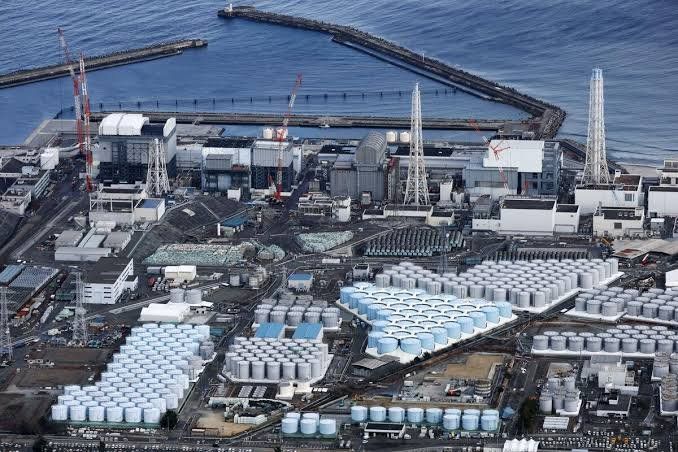
Japan's nuclear decommissioning effort has reached a significant milestone as Tokyo Electric Power Company Holdings Inc. completed its third consecutive year of releasing treated radioactive water from the damaged Fukushima nuclear plant into the Pacific Ocean. Since beginning operations on August 24, 2023, the utility company has discharged approximately 172,700 tonnes of processed water across 22 separate release cycles, marking steady progress in what officials describe as a critical step toward eventual plant closure and site remediation.
The discharge programme represents a comprehensive response to an ongoing challenge that has persisted since the devastating 2011 earthquake and tsunami triggered Japan's worst nuclear crisis. In the aftermath of that catastrophe, the Fukushima Daiichi plant began accumulating approximately 60 tonnes of radioactive wastewater daily—a byproduct of the cooling systems required to manage the damaged reactor cores. Over more than a decade, this accumulation created an enormous storage problem that threatened to overwhelm the facility's capacity and constrain essential decommissioning operations.
The strategic decision to release the treated water emerged from Japan's government deliberations in April 2021, when officials determined that maintaining massive storage tank farms had become untenable. The primary motivation was to dismantle approximately 1,000 storage tanks and repurpose the land for construction of facilities capable of extracting melted fuel debris—the most hazardous radioactive material remaining on-site. Three years into the programme, this objective has begun materializing: storage levels have declined by 7.6 per cent to around 1.24 million tonnes, and 17 tanks have already been dismantled and removed.
The technical process underlying these releases involves multiple rigorous filtration and dilution stages designed to meet international safety protocols. Water containing radioactive tritium and other isotopes undergoes treatment through an advanced liquid processing system that removes most contaminants, after which it is further diluted with seawater to concentrations approximately one-fortieth of the limits established by Japanese safety standards. This diluted mixture is then released from a point one kilometre offshore, ensuring additional dispersal before reaching populated areas. Batches of approximately 7,800 tonnes are released sequentially, with release schedules monitored by the International Atomic Energy Agency alongside the Japanese government and TEPCO itself.
Operational tempo has accelerated as TEPCO refined its procedures. During fiscal year 2023, four discharge cycles were conducted; this increased to seven each in fiscal 2024 and 2025. The company has now shifted toward continuous tank-to-tank transfers, enabling eight planned releases during fiscal 2026, of which four have already been completed by August. If maintained at this pace, the entire discharge programme could potentially conclude by 2051, aligning with the facility's complete decommissioning timeline.
Monitoring data has consistently shown no abnormal tritium concentrations in surrounding seawater or sampled seafood products, according to IAEA assessments and Japanese regulatory bodies. This technical assurance, however, has failed to overcome significant regional economic and diplomatic consequences. China, historically Japan's largest seafood export market, implemented a blanket import ban effective the very day releases commenced in August 2023. Although China's government announced last June that it would partially lift restrictions, permitting imports from all but ten prefectures including Fukushima itself, this concession has proven largely illusory in practice. The effective embargo persists amid broader diplomatic tensions, particularly following Prime Minister Sanae Takaichi's November remarks suggesting potential Japanese involvement if geopolitical crisis emerged over Taiwan.
Russia has likewise maintained import restrictions on Japanese seafood, whilst various other countries and territories have implemented their own limitations. The cumulative economic impact on Japanese fisheries and food exporters has been substantial. TEPCO has distributed approximately 92.8 billion yen (US$585 million) in compensation across roughly 1,100 separate cases, predominantly to businesses unable to export scallops and sea cucumbers to China and Hong Kong markets. These figures underscore how Japan's domestic environmental and decommissioning objectives have encountered serious friction with regional trading partners and geopolitical considerations beyond the company's or government's direct control.
For Malaysia and Southeast Asia, the Fukushima situation carries several implications worth considering. The programme demonstrates how democracies attempt to balance environmental remediation with economic and diplomatic realities—a balance that technical safety assurances alone cannot always achieve. Southeast Asian nations with their own energy security concerns observe how Japan navigates the complex legacy of major industrial accidents decades after their occurrence. Additionally, the episode illustrates how trade relationships can serve as leverage in unrelated diplomatic disputes, affecting agricultural producers and consumers across multiple jurisdictions. Malaysia, as a trading nation dependent on stable regional supply chains and predictable market access, should note how Japan's neighbours have deployed economic restrictions as tools of political messaging despite technical evidence of safety.
TEPCO's chief decommissioning officer, Akira Ono, stated at a recent press conference that the company remains committed to conducting releases safely whilst providing accurate information and appropriate compensation to affected industries. This framing emphasizes TEPCO's defensive posture—the company presents itself as having met technical obligations whilst acknowledging that economic harm to businesses represents a legitimate claim requiring financial redress. The company's challenge extends beyond engineering and environmental management to encompassing communications strategy and stakeholder management across multiple countries with divergent political interests.
Looking forward, Japan's nuclear decommissioning programme at Fukushima remains fundamentally constrained by geopolitical factors largely beyond its technical capacity to resolve. The utility company can ensure that discharged water meets rigorous safety standards and demonstrate this compliance through independent monitoring. Yet trade restrictions and diplomatic tensions persist based on calculations made by foreign governments responding to broader regional tensions. This disconnect between technical safety and political acceptance represents one of the enduring lessons from Fukushima's post-crisis management—a reality increasingly familiar to other nations managing major industrial or environmental challenges in an interconnected global economy.

