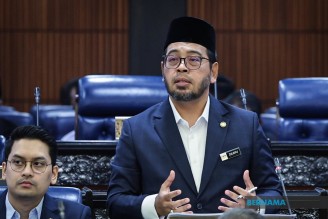
Tabung Haji's foray into Putrajaya Perdana Bhd proved to be a costly strategic misstep that ensnared Malaysia's pilgrimage fund in the web of 1Malaysia Development Bhd transactions, resulting in a RM145.3 million loss. Minister in the Prime Minister's Department (Religious Affairs) Dr Zulkifli Hasan revealed this troubling finding while briefing Parliament on a comprehensive Royal Commission of Inquiry report that examined the fund's troubled years between 2014 and 2020.
The RCI investigation identified Putrajaya Perdana as one of 14 deeply problematic investments that collectively drained billions of ringgit from Tabung Haji's reserves. The connection ran deeper than a simple equity stake—the institution's then-chairman simultaneously held the chairmanship of Putrajaya Perdana, creating a direct organizational link that facilitated Tabung Haji's involvement in 1MDB-related transactions during a period when the sovereign wealth fund was embroiled in international controversy. This dual leadership role raises serious questions about governance separation and potential conflicts of interest that may have blurred the boundaries between the two entities' strategic interests.
A particularly troubling episode involved Tabung Haji purchasing land at the Tun Razak Exchange directly from 1MDB, a transaction that occurred precisely when the developer was facing mounting scrutiny and reputational damage globally. The timing and circumstances of this acquisition underscore what appears to have been a pattern of decision-making that prioritized resolving other parties' financial difficulties over protecting the fund's own assets. Dr Zulkifli pointedly questioned whether such investments genuinely served Tabung Haji's interests or instead functioned as a mechanism to shore up 1MDB's deteriorating financial position.
The corporate governance failures extended to the executive suite, where evidence suggests Tabung Haji's chief executive officer concurrently served on 1MDB's board of directors. This arrangement created an inherent conflict of interest, as the same individual bore fiduciary responsibility to both organizations while they engaged in transactions with one another. Such structural overlaps in decision-making authority raise fundamental concerns about whether proper checks and balances existed to protect Tabung Haji's shareholders—millions of Malaysian pilgrims whose deposits fund the institution's operations and investment activities.
Beyond the 1MDB entanglement, Tabung Haji experienced catastrophic losses through its involvement with FGV Holdings, the massive agricultural conglomerate whose initial public offering had been celebrated as a national achievement. The fund accumulated over RM1 billion in losses as FGV's share price collapsed, declining more than 80 per cent from its offering levels. Rather than acknowledging these deteriorating investments transparently, Tabung Haji management resorted to modifying the fund's impairment accounting policies—a maneuver designed to obscure mounting losses from public view rather than confronting the underlying investment failures directly.
The consequences of these decisions persisted for years, with Tabung Haji continuing to hold FGV shares despite their precipitous value decline. This practice of holding underwater assets while concealing their true worth represents a failure of both prudent asset management and institutional transparency. The strategy effectively transferred wealth from pilgrims whose savings were invested in Tabung Haji to other market participants who benefited from the fund's reluctance to crystallize losses and exit deteriorating positions.
Recent efforts have begun reversing some of these damaging decisions. Tabung Haji repurchased the Tun Razak Exchange land that it had previously sold to 1MDB for RM400 million in 2018, acquiring it back at RM270 million based on current market valuations. While this represents a significant discount from the original transaction, acquiring the property at its genuine current value rather than allowing it to remain in 1MDB's portfolio prevents further erosion of value. Additionally, the fund reacquired the UJ Estates oil palm plantation operation it had disposed of earlier for RM800 million, now purchasing it back at RM695 million plus RM115 million in cash, valuing the enterprise at approximately RM580 million.
The comprehensive RCI report, released publicly on July 29 after being presented to the King on August 30, 2022, spans 211 pages and systematically documents the weaknesses that plagued Tabung Haji's management and operational frameworks during the problematic period. The investigation identified not merely isolated incidents of poor judgment but rather systemic governance deficiencies that allowed questionable investment decisions to proceed without adequate oversight, scrutiny, or restraint. These structural weaknesses created an environment where conflicts of interest could flourish and strategic choices could prioritize external considerations over fiduciary obligations to pilgrims.
The RCI formulated 25 specific recommendations aimed at remedying identified governance gaps and strengthening institutional safeguards against future misconduct. As of late July, Tabung Haji had already implemented 75 per cent of these recommendations, suggesting a genuine commitment to institutional reform and restoration of proper operational standards. This relatively rapid adoption indicates that management recognizes the severity of past failures and understands the urgency of rebuilding stakeholder confidence through concrete structural improvements. The implementation pace also demonstrates that many recommended changes address practical operational issues rather than requiring fundamental legislative or constitutional amendments.
For Malaysian readers and investors, these revelations carry significant implications. Tabung Haji manages savings and pilgrimage funds on behalf of approximately 9 million contributors, representing substantial accumulated wealth held in trust. The governance failures documented in the RCI report directly impacted the retirement security and religious aspirations of ordinary Malaysians who entrusted their savings to the institution. Broader lessons extend beyond Tabung Haji itself, highlighting systemic vulnerabilities in how Malaysian financial institutions manage conflicts of interest and maintain governance independence when leaders hold multiple board positions across interconnected entities.
The incident also illuminates how institutional vulnerabilities can be exploited during periods of financial stress, as appears to have occurred during 1MDB's difficulties. When organizations face external pressure to generate capital or resolve funding crises, desperate counterparties may identify institutions with weaker governance as convenient sources of investment capital or purchasing power. Tabung Haji's experience demonstrates how even established institutions with protective regulatory frameworks can be drawn into problematic transactions if governance oversight fails and organizational leadership becomes compromised by competing loyalties and structural conflicts of interest.

