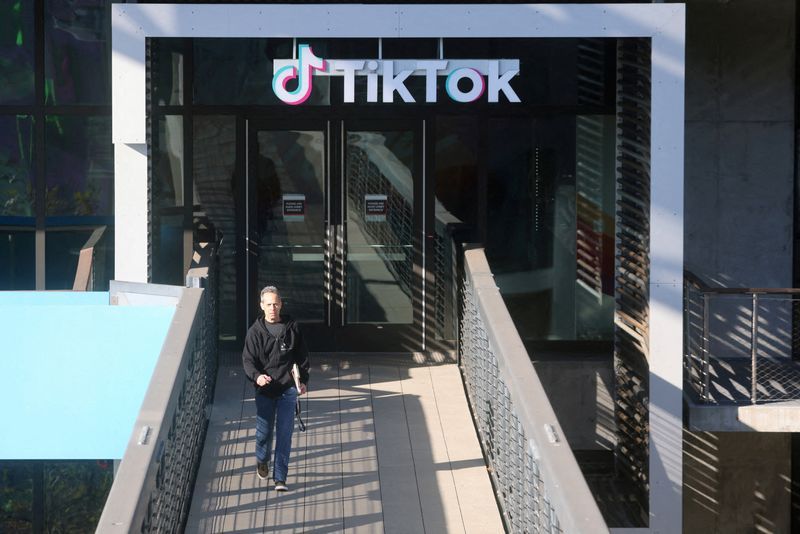
ByteDance's TikTok has reached a settlement in principle with a 15-year-old Florida boy who sued the platform for deliberately designing features to addict him and damage his mental health, according to representatives of Morgan & Morgan, the plaintiff's legal team. The agreement represents the latest capitulation by a major social media company facing escalating legal pressure across the United States over accusations that they knowingly harm children through psychologically manipulative design practices. Though the core terms have been agreed, specific settlement details remain under negotiation and have yet to be finalized, the law firm spokesperson confirmed this week.
The teenager, referred to in court documents by his initials R.K.C., began engaging with social media platforms around age eight and subsequently experienced severe sleep deprivation alongside documented symptoms of depression and anxiety. His complaint specifically alleged that the addictive mechanisms embedded within TikTok's architecture—including algorithmic recommendation systems, infinite scroll functionality, and notification tactics—deliberately exploited neurological vulnerabilities in developing adolescent brains. The settlement now removes TikTok from what would have been the second major trial in California state court examining whether social media platforms constitute public nuisances by manufacturing youth addiction.
This case underscores an emerging pattern where technology companies are choosing negotiated exits rather than contesting claims in court. R.K.C.'s original lawsuit named four defendants: Google's YouTube, Meta's Instagram, Snap Inc's Snapchat, and ByteDance's TikTok. YouTube already settled in June, while Meta Platforms and Snapchat remain scheduled for trial commencing July 27 in California. The consolidation of similar claims into coordinated litigation suggests a coordinated legal strategy by plaintiffs' attorneys to amplify pressure on each successive company through high-profile trials.
For Malaysian and Southeast Asian observers, the implications extend beyond American corporate law. TikTok operates extensively throughout Southeast Asia, where youth engagement rates often exceed those in developed markets. Thailand, Indonesia, Vietnam, and Malaysia represent crucial growth markets for the platform, with millions of teenage users accessing the service daily. These American legal precedents establish evidentiary frameworks and liability theories that regional governments and civil society organizations may eventually adopt in their own jurisdictions, potentially triggering parallel regulatory and litigation responses.
The broader litigation landscape reveals the staggering scale of claims against social media companies. More than 3,300 lawsuits involving addiction allegations currently remain pending within California state court alone, while an additional 2,600 cases brought by individual plaintiffs, school districts, municipalities, and state governments languish in California federal court. This accumulation of legal challenges reflects systemic dissatisfaction with how technology platforms operate and raises questions about whether market competition and self-regulation have proven inadequate mechanisms for protecting vulnerable populations.
The most significant precedent emerged from the first major California trial, which concluded in March with a jury finding both Meta and Google negligent. The jury ordered Meta to compensate the plaintiff with $4.2 million while Google paid $1.8 million. When the judge subsequently rejected the companies' motions to overturn the verdict in June, that decision created a powerful roadmap for future plaintiffs' cases, demonstrating that juries are willing to hold technology firms accountable and assign substantial damages. This legal vulnerability has likely influenced TikTok's decision to settle rather than risk similar exposure.
A concurrent federal court case involving a Kentucky school district further illustrates the mounting financial exposure companies face. That lawsuit, brought against Meta, Snap, TikTok, and YouTube, resulted in a combined settlement payment of $27 million before trial commenced—a remarkable sum that signals corporate recognition of genuine litigation risk. The fact that a school district rather than individual plaintiffs successfully extracted this settlement demonstrates that institutions managing youth populations are increasingly viewing social media companies as entities bearing financial responsibility for documented harms to their students.
The social media companies have consistently denied the underlying allegations and assert they implement comprehensive safeguarding procedures designed to protect teenage and younger users. However, these defensive postures appear increasingly unconvincing to juries confronted with evidence of how algorithmic systems prioritize engagement metrics over user wellbeing. The gap between corporate claims about safety measures and documented effects on youth mental health has become the central evidentiary battleground in these proceedings.
Beyond California courtrooms, nearly every state across the United States has independently initiated litigation against these platforms. These coordinated legal campaigns accuse companies of misrepresenting their platforms' safety characteristics and deliberately architecting systems to establish addictive dependency in children. The geographic diversification of claims creates legal exposure across multiple jurisdictions simultaneously, compelling companies to maintain defense teams in numerous states while facing the prospect of inconsistent rulings and damage awards.
The TikTok settlement announcement arrives at a politically sensitive moment, as the company simultaneously confronts potential regulatory action at the federal level concerning data privacy and national security. The accumulation of civil litigation, combined with heightened congressional scrutiny and potential legislative restrictions, creates a multifaceted legal and political crisis for the platform. The financial costs of settlement agreements, while substantial individually, pale against the existential regulatory threats TikTok currently navigates in its primary North American market.
For content creators, users, and advertising partners in Southeast Asia and globally, these litigation outcomes carry significant implications. Settlement costs ultimately flow into company operating budgets, potentially constraining investment in platform features, creator compensation programs, or regional expansion initiatives. Additionally, if regulatory restrictions eventually limit TikTok's operational scope in major markets, the company's global business model faces structural challenges that could reshape the competitive dynamics of social media platforms across all regions.
The pattern established through these settlements and trial outcomes suggests that the technology industry's presumption of immunity from liability for algorithmic harms has fundamentally eroded. Future platform design decisions will likely incorporate explicit consideration of litigation risk and potential damages exposure. This legal accountability, even if imperfectly calibrated, introduces market pressure toward designs that prioritize user wellbeing over maximized engagement metrics—potentially representing a consequential shift in how digital platforms navigate the tension between commercial imperatives and social responsibility.

