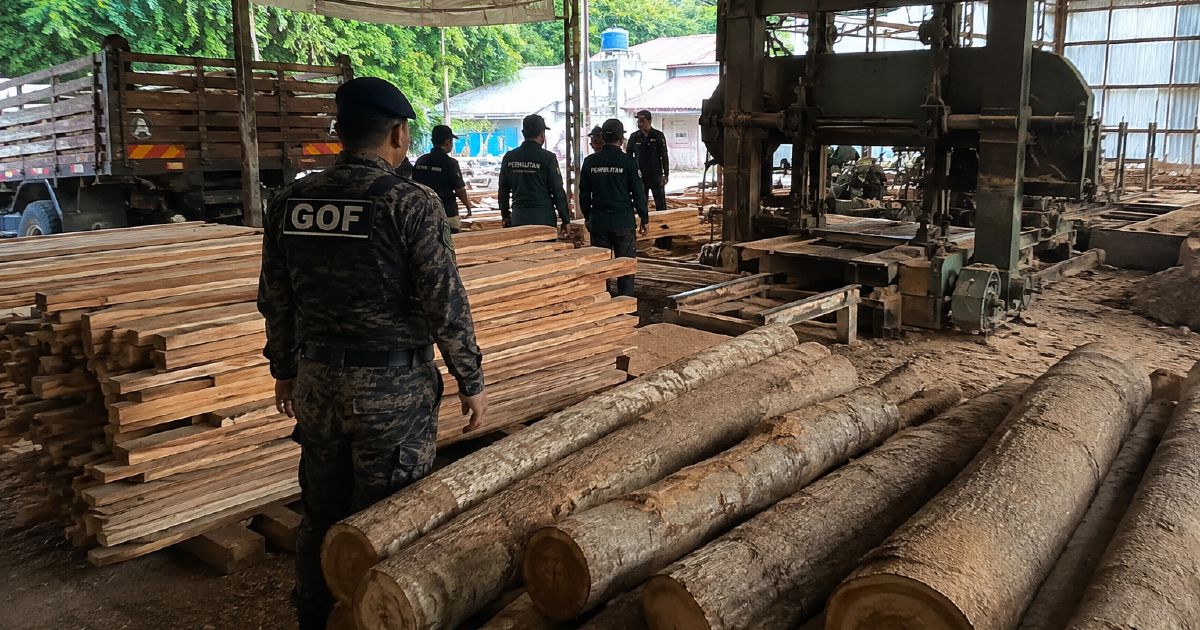
The General Operations Force has confiscated timber stocks and industrial processing equipment totalling RM640,510 following an enforcement operation targeting a sawmill facility in the Kuala Berang area of Terengganu. The action, which unfolded during a single-day operation, resulted in the apprehension of a 20-year-old individual suspected of involvement in violations related to the facility's operations.
The seizure represents a significant intervention in Terengganu's timber processing sector, which has long been a focus of environmental and regulatory authorities in the state. Kuala Berang, located in Hulu Terengganu district, has historically been home to numerous sawmill operations, some operating within legal frameworks and others operating in areas of regulatory concern. The targeted facility appears to have attracted official attention through standard enforcement channels monitored by the GOF, the paramilitary wing responsible for internal security operations and resource protection across Malaysia.
The scale of the confiscated assets—encompassing both raw timber inventory and sophisticated processing machinery—indicates that the operation targeted a functioning industrial operation rather than an isolated illegal activity. The equipment seizure is particularly notable as sawmill machinery represents substantial capital investment, suggesting the facility had been operating at a meaningful scale prior to the enforcement action. The specific value of RM640,510 reflects both timber stocks and the factory equipment impounded during the raid.
Timber enforcement has emerged as an increasingly visible priority for Malaysian authorities, particularly across Peninsular Malaysia's eastern states where forest resources remain substantial and enforcement mechanisms face logistical challenges. The General Operations Force conducts periodic operations across multiple jurisdictions, though the frequency and intensity of such activities can vary considerably depending on regulatory priorities and resource allocation decisions made at both state and federal levels. Terengganu's relative geographic isolation and extensive forest coverage create both opportunities and challenges for enforcement personnel.
The arrested individual's age—noted as 20 years old—may indicate either a junior employee or potentially a business principal, though the source material provides no additional detail regarding the nature of their suspected involvement or the specific charges that may be pursued. Malaysian authorities typically investigate possible violations including illegal logging, processing of protected timber species, documentation irregularities, or labour-related breaches depending on the initial findings from such operations.
The timing and execution of enforcement operations against timber facilities often reflects broader policy initiatives at state or federal level, though individual tips from members of the public or inter-agency intelligence can also trigger specific investigations. The GOF's involvement signals that the matter was classified as sufficiently serious or sensitive to warrant paramilitary resource deployment rather than exclusively civil enforcement mechanisms, though this does not necessarily indicate the severity of suspected violations.
For Malaysia's timber and wood processing industry—a sector worth billions in annual exports and domestic commerce—such enforcement actions underscore the ongoing regulatory environment and the importance of operational compliance. The legitimate sawmill sector in Terengganu, which employs hundreds of workers and contributes substantially to regional economic activity, operates alongside ongoing enforcement efforts designed to prevent illegal or irregular operations from undercutting compliance standards and sustainable resource management principles.
The implications for regional timber markets remain limited from any single enforcement action, though cumulative operations can influence supply availability and pricing dynamics for wood products across Southeast Asia. Malaysia's commitment to addressing resource management concerns—articulated through various environmental and forestry policies—intersects with the practical enforcement challenges that authorities face in managing vast forested territories across multiple states with varying levels of institutional capacity.
Government monitoring of timber processing facilities has intensified in recent years as part of broader initiatives addressing environmental sustainability and ensuring that commercial operations maintain appropriate licensing and compliance standards. The Terengganu operation reflects this ongoing vigilance, though the broader effectiveness of such enforcement depends on sustained resource commitment and coordination among multiple government agencies responsible for forest management, environmental protection, and resource compliance across state boundaries.
The seizure will now proceed through established protocols where confiscated materials are catalogued, valued independently where necessary, and eventually disposed of according to governmental procedures. The timber itself may be liquidated, transferred to government use, or destroyed depending on its condition, species classification, and applicable regulations governing such materials.
The investigation into the 20-year-old suspect will determine what specific charges, if any, will be pursued through the courts, and whether additional individuals or entities may face regulatory action based on findings from the enforcement operation. Outcomes from such cases often provide guidance to the broader industry regarding enforcement priorities and acceptable operational standards.

