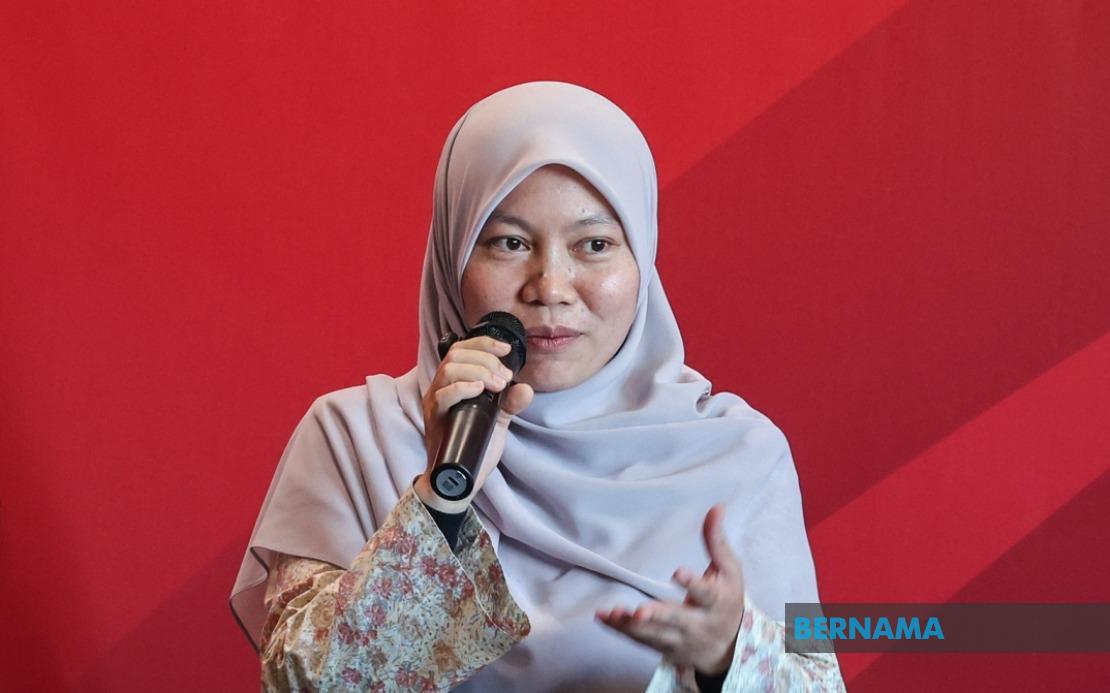
The 16th Johor state election has crystallised around the Tiram constituency, where Pakatan Harapan's unconventional strategy to field DAP's Nor Zulaila Abd Ghani challenges decades of Barisan Nasional dominance in a seat that has alternated hands twice in recent electoral cycles. The 38-year-old candidate, who serves as private secretary to Deputy Finance Minister Liew Chin Tong, confronts not merely the organisational might of the ruling coalition but also deep-rooted voter perceptions about her party's representation of Malay-majority communities.
Tiram presents a paradox within Malaysia's political landscape. While the constituency has been virtually synonymous with BN since 1959—with the coalition securing commanding majorities of 74.6 per cent in 1995 and 73.0 per cent in 2004—the narrative shifted dramatically in 2018 when PKR captured the seat with a 16.1 per cent margin. BN's subsequent recovery in 2022, winning by 9.4 per cent, occurred amid a historically suppressed voter turnout of approximately 50 per cent, suggesting that the swing represents not a fundamental realignment but rather fluctuations in electoral engagement. This volatility has transformed Tiram into one of Malaysia's most closely contested battlegrounds, where enthusiasm levels rather than structural allegiances may determine outcomes.
Nor Zulaila's candidacy defies conventional wisdom about electoral safety and risk calculus. Her decision to contest a seat where nearly 60 per cent of the 117,000 registered voters are Malay, and where DAP has never previously stood, strikes many observers as politically hazardous. Yet her framing of this choice emphasises principle over pragmatism: someone must undertake such challenges if opposition parties aspire to genuine nationwide representation rather than merely defending comfortable territories. She acknowledges that overcoming ingrained perceptions of DAP constitutes her primary obstacle, yet she grounds her campaign in addressing the concrete grievances that preoccupy residents—a strategy designed to pivot the contest away from identity politics toward service delivery and governance competence.
The substantive issues animating Tiram's electorate reveal a constituency grappling with infrastructure inadequacy rather than underdevelopment. Traffic congestion during peak hours along Jalan Tebrau has become so severe that motorists habitually divert through residential neighbourhoods and village roads, compounding safety concerns and environmental degradation. Residents describe a widening gap between population growth and infrastructure investment, with development proceeding incrementally while transport demands escalate exponentially. Heavy vehicles using undesignated routes through residential areas pose particular hazards, and the cumulative effect has been to transform what should be a functioning urban-suburban corridor into a chokepoint affecting neighbouring districts including Puteri Wangsa. Nor Zulaila's proposed approach—focusing on lower-complexity issues like hawker permits during her first hundred days before tackling larger structural problems requiring inter-agency coordination—reflects understanding that electoral mandates require demonstrable early wins to build legitimacy for tackling systemic challenges.
Barisan Nasional counters through Datuk Abdul Halim Suleiman, a former two-term Puteri Wangsa assemblyman and current Tebrau UMNO division chief who also holds a Dewan Negara seat. BN's nomination strategy emphasises institutional experience and established networks rather than fresh outsider energy. Abdul Halim articulates a governance framework premised on stakeholder consultation and coordinated planning involving local authorities, government agencies, developers and community representatives. His characterisation of Tiram as encompassing diverse constituencies—urban and semi-urban areas, villages, fishing communities, Felda settlements and Orang Asli villages—acknowledges the complexity that motivated his nomination. Yet this emphasis on consensus-building and multi-party coordination also implicitly concedes that singular representatives possess limited unilateral capacity, a message that could resonate or alienate depending on voter appetite for institutional consensus versus decisive action.
The third contestant, Bersama Malaysia's Dr Harith Fakhrudin Abdul Malek, identifies traffic congestion and road safety as paramount concerns, positioning his candidacy within pragmatic problem-solving discourse rather than partisan positioning. His framing of these issues as longstanding rather than novel reinforces broader resident sentiment that Tiram's challenges represent chronic governance failures rather than recent deterioration. The proliferation of heavy vehicles, deteriorating road infrastructure, and mounting vehicle populations compound problems that have persisted for over a decade, suggesting that incremental solutions have proven inadequate. For voters fatigued by protracted infrastructure gridlock, Bersama's presence offers a potential outlet for anti-establishment sentiment without full commitment to either major coalition.
Political analyst Dr Mazlan Ali has identified voter turnout as the determining variable shaping Tiram's electoral outcome. Specifically, he contends that if participation exceeds 75 per cent, Pakatan Harapan possesses a realistic prospect of recapturing the seat. This threshold analysis rests on emerging demographic and political trends that differ from the 2022 election environment. Chinese voters, traditionally underrepresented in previous Johor state elections, are anticipated to mobilise at higher rates this cycle, reportedly motivated by alienation stemming from PAS-BN cooperation in selected constituencies and residual political turbulence surrounding former Prime Minister Datuk Seri Najib Tun Razak. Middle-class urban voters similarly show signs of mobilisation, suggesting that turnout amplification may disproportionately benefit opposition forces.
The historical trajectory of Tiram's electoral margins provides context for assessing 2024's competitive dynamics. BN's commanding supermajorities in 1995 and 2004 reflected not merely party preference but limited contestation and differential mobilisation patterns. The sudden emergence of competitive elections in 2018 and beyond reflects broader Malaysian political transformation, where traditional assumptions about regional strongholds have proven vulnerable to changed circumstances. PKR's 2018 victory demonstrated that even BN's decades-long tenure could be interrupted, while the 2022 reversal indicated that such gains remained fragile when turnout contracted. The current election thus represents a test of whether 2018 represented genuine political realignment or merely cyclical fluctuation.
For Malaysian politics writ large, Tiram's outcome carries implications transcending Johor's 56 state seats. The constituency exemplifies tensions between programmatic governance concerns—infrastructure, safety, economic opportunity—and identity-based political mobilisation. Nor Zulaila's DAP candidacy in a Malay-majority seat tests whether opposition parties can broaden appeal beyond traditional demographic strongholds through demonstrated competence and genuine engagement with community priorities. BN's response emphasises institutional networks and stakeholder coordination, a strategy that prioritises proven operational relationships over transformative promises. The emergence of Bersama as a credible third force suggests voter segments remain available for repositioning if neither major coalition convinces them of effectiveness.
The turnout threshold identified by analysts reflects genuine structural reality: Tiram's electorate comprises constituencies with differential political preferences and varying propensities for electoral participation. Lower turnout benefits BN by reducing noise and maintaining advantage among core supporters. Higher turnout, particularly exceeding 75 per cent, suggests broader mobilisation including segments less reliably aligned with BN—younger urban residents, non-Muslim communities, and middle-class professionals expressing policy dissatisfaction rather than partisan conviction. This dynamic extends beyond Tiram itself, as similar constituencies throughout Johor and indeed Malaysia increasingly feature comparable divides between core and mobilisable voters.
The infrastructure and governance priorities articulated by all three candidates reflect genuine resident concerns that transcend electoral theatrics. Tiram's traffic congestion, village road deterioration, and limited economic dynamism represent real quality-of-life constraints that elected representatives will confront regardless of partisan identity. Whether candidates adopt collaborative institutional approaches or pursue more centralised action-oriented governance, constituents will ultimately evaluate performance against concrete outcomes—congestion relief, enhanced safety, improved amenities. The election thus constitutes not merely partisan competition but a referendum on which governance model residents find more credible.
As Tiram voters prepare to cast ballots, the seat encapsulates broader Malaysian political currents: erosion of traditional regional certainties, increased electoral volatility when engagement increases, rising salience of local governance issues among urban constituencies, and apparent realignment of some demographics away from long-term BN alignments. The closely fought contest between Nor Zulaila's DAP, Abdul Halim's BN, and Harith's Bersama reflects not merely local factors but resonates with nationwide tensions between incumbent institutional power and renewed opposition capacity. Ultimately, turnout rates will determine whether Tiram returns to BN's column, remains with opposition control, or generates unexpected outcomes that reshape Johor's political calculus heading into national elections.

