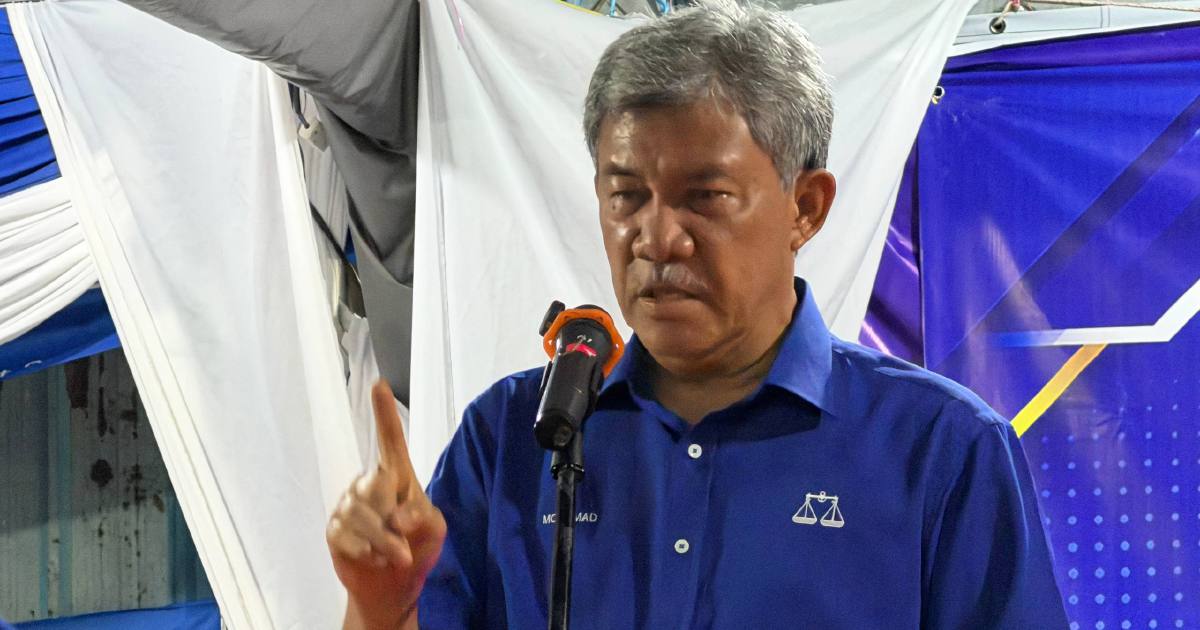
Datuk Seri Mohamad Hasan, the Barisan Nasional chairman for Negri Sembilan, has sounded a clear warning against permitting narratives involving the royal institution to shape voting behaviour in the state's forthcoming election. Speaking in Rembau, the veteran politician expressed concern that discussions and conjecture surrounding the monarchy have begun to permeate electoral discourse, potentially distracting voters from substantive policy matters and development priorities that should form the foundation of their decision-making.
The cautionary statement reflects a broader pattern in Malaysian politics where the institution of the monarchy—held in high constitutional regard and cultural reverence—sometimes becomes entangled with electoral narratives, either directly or through innuendo. Such developments carry particular significance in Negri Sembilan, where the office of Yang di-Pertuan Agong traditionally rotates among the state's royal houses, a constitutional arrangement that has long distinguished this monarchy from others in the federation. This unique position can occasionally generate speculation when political transitions loom, and Tok Mat's intervention appears designed to establish clear boundaries between legitimate electoral discourse and commentary that touches upon matters of state protocol or succession.
The 16th Negri Sembilan state election represents a critical juncture for the ruling coalition, which faces the dual challenge of consolidating support among traditional constituencies whilst adapting to an evolving political landscape. Barisan Nasional's performance in Negri Sembilan carries implications beyond state borders, serving as a barometer for the coalition's standing in the broader Malaysian electorate. Tok Mat's intervention suggests internal awareness that the campaign environment contains vulnerabilities where misinformation or unsourced speculation could take root and influence voter sentiment.
Speculation regarding outcomes of a potential Barisan Nasional victory—presumably concerning constitutional processes, government formation, or matters of state governance—has apparently circulated within political circles and amongst the electorate. Rather than engage substantively with such speculation, Tok Mat's approach has been to discourage it altogether, framing such discourse as inappropriate and potentially divisive. This stance aligns with long-standing convention in Malaysian politics that certain institutional matters should remain insulated from partisan electoral combat.
The timing of Tok Mat's warning underscores the intensity of campaigning as polling day approaches. Political operatives across competing coalitions frequently test boundaries regarding what topics constitute fair electoral discourse, and royal institution-related narratives represent particularly sensitive terrain. By explicitly cautioning voters against being swayed by such narratives, Tok Mat has attempted to reset the conversational parameters and refocus debate on economic development, service delivery, and policy platforms.
For Malaysian voters, particularly those in Negri Sembilan, the statement carries implications for evaluating candidate credentials and party manifestos. Election campaigns function most effectively when centred upon tangible issues affecting daily life—employment opportunities, education provision, healthcare access, and infrastructure development. Tok Mat's intervention essentially argues that voters should prioritise these measurable outcomes over speculation regarding constitutional arrangements or institutional matters that lie largely beyond the electorate's direct influence.
The warning also reflects internal discipline within the Barisan Nasional machinery. Political coalitions succeed when component parties and leaders maintain message cohesion and prevent unauthorised narratives from gaining traction. By publicly establishing this boundary, Tok Mat has signalled that the BN campaign maintains professional standards and declines to exploit sensitive institutional matters for electoral advantage. This positioning potentially enhances the coalition's standing amongst voters who value decorum and respect for constitutional institutions.
From a Southeast Asian perspective, Malaysia's experience demonstrates how monarchical institutions and electoral democracy navigate coexistence in mature democracies. Unlike some neighbouring jurisdictions, Malaysia maintains robust separation between royal prerogative and electoral outcomes, with constitutional provisions insulating the institution from partisan politics. When political figures like Tok Mat reinforce these boundaries through public statements, they strengthen institutional resilience and democratic norms.
The broader electoral contest in Negri Sembilan will ultimately turn upon conventional factors: party organisation, candidate appeal, voter registration dynamics, and policy platforms. Tok Mat's intervention suggests that Barisan Nasional intends to contest this election on these conventional grounds rather than permit peripheral narratives to dominate discourse. This strategic choice reflects confidence in the coalition's substantive record and messaging within the state.
Moving forward, the impact of Tok Mat's cautionary statement will depend upon whether competing narratives can be effectively suppressed or whether speculation continues circulating through informal channels and social media platforms. Political communication in the digital age has fragmented traditional message control mechanisms, rendering such warnings necessary but potentially insufficient. Nevertheless, explicit statements from senior figures carry symbolic weight and establish clear expectations regarding acceptable electoral discourse.
Ultimately, Tok Mat's intervention represents a deliberate attempt to maintain boundaries between electoral competition and institutional matters, reinforcing Malaysia's long-established convention that the monarchy remains above partisan contestation. How voters respond to this framing, and whether competing coalitions honour similar boundaries, will shape the character of Negri Sembilan's 16th state election.

