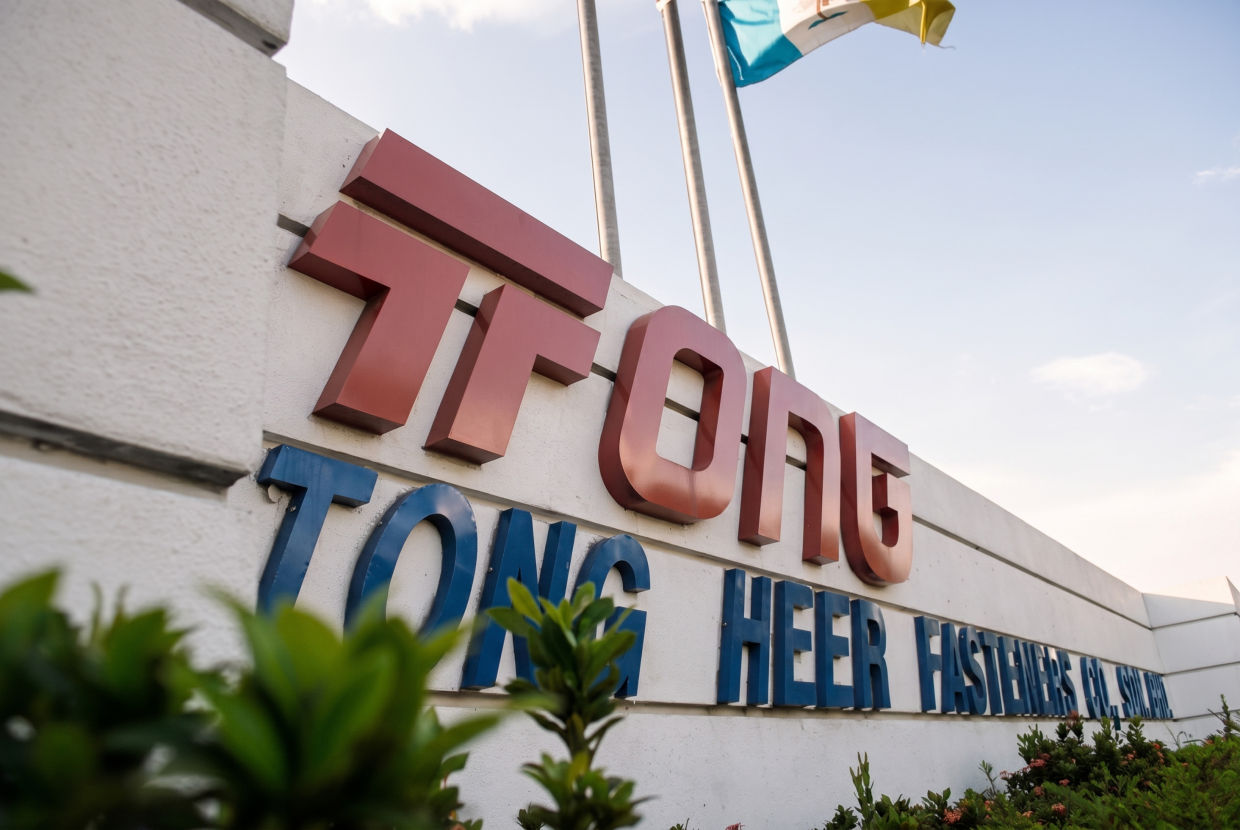
Tong Herr, the stainless steel fasteners and aluminium extrusions manufacturer, faces delisting after its principal shareholders launched a privatisation bid at RM2.55 per share. The proposal represents a significant 34.2% uplift from the company's last closing price of RM1.90, delivering a marked gain for existing investors willing to exit at the offered price. The move signals a dramatic shift in the company's future direction, potentially marking the end of its three-decade journey as a publicly listed entity on Bursa Malaysia's Main Market.
The privatisation initiative has been orchestrated by Allrich Corp and Richard Holdings Ltd, which respectively control 39.68% and 31.95% shareholdings in Tong Herr. When combined with their joint ultimate offerors and persons acting in concert, these entities command approximately 114.38 million shares, translating to 74.5% ownership of the company's total issued capital. This commanding stake effectively positions them to drive the proposal through, though they still require formal approval from the smaller shareholder cohort to proceed with the delisting process.
The offer price carries further significance when measured against alternative benchmarks. Calculated with reference to Tong Herr's closing price and volume-weighted average price through August 5, 2026, the RM2.55 per share consideration encompasses a 41.7% premium to the RM1.80 closing price recorded on that specific date. This dual-reference approach suggests the offerors have sought to establish fair value through multiple methodologies, potentially anticipating resistance from independent shareholders who might otherwise challenge the adequacy of consideration at an extraordinary general meeting.
The mechanics of the privatisation rest upon a selective capital reduction and repayment mechanism, a structured approach that enables the company to return capital to shareholders while simultaneously eliminating public ownership. Upon successful completion, the joint offerors have explicitly committed to requesting Bursa Securities to delisting the company and withdrawing its listing status from the Main Market. This forthright declaration removes any ambiguity about the transaction's terminal objective—the joint offerors harbour no intention of preserving Tong Herr's public market standing.
The strategic rationale advanced by the major shareholders centres on operational flexibility and resource optimisation. Privatisation, they contend, would liberate the company from the regulatory compliance burdens and administrative overhead inherent in maintaining listed status, permitting management to concentrate exclusively on organic business expansion and durability of shareholder wealth over extended timeframes. For a mid-sized manufacturing concern, the annual costs of regulatory filings, audit fees, investor relations functions, and governance infrastructure represent material recurring expenses that compete with capital available for reinvestment in productive assets.
A compelling secondary argument underpins the delisting rationale: Tong Herr's capital markets presence has become increasingly marginal. Over the preceding three years, the company registered a mere 21,075 shares in daily trading volume on average, representing just 0.05% of its free float. This anemic liquidity profile renders the public listing economically hollow—shareholders enjoy minimal practical capacity to execute transactions at meaningful scale without substantial price concession, while the company incurs full costs of public company status despite negligible trading activity. The apparent disconnect between listing expense and shareholder trading utility constitutes a rational foundation for delisting.
The privatisation pathway necessarily confronts multiple approval hurdles that underscore the safeguards protecting minority shareholding interests. Non-interested shareholders must authorise the selective capital reduction through special resolution at an extraordinary general meeting, requiring endorsement from both a simple majority of participating shareholders by headcount and seventy-five percent by voting value. Additionally, the approval framework incorporates a protective veto mechanism stipulating that votes cast against the proposal by non-interested parties cannot exceed ten percent in aggregate voting value across the entire non-interested shareholding base.
These cumulative approval conditions reflect regulatory architecture designed by Bursa Malaysia to prevent oppressive minority squeeze-out transactions, ensuring that privatisation cannot proceed against material opposition from the unaffiliated shareholder contingent. The High Court must ultimately confirm the selective capital reduction, introducing judicial oversight into the process and providing an additional forum for aggrieved shareholders to challenge the transaction's fairness should they perceive the RM2.55 consideration as inadequate. This multi-layered approval structure, while potentially protracted, offers meaningful protections to those shareholders unaffiliated with the controlling bloc.
Tong Herr's independent directors have assumed responsibility for evaluating the privatisation proposal and determining appropriate next steps. Their deliberation will likely encompass assessment of the adequacy of consideration relative to the company's intrinsic value, the reasonableness of the business rationale, and the protections afforded to dissenting shareholders. The independent board cohort occupies a quasi-fiduciary posture toward non-controlling shareholders, and their assessment could materially influence voting dynamics at the forthcoming shareholder meeting.
The proposed delisting reflects broader trends sweeping Southeast Asian capital markets, where smaller-capitalisation manufacturers and industrial enterprises increasingly find the costs of public company status incommensurate with the benefits of market access. For Malaysian investors tracking the fasteners and precision engineering sectors, the Tong Herr transaction offers a cautionary signal regarding illiquid listed equities trading persistently below intrinsic value. The premium offered—whilst substantial percentage-wise—may paradoxically underscore how profoundly disconnected Tong Herr's public market valuation had become from management's internal assessment of underlying business worth, itself a reflection of the company's obsolescence as a public entity given minimal trading interest.
The company will shortly furnish further disclosures once the independent directors complete their deliberation, an announcement that should clarify the independent board's position and potentially indicate whether any countervailing concerns exist regarding the transaction structure or consideration adequacy. Until such pronouncements materialise, minority shareholders contemplating their voting positions face incomplete information regarding board recommendations, introducing uncertainty into the ultimate shareholder meeting dynamics and approval probability.

